Gå direkte til indholdet

Struggling to budget for custom felt bags? Receiving wild quote variations delays your project. This guide breaks down exactly what drives those costs so you can plan effectively.
For bulk orders, the cost of custom felt bags depends directly on material type, felt thickness, bag dimensions, logo methods, and order volume. While factory-direct suppliers offer lower rates for large quantities, minimum order thresholds and complex bag structures will increase your total investment.
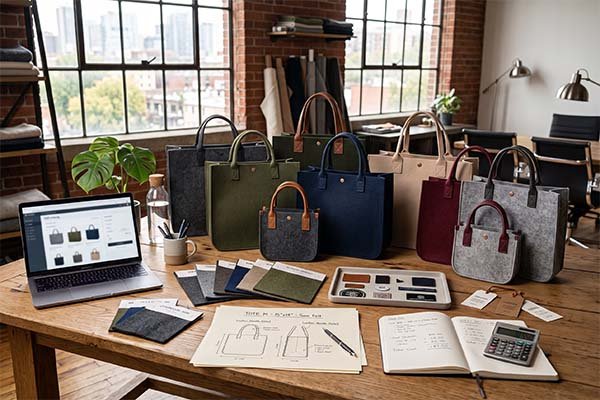
You might send a factory a picture and ask for a quick price. But a real quote requires looking at several physical variables. Let us look at what actually changes the numbers on your invoice.
What Factors Affect the Cost of Custom Felt Bags?
Wondering why two similar bags have completely different price tags? Guessing costs based on photos leads to budget blowouts. Let us examine the physical components that change your quote.
The cost of a custom felt bag is determined by material type, felt thickness, physical dimensions, logo application methods, hardware accessories, and structural complexity. Each element adds material expenses, increases labor time, or alters shipping weights, driving the final invoice up or down.
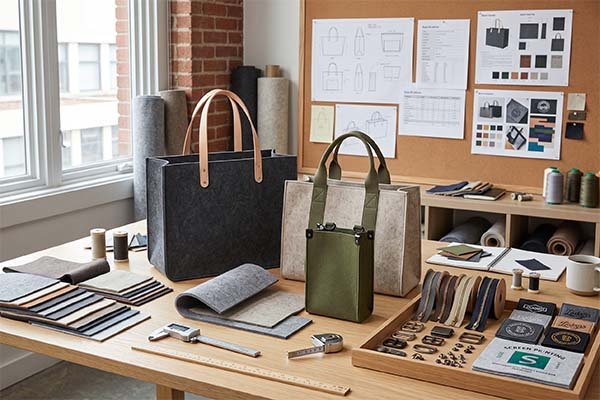
The Role of Felt Thickness
Thickness does more than change the raw fabric cost. We typically work with 2mm, 3mm, 4mm, or 5mm felt. A 5mm felt wine bag weighs twice as much as a 2mm version. This doubles your freight volume. Thicker materials are also harder for factory workers to cut and sew. This slows down the daily production rate and increases labor charges.
Bag Dimensions and Material Waste
A large shopping bag costs more than a small laptop sleeve. The price increase is not linear. When you increase a bag by two inches, you change how many panels we can cut from a single roll of felt. If a larger dimension results in more fabric waste, you pay for that waste.
Accessories and Construction
Every zipper, metal rivet, PU leather handle, or magnetic button adds direct material costs. The hidden cost is labor. Adding an inside pocket means a worker has to align and stitch an extra piece before assembling the main body. A structured tote bag with a gusset, inner lining, and bound edges takes five times longer to sew than a simple flat pouch. If you want a stronger base for a shopping tote, we often add a double-layered bottom panel. This guarantees the bag will hold up over time, but it clearly adds more fabric and sewing time to the bill.
| Construction Feature | Cost Impact | Production Speed |
|---|---|---|
| Flat pouch (no gusset) | Lav | Fast |
| Added inner pockets | Medium | Slower |
| Leather handles & rivets | Høj | Very Slow |
How Does Material Choice Impact Custom Felt Bag Pricing?
Stuck deciding between standard and recycled felt? Picking the wrong fabric ruins your margin or hurts your brand image. The exact material you choose changes everything about the quote.
Material choice directly controls your baseline manufacturing expense. Standard polyester felt offers the lowest raw material rate for tight budgets. Meanwhile, GRS-certified RPET felt costs more per yard but satisfies strict corporate sustainability requirements, making it the preferred choice for modern retail packaging.
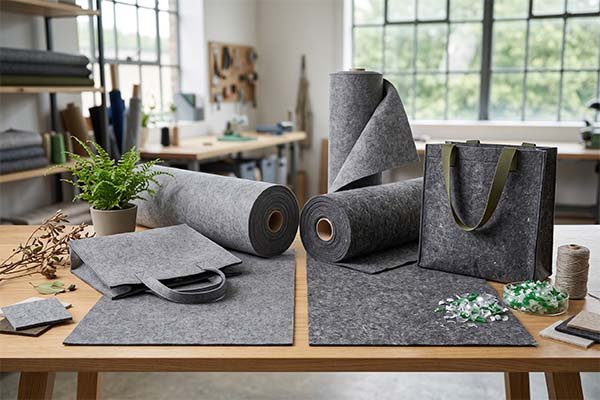
The Shift to RPET Felt
Over the last five years, procurement managers have shifted heavily toward RPET felt. This material uses recycled plastic bottles. The cost is higher than virgin polyester because collecting, cleaning, and processing the plastic into felt fibers requires specialized facilities. Brands gladly accept this increase. Paying slightly more per bag is a small price to market corporate gifts as sustainable. RPET helps you meet ESG goals, while standard polyester keeps giveaways cheap.
The Decline of Wool Felt in B2B
Many buyers ask for wool felt because they want a soft, premium feel. Authentic wool felt is incredibly expensive and shrinks easily if not treated correctly. For most promotional or retail packaging projects, wool simply breaks the budget. We replace it with high-density polyester or RPET that mimics the texture without the massive price tag. The fabric you select sets the stage for the rest of your production run.
| Materialetype | Core Benefit | Market Demand | Ideal Use Case |
|---|---|---|---|
| Polyester Felt | Lowest cost | Stable | Promo giveaways |
| RPET Felt | Eco-friendly (GRS) | Growing fast | Retail packaging |
| Wool Felt | Premium texture | Very Low | High-end fashion |
Why Do Order Quantity and Customization Change the Final Price?
Frustrated by high minimum order quantities? Ordering small batches burns through your cash fast. Volume and design tweaks heavily dictate the final amount on your proforma invoice.
Larger order quantities dilute fixed factory costs like machine setup, raw material sourcing, and logistics, lowering the per-unit price. Customizing features like unique Pantone colors, complex embroidery, or specific dimensions requires custom tooling and extra labor, which pushes the total price up.
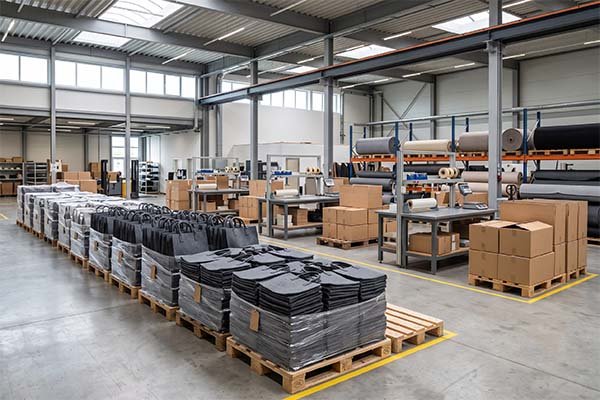
How MOQ Dictates Your Quote
Every time we start a production run, we have fixed costs. We have to buy a massive roll of felt. We calibrate the cutting machines. We make a printing screen for your logo. If you order 200 bags, all those fixed costs are divided by 200. If you order 3,000 bags, those setup costs become tiny fractions of a cent per bag.
The Cost of Unique Customization
Standard colors like heather grey or black are always in stock. If you need a specific bright pink to match your brand guidelines, we have to dye a fresh batch of felt. Dye factories have massive minimums. You end up paying for unused material. Complex logos follow the same logic. A small one-color logo is fast, but a large three-color design means passing the bag through the printing press three separate times.
Production Lead Time
Time is money. If you need bags delivered in 15 days, we push other orders aside, pay workers overtime, and book expensive air freight. Planning your inventory three months ahead lets us run normal shifts and book cheap ocean shipping. When you consolidate your purchases, such as buying canvas and felt bags at the same time, we can ship them together. This lowers your average freight rate per item.
| Quantity Tier | Setup Cost Impact | Unit Price Trend |
|---|---|---|
| 200 pcs | Meget høj | Expensive |
| 1,000 pcs | Moderat | Standard |
| 3,000+ pcs | Lav | Highly competitive |
How Can You Reduce the Cost of Bulk Custom Felt Bags Without Sacrificing Quality?
Over budget on your custom bag project? Cutting corners on quality will ruin your reputation. You can trim actual production expenses purely through smart structural and logistical choices.
Reduce costs by selecting standard bag dimensions, using 3mm felt instead of 5mm, and opting for simple one-color screen printing. Increasing your order volume to 1,000 units and booking ocean freight months in advance drastically lowers the landed cost without cheapening the final product.
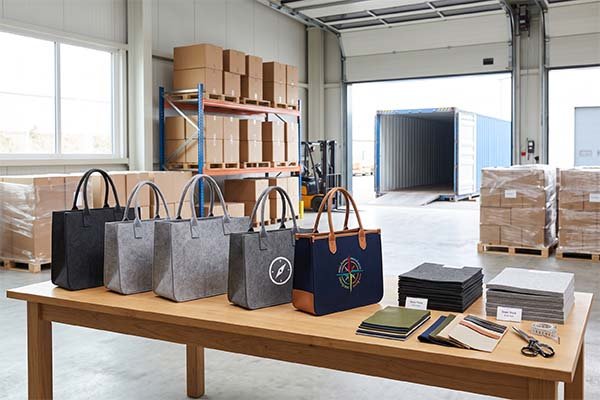
Choose the Right Thickness and Structure
Many buyers assume 5mm felt is best because it is thickest. For a simple document folder or lightweight tote, 3mm is plenty. Dropping down to 3mm saves raw material cost and slashes your shipping bill because the boxes weigh less. You should also optimize accessories. Remove metal rivets if the bag does not carry heavy weight. Ditch the custom internal pocket if it is just a simple grocery tote.
Select Cost-Effective Logo Methods
Not every bag needs a custom leather patch or heavy embroidery. If you are doing a trade show giveaway, a crisp one-color screen print gets your brand seen effectively.
Standardize Dimensions and Plan Early
Stick to standard factory dimensions. If our standard mold is 35x40cm, using it saves you the cost of a new cutting die. Bump your order from 500 to 1,000 pieces. The drop in unit price often pays for the extra inventory. Once production finishes, you want those goods on a boat. Shipping 1,000 felt bags by air to the US can easily double your total project cost. Ocean freight is slow but highly profitable.
| Strategy | Impact on Quality | Savings Potential |
|---|---|---|
| Switch 5mm to 3mm felt | None (for light items) | Høj |
| Use standard factory sizes | None | Medium |
| Ocean freight vs Air | None | Meget høj |
What Information Should You Prepare Before Requesting a Custom Felt Bag Quote?
Tired of vague replies from bag manufacturers? Sending a single photo guarantees an inaccurate price. Providing the right details upfront gets you a fast, exact quote immediately.
To get an accurate quote, provide the factory with a reference image, exact dimensions, preferred felt thickness, and material type. Include your logo file, target order quantity, specific packaging needs, and the destination port to calculate complete manufacturing and shipping costs.
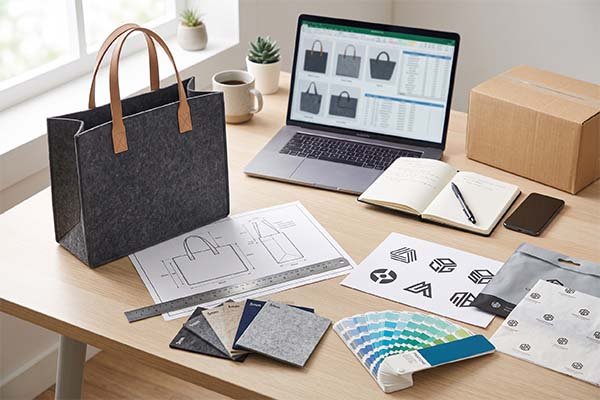
Step 1: Product Picture and Dimensions
Send a clear photo of the style you want. Immediately follow it with exact dimensions: Length, Width, and Gusset (depth). This allows us to calculate raw fabric usage. A quick message asking "How much does this cost?" forces me to guess your needs. Guessing leads to buffer pricing, meaning you get quoted a higher rate just in case.
Step 2: Thickness and Material
Tell me if you want 2mm, 3mm, or 4mm felt. Specify if you need standard polyester or GRS-certified RPET.
Step 3: Logo and Quantity
Send the logo file, or at least tell me how many colors it has and where you want it placed. State your exact target quantity. If you are unsure, ask for pricing at 500 and 1,000 pieces to compare tiers and divide fixed setup costs.
Step 4: Packaging and Shipping
Do you need each bag in an individual polybag with a barcode? Do you want a bulk quote, or do you need me to calculate door-to-door shipping to a warehouse in Texas? The destination port helps us provide exact freight rates.
| Required Detail | Why the Factory Needs It |
|---|---|
| Exact Dimensions | To calculate raw fabric usage |
| Target Quantity | To divide fixed setup costs |
| Destination Port | To provide exact freight rates |
Konklusion
Custom felt bag costs depend entirely on your choices in material, volume, and structure. Prepare exact specifications before sourcing to lock in the best manufacturing rate for your project.
Frequently Asked Questions
Q: Do you charge a fee for a physical sample before bulk production?
A: Yes. We charge a small sample fee to cover the immediate labor and machine setup. We fully refund this fee when you place the final bulk order.
Q: How much weight can a standard felt tote bag carry?
A: A well-stitched 3mm felt tote bag easily holds 10 to 15 kilograms. If you need it to carry heavier items like wine bottles, we add reinforced stitching at the handles.
Q: Can I split my order of 1,000 bags into two different colors?
A: Yes, you can. Each color acts as its own production batch. Splitting colors might slightly increase your unit price because we have to set up the cutting machines twice.
Q: Is it possible to wash felt bags if they get dirty?
A: We recommend spot cleaning with a damp cloth and mild soap. Machine washing can distort the shape and cause the fabric to pill.
Q: Does the felt fabric pill or fuzz over time?
A: Friction causes all felt to pill eventually. High-density polyester and RPET resist pilling much better than low-density options. This keeps the bag looking new longer.
Q: How do you prove the RPET felt is actually made from recycled plastic?
A: We provide a Global Recycled Standard (GRS) certificate for your batch. This document traces the raw material back to the exact recycling facility.
Q: Are felt bags safe for direct contact with food?
A: No. Standard felt is not food-grade. If you plan to use them for groceries or baked goods, the food must remain in its own sealed packaging.
Q: Can you pack the bags into my own custom retail boxes?
A: Yes. You can send us your retail packaging, or we can produce the boxes for you. We pack the bags directly into the individual boxes before shipping them out.
Q: Will the fabric color fade in the sun?
A: Felt holds color well under normal use. If you leave it in direct sunlight for weeks, some fading will happen. Dark colors like black and navy show fading faster than light grey.
Q: What happens if my logo has a gradient or very fine details?
A: Screen printing cannot handle gradients well. For fine details or color blends, we switch to heat transfer printing. This method bonds a printed film directly to the felt, capturing every detail exactly.

 English
  Deutsch
  Español
  Português
  Русский
  العربية
  Français
  Italiano
  日本語
日本語  한국어
한국어  Dansk
Dansk