Skip to content

Many buyers choose RPET materials by default now because they want to follow the trend. However, this choice often leads to wasted budget if the bag does not match the project goals.
RPET reusable bags create the most value in high-frequency scenarios like grocery shopping and retail. The value comes from replacing single-use items and turning waste into durable brand assets. When usage matches project goals, these sustainable packaging solutions maximize return on investment.
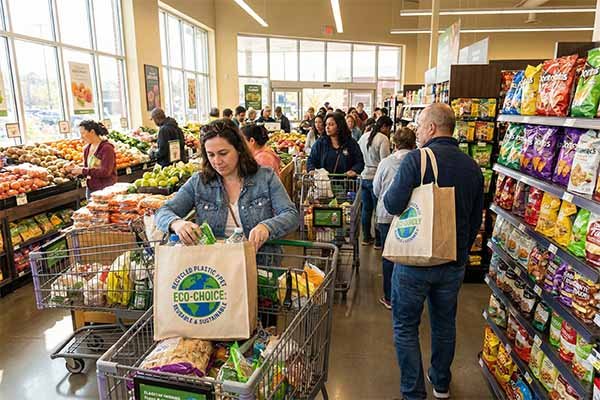
Simply picking a recycled material is not enough to make a project successful. You must understand where the material fits best to avoid high costs with low returns. Let us explore the specific scenarios where RPET bags truly pay off for your business.
Why Do RPET Reusable Bags Deliver More Value in Some Projects Than Others?
Buyers often look at the unit price and ignore the long-term value of the product. This mistake creates a gap between the budget spent and the brand impact achieved.
The value difference comes from the "application scenario" rather than the material itself. When an RPET bag becomes a daily essential instead of a disposable wrapper, the higher production cost pays off through repeated brand exposure and genuine plastic reduction.
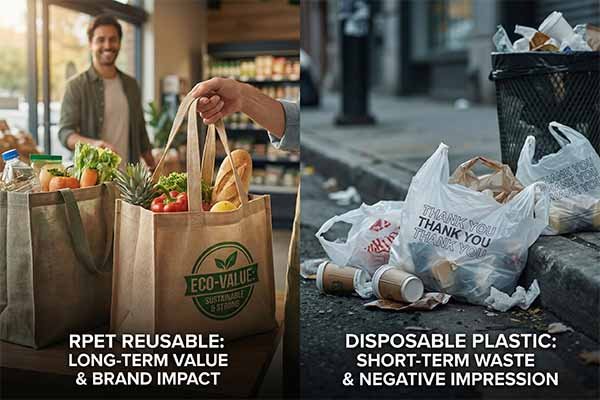
We need to look at the cost structure to understand value properly. RPET material usually costs more than simple non-woven fabrics. However, it is often cheaper than high-end cotton or canvas. The key factor for success is the return on investment (ROI). Real ROI depends on "visibility plus usage frequency."
If a brand treats an RPET bag as a disposable package, the value is very low. The cost is too high for a single use. But if the bag becomes a brand asset, the value changes completely. Users keep the bag. They carry it to the gym, the store, or work. This creates ongoing value for your company.
Different markets also see this differently.
- European and US Markets: Consumers here look for the story behind the recycled material. They value the "closing the loop" narrative.
- Asian Markets: The focus might be more on practical durability and water resistance.
You must align your sustainable material choice with your target market’s habits. When the bag becomes a product people want to keep, the higher cost of RPET becomes a smart investment.
What Types of Brands Benefit Most from RPET Recycled Material Bags?
Not every brand needs the same type of eco-friendly bag for their marketing strategy. Some businesses see huge returns from recycled materials, while others see almost no benefit at all.
Lifestyle brands, supermarket chains, and corporate ESG projects benefit most from recycled material bags. These sectors rely on "sustainability stories" and high-frequency usage, where the bag serves as a mobile billboard and concrete proof of their environmental commitment.
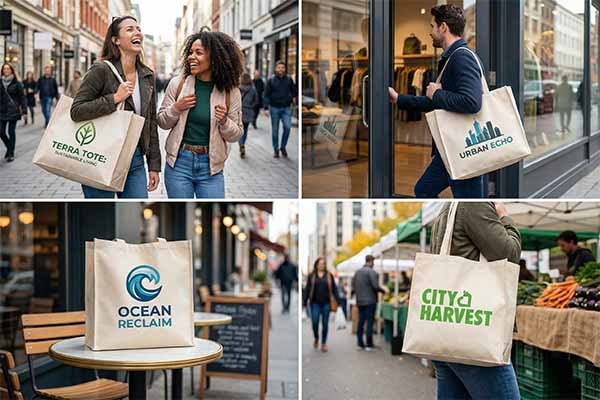
We can identify specific types of brands that "use RPET correctly." These brands do not just buy a bag; they buy a solution to a specific problem.
Lifestyle & Sustainable Brands
For these companies, the bag is part of the product. It tells a story about saving the ocean or reducing plastic. They need "environmental stories," not just packaging. The bag proves their commitment to their customers. RPET becomes a part of their brand language.
Retail & Supermarket Chains
These businesses benefit from high frequency. Customers use these bags daily or weekly. This replaces thousands of single-use plastic bags over time. The RPET bag becomes a "walking advertisement" for the store.
Corporate & ESG-Driven Projects
Large companies often have strict ESG (Environmental, Social, and Governance) goals. RPET bags wholesale orders help them meet these targets. They can report the exact number of bottles diverted from landfills in their annual reports.
Event & Exhibition Projects
Trade shows require bags that can hold heavy brochures and gifts. RPET is strong. It works better than paper or weak fabrics. Here, RPET balances functionality with brand dissemination.
| Brand Type | Key Value Driver | Bedste brugssag |
|---|---|---|
| Lifestyle | Storytelling | Merchandise / GWP |
| Detailhandel | Frequency | Grocery Shopping |
| Corporate | Overensstemmelse | Annual Reports |
| Begivenheder | Functionality | Trade Shows |
How Do Usage Scenarios Impact the ROI of RPET Reusable Bags?
A bag is only valuable to your brand if people actually use it repeatedly. The number of times a customer uses the bag changes the cost calculation for your business completely.
ROI correlates directly with usage frequency in every project. High-frequency scenarios like grocery shopping maximize brand exposure and environmental impact, while low-frequency uses like inner packaging often result in a negative return on investment for RPET materials.
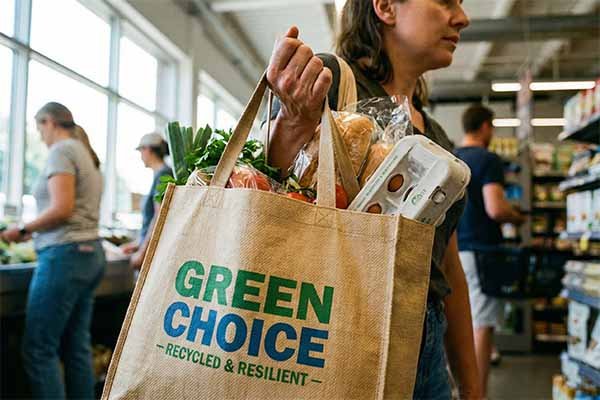
The return on investment (ROI) for custom RPET reusable bags links directly to how often someone uses them. The more a bag is used, the cheaper it becomes per impression. We can break this down into specific scenarios.
High-Frequency Scenarios
This includes grocery shopping bags, daily carry-all totes, and gym bags. This is the best use for RPET. The material is durable and water-resistant. A user might use this bag 100 times a year. Each use lowers the "cost per impression" for your brand. It also maximizes the environmental benefit. The energy used to make the bag pays off quickly.
Mid-Frequency Scenarios
This includes corporate gifts and membership welfare bags. The user might use the bag once a month. The value here is in the "perceived quality." The recipient feels the bag is sturdy and valuable. It reflects well on the company giving the gift.
Low-Frequency Scenarios
This includes inner packaging or short-term promotions. Using heavy sustainable packaging bags here is often a waste. If a customer throws the bag away after one use, the ROI is negative. The bag did not live long enough to justify the production resources. Every time a bag is reused, it creates brand exposure. You want a scenario where that exposure happens often.
Where Do RPET Bags Outperform Traditional Eco-Friendly Bag Materials?
You might wonder how RPET compares to cotton or non-woven fabrics in real usage. Each material has a specific strength, but RPET wins in specific performance areas like durability and consistency.
RPET outperforms cotton in durability and water resistance, and it beats non-woven in perceived value. It is the ideal choice for projects requiring a "modern, sustainable" look with consistent printing quality and long-lasting strength.
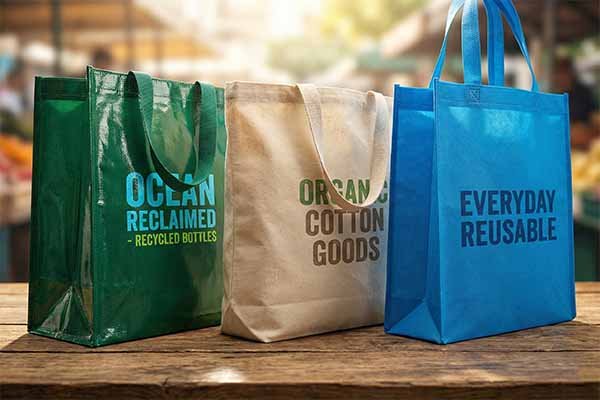
We should compare materials to find the best fit, not to say one is bad. RPET has clear advantages over traditional eco-friendly bag materials in specific areas.
RPET vs. Cotton Bags
Cotton is natural, but it absorbs water and gets dirty easily. RPET is polyester made from bottles. It resists water and is easy to wipe clean. Also, RPET takes color very well. Your brand logo will look sharp and consistent on every bag. Cotton quality can vary between batches. For brands that need a uniform look, RPET is often safer.
RPET vs. Non-Woven Bags
Non-woven bags are cheap and practical. However, they often look like "cheap giveaways." RPET fabric feels more like a real textile. It has a weave structure. This gives it a higher perceived value. It tells a story of sustainability that non-woven bags cannot match.
The Professional Attitude
Sustainability is not about choosing the most expensive material. It is about choosing the most suitable material. RPET is perfect for projects that need a "modern plus eco-friendly" feel. If you need durability and a good print surface, reusable bags wholesale orders in RPET are a strong choice.
| Funktion | RPET | Bomuld | Ikke-vævet |
|---|---|---|---|
| Vandtæthed | Høj | Lav | Medium |
| Print Consistency | Høj | Variabel | Høj |
| Perceived Value | Høj | Høj | Lav |
| Holdbarhed | Fremragende | God | Medium |
How Can Buyers Maximize Brand and Sustainability Value with Custom RPET Bags?
Buying RPET bags requires attention to specific details during the development phase. You need to control the design and the production terms to get the best result for your money.
Buyers must focus on visible logo placement, choosing the right material blend, and verifying GRS certifications. Controlling the Minimum Order Quantity (MOQ) prevents overproduction, ensuring the project remains both economically and environmentally sound.
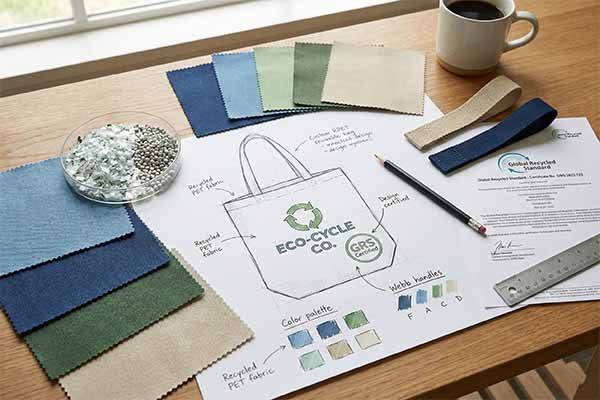
Buyers can take specific steps to make their custom RPET bags more valuable. I have seen many projects succeed by following these practical rules.
Design for Visibility
Do not hide your logo. But do not make it boring either. Place the logo where it is easy to see when someone carries the bag on their shoulder. Make the text readable. Use the "recycled" label on the bag. Consumers want to know the bag is made from bottles. This adds value to your brand image.
Valg af materiale
You can choose 100% RPET or a blend. A 100% RPET bag makes a stronger claim. It uses more bottles. However, blends might be softer or cheaper. You need to balance the cost with the environmental story you want to tell.
Certifications and MOQs
Always ask for GRS (Global Recycled Standard) certification. You do not need to print every certificate on the bag, but you need the proof for your files. Also, watch your order quantity. Sustainable packaging solutions should not create waste. Do not order 50,000 bags if you only need 10,000. Excess inventory that sits in a warehouse is not sustainable. It is waste. Order what you can use effectively.
Konklusion
RPET bags create real value only when used frequently. Aligning material choice with usage scenarios turns costs into long-term brand assets and effective sustainable packaging solutions.
Frequently Asked Questions
Q: What is the specific manufacturing process that turns plastic bottles into RPET fabric?
A: The process involves collecting and cleaning PET bottles, shredding them into small flakes, and melting them into pellets. These pellets are then extruded into yarn (filament), which is woven into fabric. This mechanical recycling process significantly reduces the need for crude oil extraction compared to virgin polyester.
Q: Can RPET bags be recycled again at the end of their life cycle?
A: Yes, RPET bags are generally 100% recyclable. Since they are made from polyester (PET), they can be processed back into the recycling stream to create new fibers or plastic products, truly closing the loop in a circular economy, provided local recycling facilities accept textiles.
Q: How does the weight capacity of an RPET bag compare to a standard non-woven bag?
A: RPET fabric typically has a higher tensile strength than standard non-woven polypropylene. A standard RPET grocery tote (e.g., 190T or 210D thickness) can comfortably carry 10kg to 15kg, making it suitable for heavy items like canned goods, whereas standard non-woven bags may tear under similar stress over time.
Q: Are RPET reusable bags food-safe for direct contact with groceries?
A: Most RPET bags are safe for carrying packaged groceries and produce with skins (like oranges). However, for direct contact with unwrapped food (like bread), you should request a food-grade lining or specific testing (such as FDA or LFGB compliance) from the supplier to ensure the recycled plastic contains no harmful migration substances.
Q: What are the best printing methods for complex, full-color designs on RPET bags?
A: Unlike canvas which is great for screen printing, RPET is excellent for Dye Sublimation (Heat Transfer). This method allows for edge-to-edge, photo-quality printing that won’t crack or peel, as the ink becomes part of the fabric fibers. This is ideal for brands with colorful, intricate visual identities.
Q: How should consumers clean and care for their RPET bags to ensure longevity?
A: RPET bags are water-resistant and easy to clean. For best results, they should be hand-washed in cold water with mild soap and air-dried. Machine washing is possible but may degrade the water-resistant coating or handle stitching over time. High heat (dryers) should be avoided as it can melt or warp the recycled polyester fibers.
Q: What does "D" (as in 600D) or "T" (as in 190T) mean when selecting RPET material thickness?
A: "D" stands for Denier and "T" for Thread count. 190T is a thin, lightweight, umbrella-like fabric often used for foldable drawstring bags. 600D is a thick, heavy-duty fabric similar to canvas, ideal for structured premium totes or backpacks. Choosing the right thickness is crucial for the bag’s perceived value.
Q: How can I verify that the GRS certificate provided by a supplier is valid for my specific order?
A: A general GRS company certificate only proves the factory is certified. To validate your specific order, you must ask for a Transaction Certificate (TC). The TC tracks the specific batch of recycled yarn used for your order from the source to the final product, ensuring the exact bags you receive are truly recycled.
Q: Is there a texture difference between Virgin Polyester and RPET?
A: Visually and tactually, high-quality RPET is almost indistinguishable from virgin polyester. However, some lower-grade RPET might feel slightly stiffer or have minor color variations (off-white) if the recycled bottles were not sorted perfectly. A professional supplier will ensure a "soft hand" finish to match the feel of traditional textiles.
Q: Does the production lead time for custom RPET bags differ from regular materials?
A: It can be slightly longer. While standard materials like cotton or non-woven are always in stock, specific colors or thicknesses of RPET fabric might need to be custom-woven or dyed for your order, especially for high MOQs. It is wise to add an extra 7-10 days to your project timeline for material preparation.


 Dansk
Dansk  English
  Deutsch
  Español
  Português
  Русский
  العربية
  Français
  Italiano
  日本語
日本語  한국어
한국어