Перейти к содержанию

Many brands feel confused when their usual eco-friendly bags face rejection or delays in Western markets. You might think using "green materials" is enough, but regulations now demand much more than just organic cotton or recycled plastic.
The focus of eco-bag compliance has shifted from simple material choices to strict rules on sustainability and recyclability. This article explains the specific regulatory changes in the EU and US, helping you avoid legal risks and choose bags that truly meet new market standards.
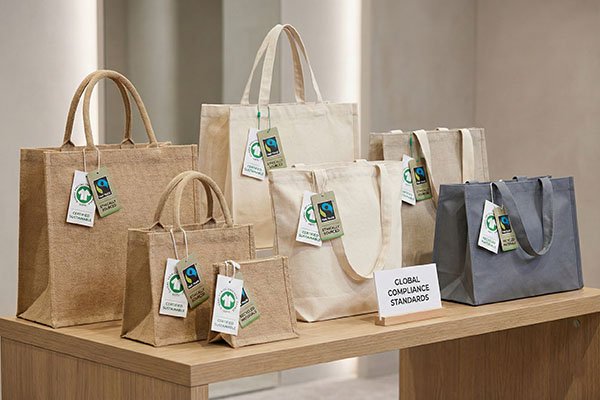
Buying the wrong bags can lead to customs fines, recalls, or damage to your brand reputation. You need to understand these changes before you place your next order.
WHAT New Compliance and Material Requirements Are Emerging for Eco Bags?
Regulators no longer care only about the raw material of your bag. They now check if the bag can enter a recycling system after the customer uses it. The definition of "compliant" has changed completely.
New standards require you to prove the origin of materials and the true recyclability of the finished product. We see a strong push for transparency regarding material sources, recycling paths, and the accuracy of environmental claims on the bag itself.
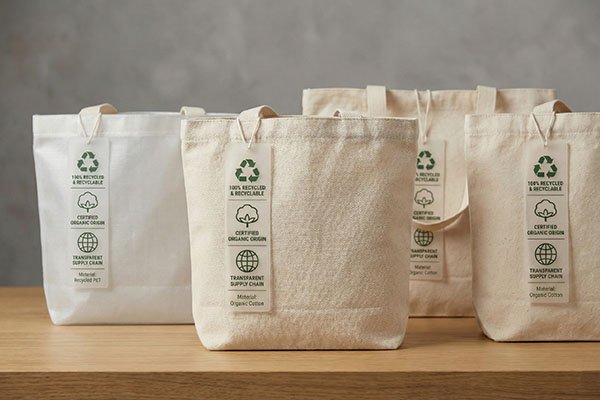
The market judgment for common materials like rPET, recycled cotton, and PP woven bags is evolving rapidly. In the past, you could simply state that a bag was made of recycled material. Now, under regulations like the EU’s Packaging and Packaging Waste Regulation (PPWR), you must ensure the bag fits into existing recycling streams. A bag made of multiple different materials glued together is often rejected because it cannot be recycled easily.
You must also pay attention to information disclosure. The physical product must carry clear information about its material composition, its intended use, and how to recycle it. This is no longer optional marketing text. It is a compliance requirement. For example, if you claim a bag is "biodegradable," you must have scientific proof verified by authorized bodies. General claims are now risky. You need to provide a transparent chain of custody for your materials. This means your supplier must provide valid transaction certificates, not just a verbal guarantee. The focus is now on the entire life cycle of the bag, not just how it was made.
WHY Are Traditional Eco-Friendly Bag Solutions Losing Relevance in EU & US Markets?
Many companies find their standard promotional bags are now seen as waste rather than gifts. Buyers in these regions are rejecting low-quality items that claim to be green but end up in the trash immediately.
Single-use or fragile eco-bags are increasingly labeled as "non-compliant sustainable products" by consumers and regulators. Relying on low prices or simple eco-concepts is no longer enough to satisfy brand safety needs or strict new laws.
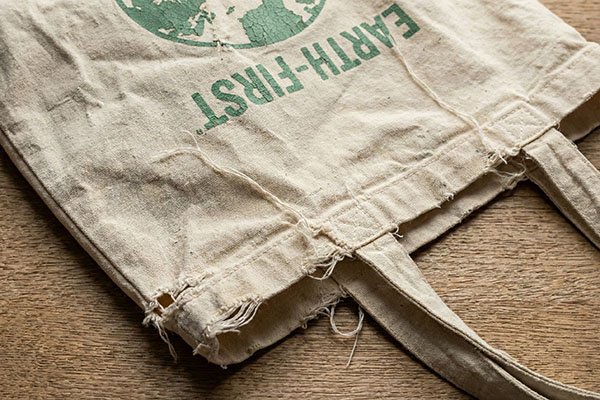
The era of "greenwashing" is ending. Greenwashing is when a company spends more time claiming to be green than actually being green. In the EU and US, consumers are very alert to this. A thin, cheap tote bag that tears after two uses is now a liability. It damages your brand image because it contradicts the message of sustainability. If a bag is meant to replace plastic but breaks just as fast, regulators view it as a failure.
We observe a clear shift in market feedback. Buyers do not want a bag that just looks eco-friendly. They want a bag that functions as a long-term brand carrier. This brings us to the concept of durability. A bag must withstand many uses to justify the resources used to make it. Traditional solutions often focused on getting the lowest price per unit. This approach ignores the hidden cost of brand damage. If your bag is labeled "reusable" but falls apart, you risk legal action under new consumer protection laws in the EU "Empowering Consumers" directive. The market now demands tangible quality over empty marketing slogans.
HOW Do Eco Bag Requirements Differ Between Europe and the U.S.?
You cannot use a single strategy for both the European and American markets. Europe focuses heavily on systematic rules and certifications, while the United States focuses on specific state laws and chemical safety.
Europe prioritizes the logic of regulations and the overall sustainable system, including design-for-recycling standards. The US market cares more about practical usage scenarios, liability risks, and specific chemical bans like PFAS.

Understanding the nuance between these two regions is critical for your sourcing strategy. In Europe, the approach is top-down and systemic. The EU cares about the "Design for Recycling" criteria. By 2030, the PPWR requires packaging to be recyclable at scale. This means your bag design must minimize void space and avoid unnecessary layers. The EU also looks at the certification of the entire supply chain. They want to see a full system in place.
In the United States, the landscape is fragmented. You deal with state-level bans rather than a single federal law. For example, New Jersey has strict mandates on recycled content percentages for carryout bags. If you sell there, your bag must meet that specific number. The US also focuses heavily on toxicity. Many states are banning intentionally added PFAS (forever chemicals) in packaging. This affects how your bags are treated for water or grease resistance.
| Характеристика | European Market (EU) | United States Market (US) |
|---|---|---|
| Primary Focus | Systemic circular economy and recycling logic. | Practical risk management and state laws. |
| Key Regulation | PPWR (Packaging and Packaging Waste Regulation). | State-level Bag Bans & Toxic Free Packaging Acts. |
| Material View | Must be recyclable by design (Design-for-Recycling). | Must be safe (PFAS-free) and durable. |
| Labeling | Requires verified green claims (Green Claims Directive). | Requires clear recycling info (e.g., How2Recycle). |
| Certification | High demand for system certifications (GRS, etc.). | Focus on testing reports and content verification. |
WHAT Key Eco Bag Details Do Buyers Often Overlook?
Procurement managers often focus on the main fabric but forget the small details that cause compliance failures. Issues with tags, inks, and construction methods can render a perfectly good eco-bag illegal.
Buyers frequently ignore wash labels, weight-bearing capacity, and ink toxicity, which are critical for market entry. Custom structural designs can also inadvertently violate waste minimization rules or recycling compatibility.
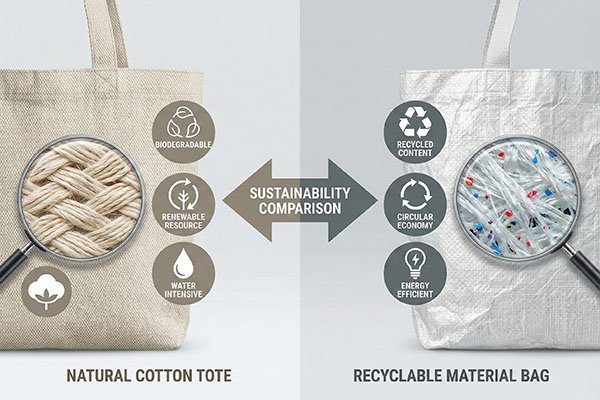
The devil is in the details. You might choose a GRS-certified recycled cotton fabric, but then use a printing ink that contains heavy metals. This makes the bag unsafe and non-compliant in both the US and EU. Printing inks impact the recycling process. If the ink covers too much surface area or interacts poorly with the recycling chemicals, the bag is trash.
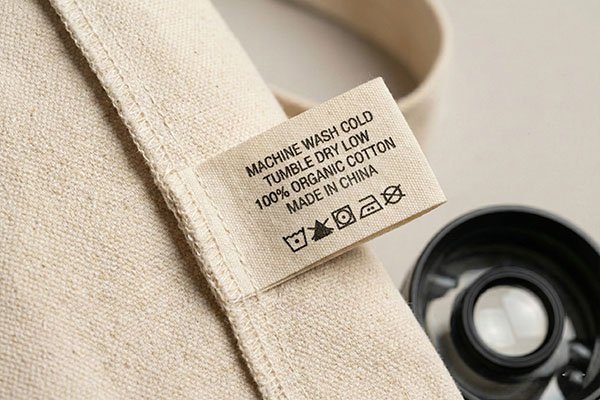
Another overlooked detail is the wash label and hangtag. In the EU, if you sell a textile product, the fiber composition label is mandatory and must be accurate. Missing this label leads to customs seizures. Durability is also a technical spec, not just a feeling. You need to test the weight-bearing capacity of the bag. If you claim a bag is "reusable," it must hold a certain weight for a specific number of uses (e.g., 125 uses). Poor stitching or weak handles break this promise.
Table of Overlooked Checkpoints:
- Wash Labels: Must match the language and regulations of the destination country.
- Handle Stitching: Cross-stitching is often needed to meet "reusable" durability standards.
- Ink Type: Water-based or soy-based inks are safer; avoid plastisol if possible.
- Accessories: Zippers or buttons must not contain lead or nickel and should not hinder recycling.
HOW Should Brands Adjust Their Custom Eco Bag Sourcing Strategy?
You need to move away from buying generic bags and start sourcing based on your specific destination market. The best strategy balances your budget with the need for safety and brand value.
Brands must re-evaluate materials based on the target market’s specific laws and prioritize suppliers with export compliance experience. Design your bags to increase reuse rates, balancing cost control with the strict demands of eco-consistency.
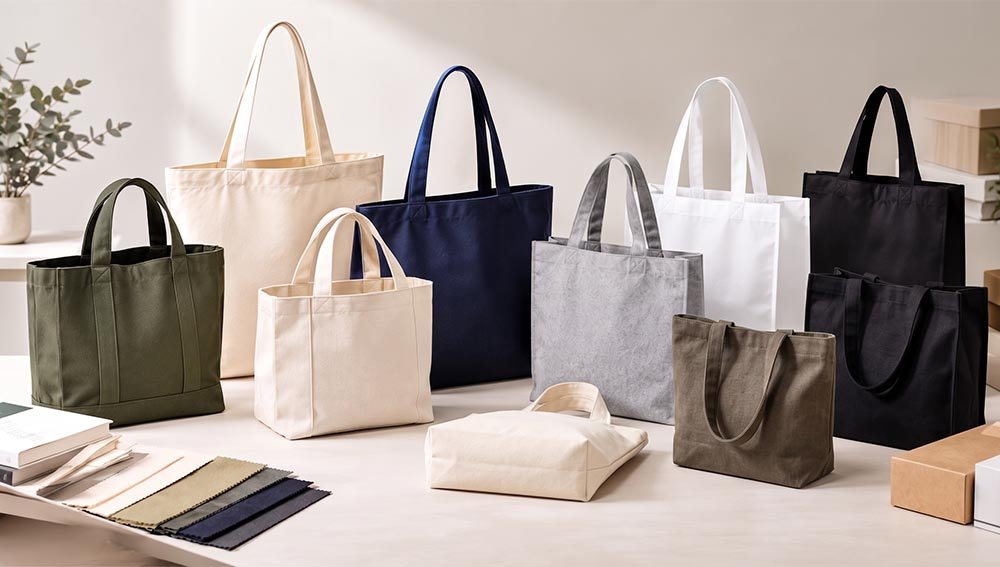
Your sourcing strategy must start with the end in mind. If you ship to California, your material choice might differ from a shipment to Germany. You should prioritize suppliers who understand these nuances. A supplier who only knows how to sew bags but knows nothing about the EU Green Claims Directive is a risk to your business. You need a partner who offers "compliance by design."
Balance is the key word here. You want to control costs, but "cheap" is dangerous. Instead of cutting costs on materials, try to optimize the design. Simplify the structure. Remove unnecessary double walls or linings that the EU PPWR frowns upon. This saves material costs and improves compliance. Focus on the "Reuse" aspect. If you make the bag stronger and more attractive, the end consumer keeps it longer. This turns a packaging cost into a marketing investment. When you select a supplier, ask them about their experience with US state bans or EU recycling codes. Their answer will tell you if they can protect your business.
Заключение
The market has moved from "theoretical eco-friendliness" to "verified sustainability." You must choose bags that are durable, legally compliant, and genuinely recyclable to succeed in the US and Europe.
Часто задаваемые вопросы
Q: Does "PFAS-free" mean my custom bags cannot be water-resistant anymore?
A: Not necessarily. While traditional fluorinated chemicals (PFAS) used for waterproofing are being banned in many US states and EU regions, we now use alternative bio-based coatings or tighter weave structures (like high-density canvas or Tyvek) to achieve water resistance without toxic chemicals. You should specifically ask your supplier for "C0" (fluorine-free) water-repellent treatments.
Q: What exactly is the "Digital Product Passport" (DPP) mentioned in recent EU discussions?
A: Although not fully implemented for all textiles yet, the DPP is a tool required by the new Ecodesign for Sustainable Products Regulation (ESPR). It involves a QR code on the bag that grants access to data about the product’s sustainability, material origin, and recyclability. Preparing for this now by digitizing your supply chain data can future-proof your brand.
Q: How can I verify that a "Transaction Certificate" (TC) provided by a supplier is genuine?
A: A Transaction Certificate is crucial for certified materials like GRS (Global Recycled Standard). To verify it, do not just accept a PDF file. You should check the certificate number on the certifying body’s official database (such as Textile Exchange) and ensure the buyer’s name on the certificate matches your company name, proving the materials were actually sold to you.
Q: Are "biodegradable" plastics (PLA) a safe alternative for the US market?
A: It is risky. Many US states (like California) have strict laws against labeling products as "biodegradable" unless they meet very specific scientific breakdown timelines in standard landfill conditions. PLA often requires industrial composting facilities to break down, which are not available everywhere. "Compostable" and "Biodegradable" are legally distinct and heavily regulated terms.
Q: Do these compliance rules apply if I am only shipping small quantities via e-commerce (DDP)?
A: Yes. In the EU, the Extended Producer Responsibility (EPR) laws apply even to small sellers. If you place packaging on the market, you are responsible for its end-of-life fees. Marketplaces like Amazon now legally require you to prove your EPR registration numbers (like LUCID in Germany) before they allow you to sell.
Q: Can I use the exact same bag design and labeling for both the UK and the EU?
A: Mostly, but there are labeling nuances. Since Brexit, the UK has its own developing standards (like the UK Plastic Packaging Tax), though they largely mirror EU trends. However, specific recycling logos (like the Triman logo required in France) are mandatory in some EU countries but not in the UK. A "one-size-fits-all" label often fails specific local requirements.
Q: What specific ISO test standards should I request to prove "durability"?
A: To prove a bag is "reusable" rather than single-use, you should ask for testing under ISO 19863 (for handle strength) or EN 13590. For example, a common standard is that the bag must handle a specific weight (e.g., 10kg) for 125 test cycles without structural failure. A simple factory QC check is no longer sufficient for regulatory proof.
Q: If my bags are made from 100% organic cotton, am I automatically safe from these regulations?
A: No. While the material is natural, you still face scrutiny regarding water usage and ethical labor practices (forced labor bans in the US). Furthermore, if the cotton bag is designed in a way that makes it hard to recycle (e.g., mixed with non-removable metal rivets or plastic linings), it might still violate the EU’s "Design for Recycling" principles under the PPWR.
Q: How does the rising cost of compliance affect the unit price of eco-bags?
A: Compliance adds a "safety premium." You should expect a 10-20% potential cost increase due to certified raw materials (which are more expensive than unverified ones), third-party testing fees, and higher-quality non-toxic inks. However, this cost safeguards you against recalls or fines, which are far more expensive in the long run.
Q: What is the risk of using "stock bags" that are already produced and sitting in a warehouse?
A: Stock bags are high-risk for new regulations because they were likely manufactured before the latest rules on PFAS or recycled content mandates took effect. They may lack the necessary traceability documents or batch-specific testing reports required by customs today. Custom production is safer because we can ensure the materials meet the current month’s regulatory standards.


 English
  Deutsch
  Español
  Português
  Русский
  العربية
  Français
  Italiano
  日本語
日本語  한국어
한국어  Dansk
Dansk