Перейти к содержанию

Custom merchandise can carry a brand name and still look like every other promotional product. A distinctive material, a clear design concept, and practical construction can help a custom Tyvek bag stand out.
To create custom Tyvek bags for creative merchandise, start with the project concept and intended use, choose a suitable bag style and material specification, develop artwork around the actual bag structure, and approve a physical sample before bulk production. This process helps buyers balance visual appeal, practical use, production costs, and consistent quality.
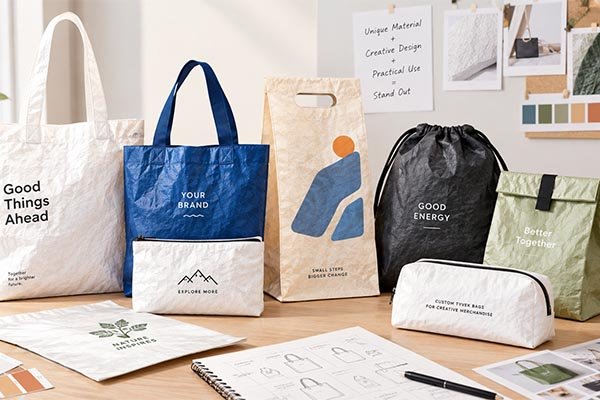
A creative merchandise bag should do more than display a logo. Its material, shape, artwork, and details should work together to express a clear idea. Tyvek offers a paper-like appearance and a lightweight structure that can support different design styles. Buyers can compare available custom Tyvek bag styles when planning a collection. However, a good result still depends on how the bag is designed and made. The following sections explain how to turn an initial concept into a product that is ready for production and useful beyond its original promotional purpose.
How Can Tyvek Bags Support Creative Branding and Visual Identity?
Many promotional bags look similar because their designs rely on familiar shapes and large logos. Tyvek offers a different visual direction for brands that want their merchandise to feel more like a designed product.
Tyvek bags can support creative branding through their paper-like appearance, lightweight structure, and flexible graphic layouts. Brands can combine these features with original artwork, clear typography, and coordinated colors to create merchandise that reflects a specific identity.
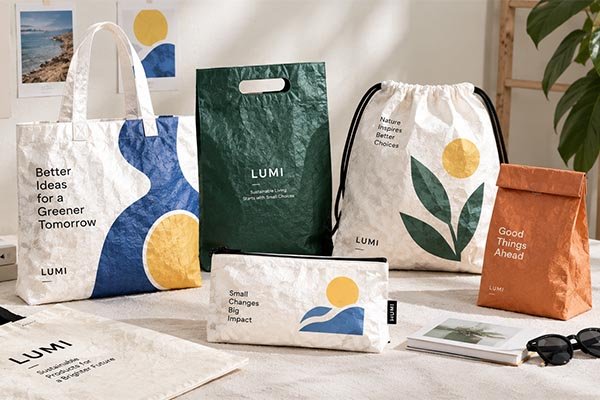
Tyvek bags give designers another option when standard cotton, canvas, or non-woven bags do not match the intended look. Their surface can work with minimalist graphics, architectural drawings, bold lettering, and experimental layouts. The material also has its own texture, so the design does not need to cover every part of the bag. A carefully placed logo and a simple graphic may create a stronger result than a crowded layout.
What Makes Tyvek Bags Different from Conventional Merchandise Bags?
Material choice affects the first impression of a product. Canvas often creates a familiar fabric look, while cotton bags can suit natural and understated brand styles. Non-woven bags are common in promotional projects because they can support cost-focused production.
Tyvek offers a different appearance. Its surface resembles paper, but the material is made from high-density polyethylene HDPE. It is lightweight and can be used in sewn bag products. These features make it suitable for certain creative merchandise projects.
Designers can consider several visual directions:
- Minimalist layouts: Use generous empty space, restrained colors, and small brand marks.
- Illustration-led designs: Place original drawings or abstract graphics across the main panel.
- High-contrast artwork: Combine black and white or use a limited number of strong colors.
- Experimental typography: Use unusual letter sizes, alignment, or spacing to create a distinctive look.
The material should serve the concept rather than become the concept itself. A canvas bag may work better for a project that needs a familiar textile feel, while Tyvek may be a better fit when the surface appearance is part of the intended design. Buyers can also compare cotton and canvas bag options before confirming the material.
How Can Tyvek Bags Reflect a Brand’s Visual Identity?
A strong merchandise design should feel connected to the brand, even when the product uses a different format from its usual packaging. Buyers can start with existing brand colors, fonts, symbols, and graphic elements. These assets provide a clear starting point for the bag design.
Three design directions are worth considering.
| Design direction | Main focus | Suitable application |
|---|---|---|
| Brand-led design | Logo, brand colors, and familiar symbols | Retail merchandise and corporate gifts |
| Artwork-led design | Original illustrations or graphic compositions | Art collections and designer collaborations |
| Concept-led design | A theme, message, or visual story | Cultural projects and seasonal merchandise |
The logo does not need to dominate the bag. A designer can place a small logo near the bottom corner and use the main panel for artwork. The reverse side can carry a product name, a short message, or a small maker’s mark.
Designers should also consider the sides, handles, and opening. These areas can support the main concept, but they should not become crowded with extra details. A consistent visual system usually works better than placing unrelated graphics on every available surface.
How Can a Creative Concept Shape the Entire Bag Design?
A common mistake is to select a bag style first and add artwork later. This approach can create a product where the image, shape, and function do not fit together.
A better approach starts with the concept. Imagine a design project based on city architecture. The team could use building outlines, street coordinates, and a small set of colors drawn from the city’s surroundings. A tote bag might carry the main architectural illustration, while a smaller pouch uses a simplified building symbol.
The same concept can guide the product structure. A flat bag may suit printed materials and lightweight merchandise. A gusseted tote may be more suitable when the product needs additional space. A small pouch can carry the visual theme into a second product without repeating the full illustration.
The team should define the main visual element before finalizing dimensions and print placement. This helps the artwork fit the actual bag rather than forcing the bag to accommodate an unsuitable layout. The custom bag development process can help buyers plan shape, fabric, printing, and accessories together.
Which Projects Can Benefit from Creative Tyvek Merchandise?
Tyvek bags can suit projects that need a clear visual identity and a distinctive product format. Their value comes from the connection between the material and the design, not from using an unusual material without a clear reason.
- Art and design projects: Printed illustrations and graphic layouts can make the bag part of a wider creative collection.
- Brand collaborations: Shared symbols and coordinated colors can connect the identities of two brands.
- Retail and lifestyle merchandise: A well-planned design can support a product collection without looking like ordinary packaging.
- Cultural and promotional projects: Maps, architectural drawings, or themed artwork can connect the bag to a specific subject.
- Corporate gifting: A restrained design can create a branded gift that feels more considered than a standard promotional bag.
The intended use should guide the material and product choice. Once the visual direction is clear, buyers can select a bag style that supports the concept and the items it needs to hold.
What Types of Tyvek Bags Work Best for Creative Merchandise?
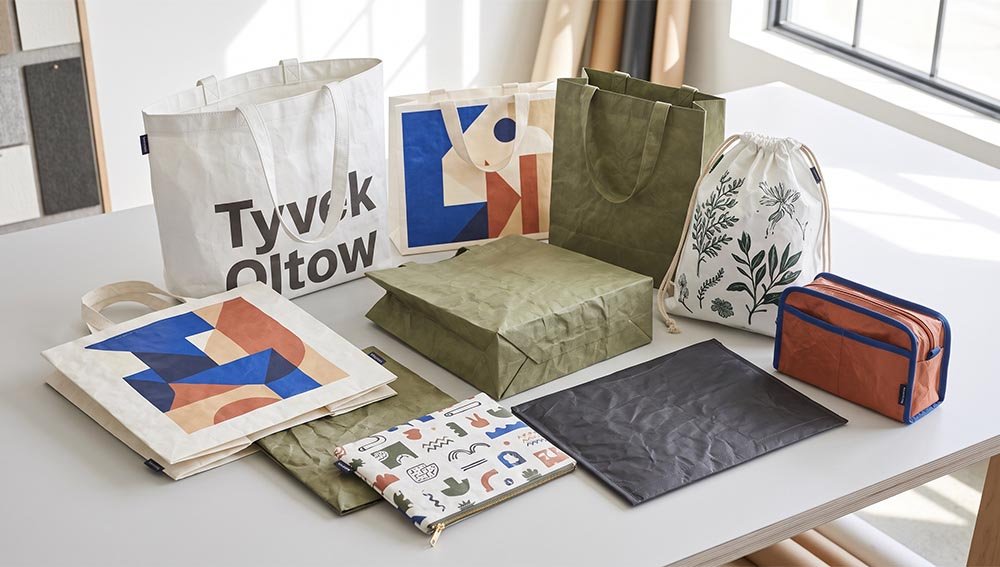
The right bag style depends on the product’s purpose, contents, and design requirements. A tote, drawstring bag, and small pouch offer different ways to present the same creative concept.
Tote bags work well as main merchandise products, drawstring bags suit lightweight storage and gift packaging, and small pouches can add variety to a collection. Buyers should confirm that the selected Tyvek grade and construction meet the needs of each style.
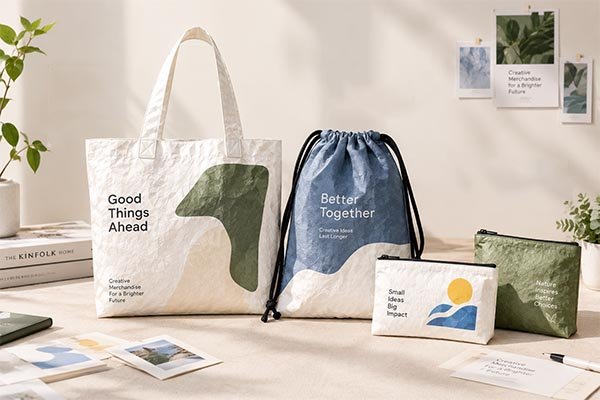
A product collection does not need to contain many different styles. Two or three coordinated products can create a stronger result when each has a clear role. The team should also consider how the bag will be carried, opened, packed, and stored before approving its design.
How Do You Choose the Right Tote Bag for Creative Merchandise?
Tote bags are a practical starting point because they provide a large area for artwork and can serve several merchandise purposes. However, the dimensions and construction need to match the intended contents.
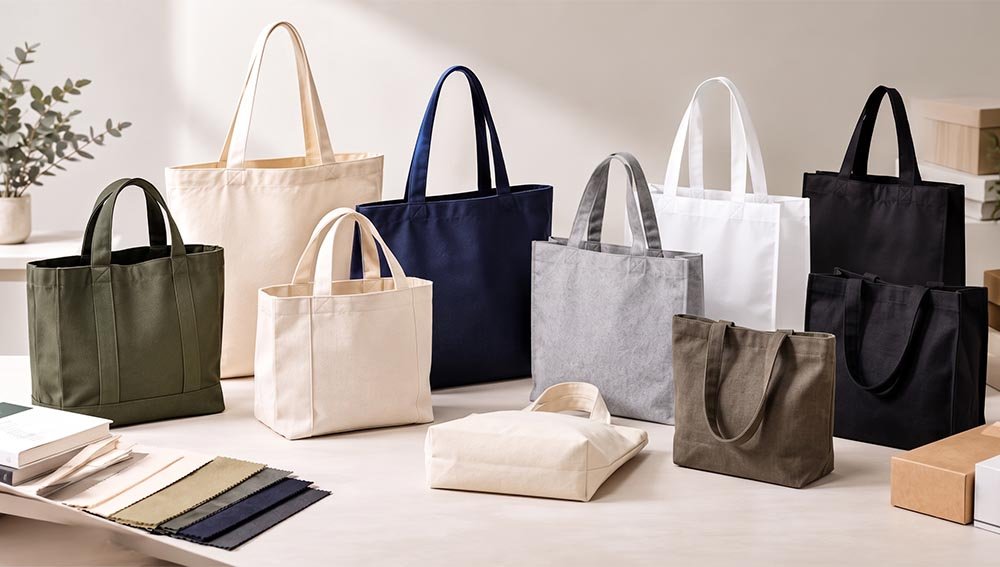
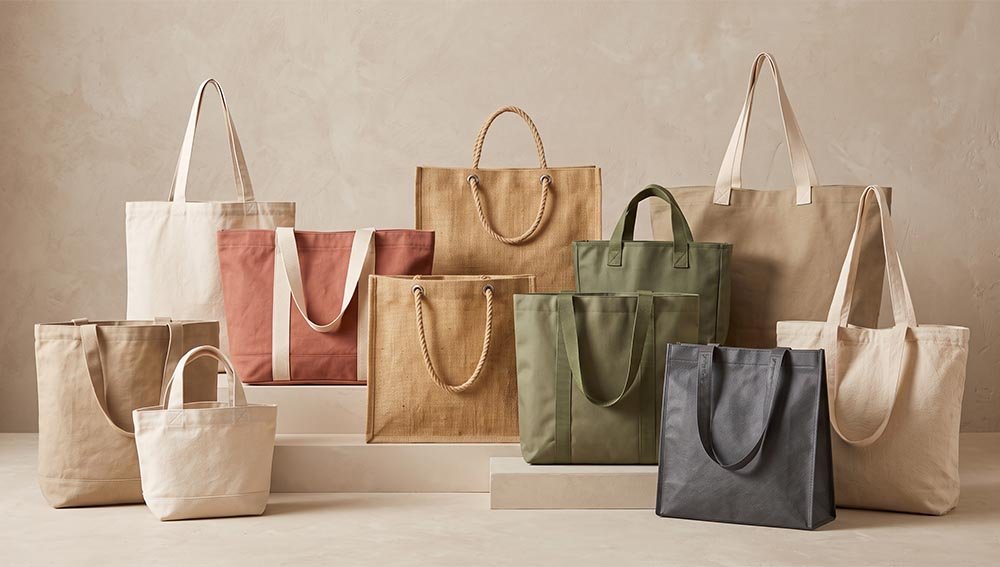
A compact tote may suit a small gift or a folded booklet. A standard tote may provide more space for printed materials and lightweight products. A gusseted tote can create additional depth when the contents need more room. Buyers can review custom tote bag styles to compare different structures.
Buyers should check these details before selecting a design:
- Finished dimensions: Confirm the width and height based on the actual contents.
- Handle length: Consider whether users will carry the bag by hand or over the shoulder.
- Bottom and side gussets: Decide whether additional volume is necessary.
- Bag opening: Check whether users can insert and remove the contents easily.
- Reinforcement: Ask how the handles and other load-bearing areas will be constructed.
Tyvek grades and bag constructions can differ. A design that looks suitable in a digital mockup may not perform as expected when filled with products. The manufacturer should assess the material, seams, and handle attachments against the intended load.
When Should You Consider Tyvek Drawstring Bags?
Drawstring bags provide a different opening structure from totes. Users can pull the cords to close the top, which makes this style suitable for certain lightweight merchandise and packaging applications.
A drawstring bag can hold small gifts, printed materials, or lightweight accessories. It can also form part of a coordinated collection with a larger tote. The main graphic can remain consistent, while the smaller bag uses a simplified version of the design. Buyers can explore custom drawstring bag styles to compare available shapes and closure configurations.
The cord and its attachment points need careful planning. Buyers should confirm the cord length, color, channel construction, and reinforcement around the openings. These details affect both the appearance and the way the bag operates.
Tyvek should not automatically be treated as suitable for every drawstring design. The selected material must work with the folding, stitching, and pulling forces created by the closure. A sample can help the buyer assess whether the opening operates properly and whether the material shows unwanted deformation during use.
Can Tyvek Pouches Add More Variety to a Merchandise Collection?
Small pouches can extend a merchandise collection without requiring a completely different visual identity. They can hold lightweight accessories, printed cards, small design items, or other products that fit their dimensions.
The structure should follow the intended contents. An open-top pouch may work for items that users need to access quickly. A zippered pouch can help keep the contents enclosed, but it adds another component that must be selected and tested. Buyers considering alternative packaging styles can also review custom cotton drawstring bags for different material and closure options.
Buyers should confirm the opening size, internal space, closure type, and printed area. A small pouch may have less room for complex artwork, so a simplified graphic often works better than reducing every element of a large design.
Pouches can also be sold or distributed separately. The product does not need to depend on a tote to have a clear purpose. However, when both products belong to one collection, shared colors, typography, and graphic elements can help them feel related.
How Can Different Bag Styles Form a Coordinated Merchandise Collection?
A coordinated collection gives buyers more options without making the products look unrelated. The goal is to give each style a different function while keeping the overall design consistent.
Consider a small collection built around an original illustration. The tote carries the main artwork, the pouch uses a smaller graphic, and the drawstring bag adopts the same colors with a simpler logo placement.
| Продукт | Main purpose | Design focus |
|---|---|---|
| Сумка-тоут Tyvek | Main merchandise product | Large themed graphic |
| Small Tyvek pouch | Compact accessory or gift | Simplified artwork |
| Tyvek drawstring bag | Lightweight storage or packaging | Coordinated colors and branding |
The collection can share a common color palette, logo treatment, or label design. It does not need identical graphics on every product. In fact, changing the scale and placement of the artwork can make each item more useful and visually distinct.
Buyers should also consider whether the products can share some specifications. Using a common material or a related print palette may help simplify production planning. Each style still needs its own construction review, especially when the openings, seams, and intended loads differ.
Which Structural Details Should Be Planned Before Finalizing the Bag Style?
Bag construction affects both usability and artwork placement. Buyers should settle the main structural details before the printer prepares the final production artwork.
The specification should include the finished dimensions, gusset requirements, opening style, handle measurements, and attachment method. It should also identify any zippers, cords, labels, or other accessories.
These details affect the printable area. A seam can interrupt a graphic, a gusset can change the position of an image when the bag is opened, and a handle attachment can cover part of the design. A layout that looks balanced on a flat template may look different on the finished bag.
The manufacturer should provide a suitable template or layout drawing when needed. The designer can then position the artwork around the actual panels, folds, and seams. This step reduces avoidable revisions later in the process.
Once the bag structure is confirmed, the artwork can be developed around the real product rather than an estimated shape.
How Can Custom Printing Make Tyvek Bags More Memorable?
Printing gives a creative merchandise bag much of its visual character. The right artwork can connect the material, product shape, and project concept without relying on a large logo.
Custom printing can make Tyvek bags more distinctive through original illustrations, clear typography, coordinated layouts, and carefully selected colors. Buyers should match the printing method to the material and approve a physical sample to check color, detail, and print placement.
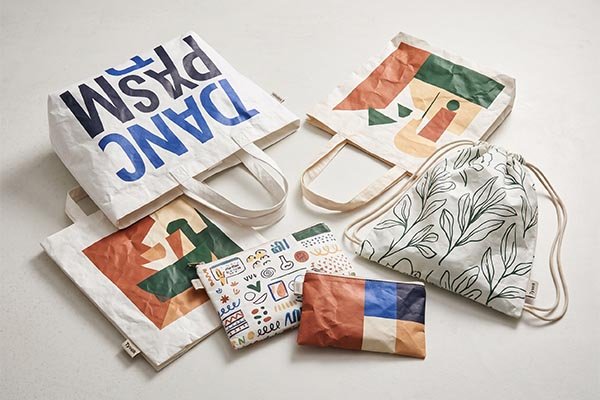
Creative printing requires more than selecting a graphic file. The design needs to work on the chosen material and fit the actual bag structure. Buyers should also confirm that the proposed process can reproduce the artwork at the required quantity and quality. DuPont’s Tyvek printing guide1 explains how the material’s characteristics affect printing choices.
How Can Bold Graphics and Illustrations Create a Strong Visual Impact?
Original illustrations and bold graphics can help a bag stand out without adding unnecessary text. The design can use one main image, a repeating pattern, or a large composition that covers much of the front panel.
A central illustration works when the project has one clear visual focus. Repeating graphics can create a more regular pattern across the bag. An asymmetrical layout may suit an experimental design, while a simple image with generous empty space can give the material more visual presence.
The artwork should also work at different viewing distances. A large graphic needs a clear overall shape, while smaller details should remain readable at close range. Excessive detail can disappear when the artwork is reduced or affected by the printing process. For logos and scalable illustrations, Adobe’s guide to vector files2 explains why vector artwork can be resized without losing edge clarity.
Buyers should discuss line thickness, small text, color coverage, and the size of the printed area with the manufacturer. A physical sample can show whether the intended details remain clear on the selected Tyvek grade.
How Can Typography and Layout Turn a Simple Bag into a Designed Product?
Typography can create a strong visual identity even when a design uses very few graphic elements. The font should match the project’s style, and the text should have a clear relationship with the logo and other artwork.
A design might use a large project name on the front panel and a small brand mark on the reverse. Another option is to place the main text near the bottom corner and leave most of the surface open. Both approaches can work when the layout has a clear visual order.
Designers should pay attention to the actual bag dimensions. A font that looks readable on a computer screen may become too small when printed on a compact pouch. Text placed too close to a seam or fold may also become difficult to read.
The team should decide whether the front and back need separate layouts. Double-sided printing may provide more room for the concept, but it can also add cost. Every printed area should have a clear purpose.
How Can Limited-Edition Designs Make Merchandise More Distinctive?
Limited-edition merchandise works best when the design connects to a real project, collaboration, or product series. The label alone does not make a product distinctive. The artwork and the reason behind the edition should provide that meaning.
A design studio might release three color versions of the same illustration. An artist collaboration could use a different drawing on each bag size. A retail brand could develop a seasonal collection with a shared graphic style and different product details.
These approaches give the collection a clear structure while allowing individual products to look different. The designer can keep the same typography and color system while changing the main image or graphic placement.
Buyers should also plan the production details. Different artwork versions may require separate print setups or individual approval samples. The supplier should confirm whether the versions can share the same bag construction and how the order quantity will be allocated across designs.
Which Printing Methods and Artwork Details Should Buyers Check?
Tyvek can support several printing processes, but the available options depend on the material grade, printing equipment, ink system, and bag manufacturer’s production setup. Buyers should ask the supplier to recommend a suitable method instead of assuming that every process works on every Tyvek product.
| Artwork requirement | Printing method to discuss | Sample checks |
|---|---|---|
| Simple logo and bold lettering | Screen printing | Edge definition and color coverage |
| Detailed illustrations or gradients | Compatible digital printing | Fine details and color reproduction |
| Large runs with repeated graphics | Flexographic, offset, or other suitable production processes | Registration and batch consistency |
These are options to discuss with the manufacturer, not a guarantee that every method is available for every bag.
Buyers should provide the confirmed artwork, logo files, color references, print dimensions, and front-and-back layouts. Vector artwork is generally useful for logos and scalable graphics, while high-resolution raster files may suit detailed illustrations and photographs. The supplier should confirm its file requirements.
Buyers should also be careful with heat-applied decoration. DuPont’s technical printing guidance for Tyvek3 explains that conventional heat-transfer or dye-sublimation methods may be unsuitable because typical transfer temperatures can exceed the material’s melting point. Any proposed heat-based process needs specific technical confirmation.
Why Should Buyers Approve a Physical Sample Before Bulk Production?
A digital mockup shows the planned appearance, but it cannot fully show the finished material, seams, or print performance. A physical sample gives the buyer a chance to check the actual product before authorizing a large order.
The sample review should cover five main areas:
- Dimensions and construction: Measure the bag and check the opening, gussets, and overall shape.
- Material appearance: Check the surface, thickness, and feel against the agreed specification.
- Печать: Review color, artwork position, fine details, and visible defects.
- Структура: Check the handles, seams, folds, and closures.
- Usability: Insert the intended contents and test the bag under its expected conditions.
Buyers should also consider folding and rubbing when these actions are likely during normal use. If the bag is intended to carry a specific load, the sample should be checked under an agreed test condition.
Tyvek’s material properties do not automatically establish the performance of a finished sewn bag. Seams, zippers, handles, and other components can affect the final result. Buyers should approve the complete construction and keep a record of the accepted sample.
For a broader view of the approval process, buyers can review the manufacturer’s custom bag development process before moving into bulk production.
What Should Buyers Consider When Ordering Custom Tyvek Bags in Bulk?
A creative design becomes a commercial product only when the specifications, price, production plan, and quality requirements are clear. Buyers need to turn the design concept into information that a supplier can quote and manufacture.
Before ordering custom Tyvek bags in bulk, buyers should confirm the bag dimensions, material grade, construction, printing requirements, quantity, packaging, and delivery schedule. They should also approve a production sample and agree on quality standards before mass production begins.
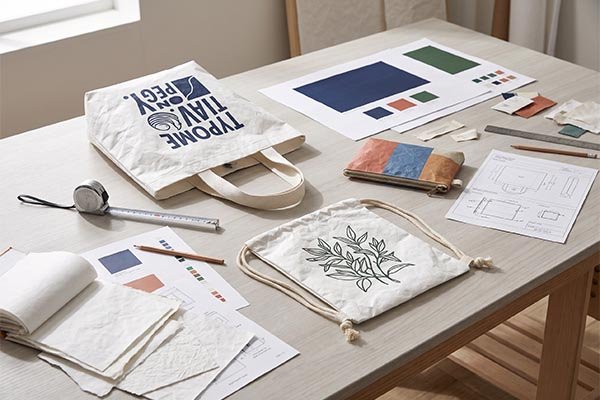
Clear specifications help both sides reduce misunderstandings. They also make it easier to compare quotations because suppliers can price the same product rather than different interpretations of the design.
How Should Buyers Define Bag Specifications Before Requesting a Quote?
A useful quotation request gives the supplier enough information to assess the product and identify any missing details. Buyers do not need to know every technical answer before making contact, but they should provide the main requirements.
The brief should cover:
- Bag type: Tote, drawstring bag, pouch, or another format.
- Dimensions: Width, height, and gusset measurements where applicable.
- Материал: Required appearance, grade, and intended use.
- Handles and closures: Length, material, color, and attachment details.
- Печать: Artwork coverage, colors, print locations, and number of printed sides.
- Количество: Total order volume and the number of designs or sizes.
- Packaging: Individual packaging, labels, and carton requirements.
- Delivery: Destination, target date, and preferred shipping terms.
A buyer who has only a reference image can still request an initial assessment. The buyer can share the intended contents, design direction, expected quantity, and target delivery date. The manufacturer can then suggest a suitable structure and identify the details that need confirmation. The customization process provides a useful starting point for discussing shapes, construction, and other requirements.
How Do Material, Structure, and Printing Choices Affect the Budget?
The price of a custom Tyvek bag depends on more than its flat dimensions. Material specifications, construction details, printing requirements, accessories, order quantity, and packaging can all affect the final quotation.
A bag with a simple one-color logo may require less printing work than a design with multiple colors and large coverage areas. A gusseted structure may involve different construction steps from a flat pouch. Zippers, cords, labels, and reinforced handles can also add materials and labor.
Buyers can organize the project budget using this basic framework:
Total project cost = bag production + customization + packaging + logistics
This is a planning framework rather than a fixed pricing formula. The supplier’s quotation should identify the charges that apply to the actual order.
Buyers should compare quotations against the same specifications. A lower unit price may reflect a different material grade, fewer printed areas, simpler construction, or different packaging. The buyer should confirm these differences before deciding which offer provides the best value.
How Can Buyers Balance MOQ, Quantity, and Design Complexity?
The minimum order quantity (MOQ) can depend on the material, production process, printing setup, and product construction. Buyers should ask whether the MOQ applies to the full order, each bag style, or each individual artwork design.
A project with several designs may not need several completely different bag structures. Shared dimensions and materials can make the collection easier to plan, although each design may still have separate printing requirements.
| Order plan | Suitable situation | Main point to check |
|---|---|---|
| One design, one style | A single branded merchandise product | Concentrated production volume |
| Multiple designs, shared structure | A coordinated creative collection | Separate print requirements |
| Multiple styles and sizes | A wider merchandise range | MOQ and cost for each style |
Buyers should request quotations at their expected quantity and, where useful, at a higher volume. This gives them a clearer view of how unit pricing changes with production volume.
Small trial orders can also help buyers test market response before committing to a larger quantity. However, they should confirm the supplier’s actual MOQ and any extra setup costs instead of assuming that all designs can be produced in small batches at the same unit price.
What Should Buyers Confirm During Sampling and Pre-Production?
The sample approval stage should establish the final production standard. Buyers need to confirm more than whether the bag looks attractive.
The approved specification should identify the material, dimensions, construction, print artwork, colors, handles, closures, labels, and packaging. The buyer should also confirm the approved artwork version and record any changes made during sampling.
This step matters when a project includes several people. A designer may approve the artwork, while a procurement manager checks the specifications and a marketing manager reviews the brand presentation. Written approval helps these teams work from the same final version.
The supplier should not change important specifications without agreement. A material substitution, print adjustment, or handle change may affect the product’s appearance and performance.
Buyers should keep an approved reference sample when possible. They can use it alongside the written specifications during production inspection, which makes it easier to identify differences between the agreed product and the finished order.
How Can Buyers Plan Production and Delivery for a Time-Sensitive Project?
Production planning should begin before the design is treated as final. Artwork changes, structural revisions, and late accessory decisions can all affect the schedule.
A typical process follows this order:
Design brief → Specification confirmation → Sampling → Sample approval → Bulk production → Quality inspection → Packing and shipment
Buyers should ask the supplier to estimate the time required for each stage. The production schedule should include the time needed for sample revisions and final approval, not only the manufacturing period.
Delivery planning also requires a confirmed destination, shipping method, packaging arrangement, and required arrival date. If a project includes several bag styles, the buyer should decide whether all products must arrive together.
A deadline should be based on a realistic production and shipping plan. It is risky to arrange a launch around an ideal delivery date when the artwork, materials, and product structure are still under review.
What Quality Checks Matter Before Shipping Custom Tyvek Bags?
A finished order should be checked against the approved specifications before shipment. The inspection plan should reflect the product’s intended use and the risks that matter most to the buyer.
The main checks include dimensions, bag shape, printing position, visible print defects, stitching, handle attachments, closures, quantity, labels, and packaging. The buyer and supplier should agree on acceptable tolerances and defect criteria before production starts.
Functional checks are also useful. A tote intended to carry lightweight printed materials needs different testing from a bag intended to carry heavier products. A pouch with a zipper should be checked for smooth opening and closing, while a drawstring bag should be checked around its cord channel and attachment points.
Buyers should not judge durability from appearance alone. Tyvek’s performance in a finished bag depends on the selected material and construction. The supplier should assess the seams, reinforcement, and load-bearing areas against the intended use.
Once the order passes the agreed checks, the supplier can prepare the goods for shipment according to the confirmed packaging and delivery requirements.
How Can Creative Tyvek Bags Stay Useful Beyond Their Original Purpose?
A merchandise bag has more value when its design and construction support a real use after the original campaign or project ends. Buyers should consider this during development rather than treating future use as an extra benefit.
Creative Tyvek bags have a better chance of remaining useful when their size, structure, and artwork suit everyday needs. Buyers should match the material to the intended use, check construction quality, and make accurate claims about reuse and environmental performance.
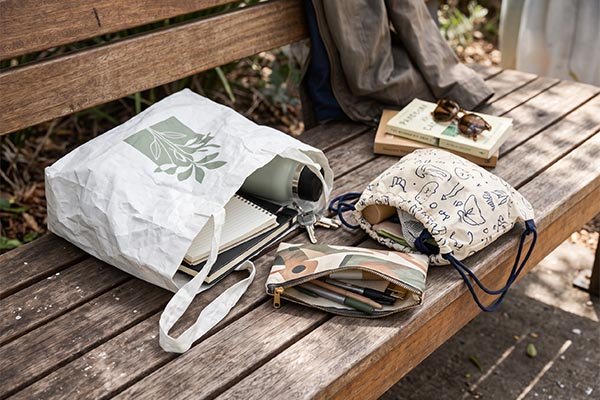
The goal is not to make every bag suitable for every situation. The goal is to develop a product that serves its intended purpose and offers a clear reason for people to keep using it.
How Can Practical Features Encourage Repeat Use?
Practical features should follow the way people will use the bag. A bag that holds the intended contents comfortably is more useful than one that prioritizes appearance while ignoring size and structure.
A compact tote may suit lightweight items, while a gusseted style may offer more room for printed materials or small products. A pouch can help organize accessories, and a suitable closure can keep the contents together.
Buyers should avoid adding details that do not support the product’s purpose. Extra compartments, decorative hardware, or complex closures may increase cost without making the bag more useful.
The material and construction must also match the intended use. Handle attachments, seams, folds, and closure points should be checked when the bag is expected to be used repeatedly. If the product needs to carry a certain weight, the manufacturer should assess its construction against that requirement.
Tyvek bags are not automatically suitable for every daily activity. Buyers should define the intended contents and use conditions before selecting the material and structure.
How Can Memorable Designs Give Merchandise Lasting Appeal?
A clear visual concept can make a merchandise bag feel like a designed product rather than a disposable promotional item. Original illustrations, artist collaborations, and well-planned graphic systems can give the bag a recognizable identity.
However, the design should leave room for the product to function as a bag. A large logo and several promotional messages may make the item look like campaign material. A smaller brand mark combined with a strong illustration can create a more balanced appearance.
Consider a design studio that develops a collection around geometric drawings. The tote could carry a large composition, while a pouch uses one element from the same artwork. The products would look related without repeating the same full graphic.
This approach can make the collection more coherent. It does not guarantee that customers will keep every item, but it gives the merchandise a clearer design purpose and a better connection to the intended audience.
How Can Tyvek Bags Fit into Everyday Life After a Campaign or Event?
The bag’s future use should influence its design from the beginning. A product that only fits campaign materials may have limited use once the event ends. A more flexible size and a restrained design may suit a wider range of situations.
Three potential uses are worth considering:
- Everyday carrying: A suitable tote can hold lightweight personal items or small purchases.
- Storage and organization: A pouch can hold small accessories or printed materials.
- Product packaging and gifting: A bag can continue to serve as packaging when its size and construction suit the product.
The design should match these uses. A large graphic may be suitable for a merchandise collection, while a smaller symbol may work better when the bag is intended for regular carrying. The size should also fit the intended contents without leaving excessive unused space.
Buyers should consider how the bag will be stored when it is empty and whether its opening makes the contents easy to access. These small details can affect whether the product remains practical after the original project has finished.
How Can Buyers Balance Reusability, Design, and Material Selection?
Material selection should reflect the intended use, expected frequency of use, and construction requirements. A lightweight bag may suit a project focused on printed materials, while a bag carrying heavier items needs a suitable material grade and tested reinforcement.
Buyers should assess the whole product rather than the material name alone. The handles, seams, closure, printing, and any additional components all affect how the bag performs over time. For project planning, Avecobaggie’s custom solutions page outlines the steps from initial request and quotation to sampling and production.
Environmental claims also need care. Tyvek is made from HDPE, so it should not be described as plastic-free. DuPont states that 100% Tyvek products can be recycled at facilities that accept flexible HDPE, but local collection options vary. A finished bag with zippers, handles, coatings, or other materials may require a separate assessment.
Buyers should confirm the material composition and check local recycling guidance before making specific disposal claims. The U.S. Environmental Protection Agency’s plastic-waste guidance4 notes that acceptance varies by local recycling programs, so a material’s recyclability does not guarantee that every community will collect it. They should also consider the expected number of uses, production requirements, and transport when assessing the product’s environmental impact.
A creative merchandise bag should bring together visual identity, practical use, and production requirements. The strongest design is one that fits the project, can be manufactured to an agreed standard, and remains useful after the original promotion ends.
Заключение
Custom Tyvek bags can turn creative concepts into distinctive merchandise. With suitable materials, thoughtful construction, tested printing, and clear production specifications, buyers can develop products that balance design, function, and cost.
ЧАСТО ЗАДАВАЕМЫЕ ВОПРОСЫ
Q: What is the difference between Tyvek paper and regular paper?
A: Tyvek has a paper-like appearance, but it is made from high-density polyethylene fibers. Unlike regular paper, it offers different strength, flexibility, and moisture resistance properties.
Q: Can custom Tyvek bags be made in different colors?
A: Yes. Custom Tyvek bags can be developed with different material colors or printed color designs, depending on the available material specifications and production methods. Buyers should confirm the available options with their manufacturer.
Q: Are Tyvek bags suitable for premium brand merchandise?
A: Tyvek bags can suit premium merchandise when the material, artwork, construction, and finishing details match the brand’s positioning. A well-planned design can create a distinctive appearance without relying on expensive decorative elements.
Q: Can Tyvek bags be customized with brand labels or tags?
A: Yes. Custom labels and tags may be added to suitable Tyvek bag designs. Buyers should confirm the label material, attachment method, placement, and compatibility with the bag’s construction before production.
Q: Can I order custom Tyvek bags with different Pantone colors?
A: Buyers can provide Pantone references to guide color matching. Pantone’s overview of color systems explains how spot colors and process colors differ in print production. The final result depends on the selected Tyvek material, printing method, ink system, and production conditions. A physical sample helps confirm the achievable color before bulk production.
Q: Are custom Tyvek bags suitable for direct product packaging?
A: Yes. They can be used for suitable lightweight products, accessories, printed materials, and gift items. The bag dimensions, opening, and construction should match the product’s shape and protection requirements.
Q: Can Tyvek bags include transparent windows?
A: A transparent window may be possible through a suitable material combination and construction method. Buyers should discuss the proposed window material, joining method, appearance, and durability with the manufacturer before approving the design.
Q: Can custom Tyvek bags be produced with different logo sizes for the same brand?
A: Yes. Different bag styles or sizes can use different logo dimensions to maintain suitable proportions. Buyers should provide clear artwork placement instructions for each version and confirm the final layouts before production.
Q: What artwork file formats are suitable for custom Tyvek bag printing?
A: Vector formats such as AI, EPS, and print-ready PDF are commonly used for logos and scalable graphics. High-resolution PNG or TIFF files may also work for certain artwork. The manufacturer should confirm its preferred file format and technical requirements.
Q: Can I develop a new Tyvek bag design based on my own sample or reference image?
A: Yes. Buyers can share a physical sample, reference image, sketch, or design concept to discuss a custom product. The manufacturer can assess the dimensions, construction, materials, and printing requirements before preparing a proposed design and quotation.
-
DuPont’s technical guide discusses printing considerations for Tyvek, including the importance of matching the printing process to the material: Tyvek Printing Guide ↩
-
Adobe explains that vector graphics use paths, points, and curves, allowing logos and illustrations to scale without the pixelation associated with raster images: Vector Files: How to Create, Edit, and Open Them ↩
-
Review the technical considerations for printing on Tyvek, including the material’s temperature limits and the suitability of different printing processes: Tyvek Printing Guide ↩
-
The U.S. Environmental Protection Agency explains that plastic collection rules vary by local program and that not every type of plastic is accepted everywhere: What You Can Do to Reduce Plastic Waste ↩
 English
 Deutsch
 Español
 Português
 Русский
 العربية
 Français
 Italiano
 日本語
 한국어
 Dansk