Перейти к содержанию

Procurement managers often face confusing price gaps for identical-looking canvas bags. This inconsistency delays purchasing decisions and risks budget overruns for brand extensions.
Two custom bags from the same material have different prices because fabric weight, printing methods, structural complexity, and sewing quality vary. Material type only represents the base component. Additional manufacturing requirements and quality standards dictate the final cost of reliable marketing solutions.
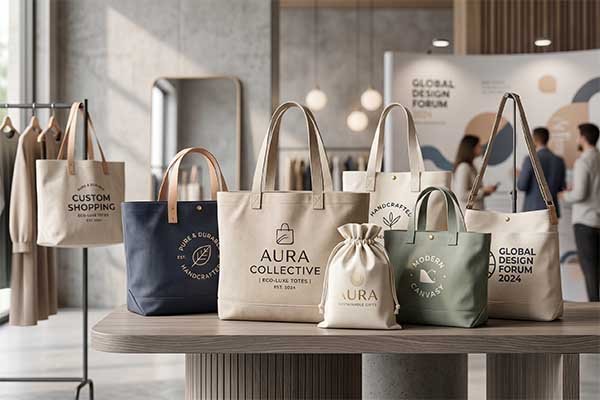
Understanding the true breakdown of manufacturing costs allows brands to secure stable, replicable custom bag solutions without sacrificing presentation effects.
What Hidden Factors Affect Custom Bag Pricing Beyond Material Type?
Supply chain managers risk ordering inferior products when they assume identical material names guarantee identical quality. This oversight often leads to inconsistent batches and failed promotional campaigns.
Material names are broad categories. A single material family features varying weights, recycled content percentages, and processing methods. Printing costs, accessory choices, and strict quality control protocols further separate low-end products from valuable brand assets.
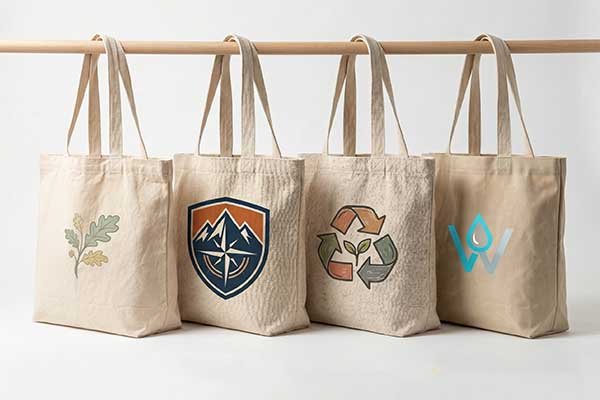
The custom bag quotation process involves multiple cost components. Buyers must evaluate these elements to avoid unexpected cost increases. Professional procurement managers break down every quote to understand the true value of the product.
Cost Breakdown in Bag Quotations
| Component | Impact on Final Price | Описание |
|---|---|---|
| Raw Fabric | Высокий | Determined by grade, thickness, and market rates. |
| Печать | Высокий | Dependent on logo size, colors, and specific techniques. |
| Аксессуары | Средний | Includes zippers, tags, and custom hardware. |
| Labor | Высокий | Varies based on structural complexity and stitching standards. |
| Packaging | Низкий | Standard polybags versus custom printed boxes. |
Companies must analyze more than the raw material name. The term "canvas" includes light weights for cheap giveaways and heavy weights for retail sales. The term "RPET" features different ratios of recycled plastics1. Manufacturers apply different processing methods to materials like Tyvek, altering the texture and price.
Focusing strictly on unit price is a poor strategy for long-term B2B procurement. Cheap bags often hide high defect rates and poor printing quality. Quality problems damage brand image and result in financial losses. Procurement teams achieve better marketing outcomes by understanding the exact specifications behind every quote.
Why Does Fabric Weight Significantly Impact the Cost of a Custom Bag?
Purchasing teams frequently receive complaints about flimsy promotional bags. Selecting an improper fabric weight wastes marketing budgets and creates a negative brand perception.
Fabric weight determines thickness and durability. Heavier fabrics require more raw material per square meter, directly increasing the manufacturing cost. Thicker materials offer superior structural integrity and higher perceived value for brand extensions.
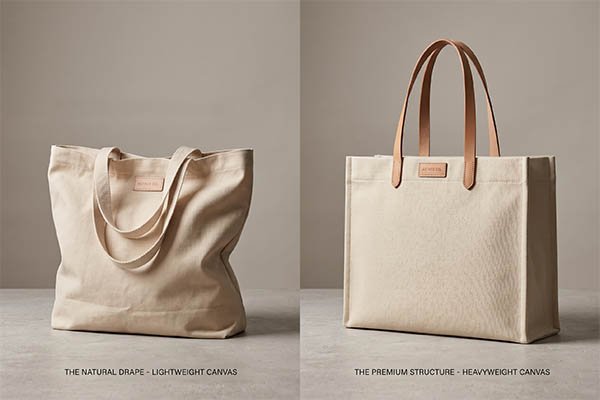
Manufacturers measure fabric weight in ounces (oz) or grams per square meter (GSM)2. This measurement dictates the total material consumption for every single unit. Buyers must specify this number clearly.
Material Consumption by Fabric Weight
| Weight Standard | Primary Application | Cost Implication |
|---|---|---|
| 4oz – 6oz | Budget promotional events | Very Low Cost |
| 8oz – 10oz | Standard grocery and retail bags | Moderate Cost |
| 12oz – 14oz | Premium retail brand extensions | High Cost |
| 16oz+ | Heavy-duty utility applications | Maximum Cost |
Heavier materials consume more raw cotton or polyester. This increases the base price immediately. Brands choose heavier weights to create a premium feel. A thick bag holds heavy items securely and lasts for years. This longevity generates extended marketing value for the company.
However, lightweight fabrics remain useful for specific B2B applications. Startups select 6oz canvas for massive trade show giveaways. Thin materials keep budgets low while still delivering wide brand visibility. Procurement managers must align the fabric weight with the specific marketing objective to optimize the return on investment.
How Do Printing Methods and Customization Options Change Manufacturing Costs?
Brands often underestimate printing expenses when designing complex logos. Choosing an incompatible printing technique causes severe logo defects and ruins the visual appeal of the product.
Printing methods carry distinct setup and labor costs. Simple silk screen printing remains inexpensive for single colors. Digital printing, embroidery, and multi-color heat transfers require specialized machinery and longer production times, significantly raising the final unit price.
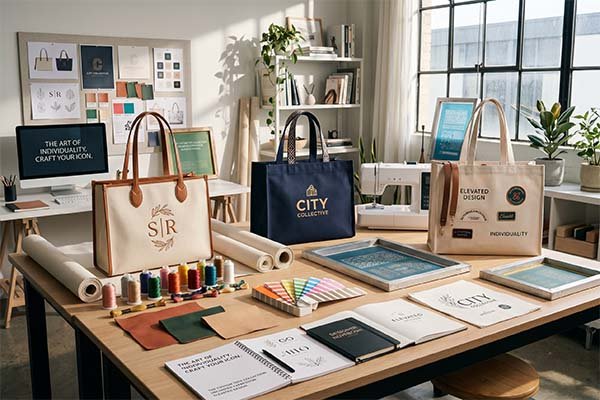
Logo size and color complexity dictate the necessary printing method. A large logo covering the entire bag requires excessive ink and longer machine operation.
Custom Bag Printing Techniques
| Technique | Ideal Scenario | Setup Cost | Unit Cost Impact |
|---|---|---|---|
| Silk Screen | 1-2 solid colors, simple shapes | Низкий | Низкий |
| Теплопередача | Multi-color logos, gradients | Средний | Умеренный |
| Сублимация | Full-surface vibrant patterns | Высокий | Высокий |
| Digital Print | High-resolution photographs | Низкий | Высокий |
| Вышивка | Premium logos, small text | Высокий | Очень высокий |
A single-color screen print3 is standard and economical. A five-color logo requires five separate screens and passes, multiplying the labor and setup fees.
Premium branding elements further elevate the cost. Woven tags, metal nameplates, and foil stamping provide distinct marketing advantages but require specialized manufacturing steps. Companies often overlook minor details like custom hang tags, inner labels, and individual barcode stickers. These elements ensure accurate inventory management and professional presentation, but they add incremental costs to every manufactured unit.
Why Can Two Bags with the Same Dimensions Have Different Production Costs?
Buyers frequently express frustration when identically sized bags carry vastly different price tags. Ignoring structural complexity leads to inaccurate budget forecasting and supplier disputes.
Bag structure determines material yield and sewing time. Gusseted bottoms, multiple pockets, and reinforced handles require additional fabric and labor. Complex designs reduce production efficiency, increasing the overall cost despite having identical front dimensions.
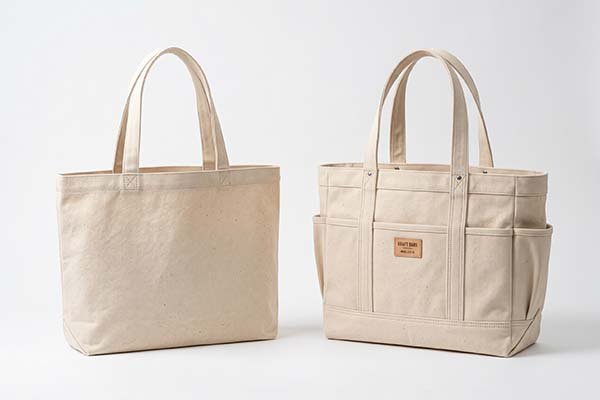
Dimensions do not reveal the complete material usage. A simple flat tote bag has no side panels or bottom fold. A box-bottom bag requires complex cutting and folding.
Structural Impact on Cost
| Bag Structure | Material Efficiency | Labor Intensity | Cost Level |
|---|---|---|---|
| Flat Tote | High Yield | Низкий | Самый низкий |
| Нижняя ластовица | Moderate Yield | Умеренный | Средний |
| Full Box Base | Low Yield | Высокий | Highest |
Functional features significantly extend production time. Adding inner zipper pockets, magnetic snaps, and velcro closures requires extra assembly steps. Handles also play a major role in pricing. Wide, double-layered handles use twice the material. Cross-stitched handle reinforcements take longer for sewing operators to complete.
Sewing quality directly affects the factory’s output rate. A factory using single-needle stitching produces units rapidly. A factory applying double-needle stitching and strict defect control operates slower. This lower output rate increases the labor cost per bag. Brands pay extra for rigorous quality control to ensure long-term reliability and protect their market reputation.
How Can Buyers Evaluate Custom Bag Quotes and Identify the Best Value?
Comparing vague quotes creates high supply chain risks. Selecting the absolute lowest price often results in defective shipments, delayed lead times, and damaged client relationships.
Buyers secure the best value by establishing unified quoting standards. Procurement managers must specify fabric weights, printing details, structural requirements, and packaging methods. Evaluating these components ensures fair supplier comparisons and delivers reliable, high-ROI marketing solutions.
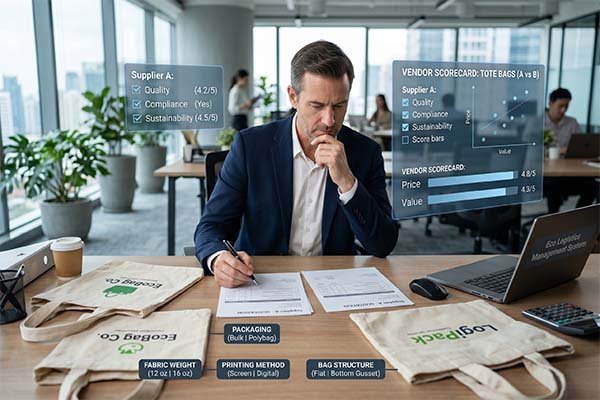
B2B buyers must analyze quotes methodically. Accepting a total price without a breakdown is a major mistake. Procurement teams need answers to specific questions before making purchasing decisions. Companies must partner with reliable bag manufacturers that provide transparent pricing data.
Essential Quote Evaluation Checklist
| Evaluation Category | Key Questions to Ask Suppliers |
|---|---|
| Material Specs | What is the exact fabric weight and grade? |
| Production Details | Which printing method is included? |
| Packaging | Are individual polybags included in the unit price? |
| Logistics | Does the price cover sea freight or air freight? |
| Quantity Levels | What is the pricing difference between 1,000pcs and 5,000pcs? |
Minimum Order Quantities (MOQ) strongly influence the final price. Larger orders distribute setup costs across more units, lowering the individual item price.
The best value combines stable lead times, consistent batch quality, and effective brand presentation. A slightly higher initial cost often prevents massive downstream losses from defective goods. Brands achieve success by viewing custom bags as strategic marketing investments rather than disposable commodities.
Заключение
Material type is just one pricing factor. Fabric weight, structural complexity, and printing methods drive costs. Procurement managers must evaluate the complete specification to secure valuable, replicable marketing solutions.
Часто задаваемые вопросы
Q: How do custom quilted bags elevate brand presentation compared to single-layer alternatives?
A: Custom quilted bags utilize a premium three-layer structure consisting of an outer shell, internal padding, and an interior lining. This construction presents a high-value structural solution that enhances perceived brand prestige rather than acting as a simple promotional giveaway.
Q: What is the procedure for matching brand colors exactly during production?
A: Precise brand identity management requires exact Pantone color matching. Factories apply specific dyeing processes or specialized printing techniques to align the final product exactly with established corporate brand guidelines.
Q: How does investing in a higher-tier manufacturing standard affect overall marketing ROI?
A: Upgrading manufacturing standards reduces defect rates and increases product longevity. A durable, well-crafted brand extension remains in circulation longer, maximizing continuous brand visibility and improving the overall return on the initial marketing investment.
Q: Can modular design elements be incorporated into custom bag projects?
A: Yes, modular elements such as detachable straps, interchangeable pouches, or multi-functional hardware can transform a standard bag into a versatile marketing solution, adding utility for the end-user and value to the brand.
Q: Are there flexible scaling options for growing procurement needs?
A: Procurement programs are structured to scale alongside business growth. Custom manufacturing solutions adjust to accommodate expanding global distribution needs without relying on rigid, publicly stated order minimums, ensuring commercial flexibility.
Q: How are product prototypes managed before full-scale manufacturing begins?
A: Prototyping allows procurement teams to verify structural integrity, logo placement, and material feel. Adjustments to the design or construction can be finalized during this phase to ensure the final product perfectly represents the intended brand extension.
Q: What logistics arrangements support international procurement projects?
A: Global supply chain services include coordinating international freight handling, customs documentation, and delivery schedules. Professional logistics management ensures marketing materials arrive safely for planned promotional campaigns.
Q: How does transitioning from a product-focused approach to a solutions-focused approach benefit buyers?
A: A solutions-focused approach analyzes the core marketing objective rather than just the physical item. This strategy aligns material selection, structural design, and finishing details with the ultimate goal of driving customer engagement and maximizing brand equity.
Q: Are custom labeling and specialized retail packaging integrated during production?
A: Comprehensive manufacturing services include applying custom woven tags, interior branding, and individual retail packaging at the factory level. This integration streamlines the supply chain and prepares the products for immediate distribution.
Q: What methods ensure consistency across multiple production batches over time?
A: Maintaining strict technical specification sheets and retaining approved physical master samples ensures long-term consistency. Standardized quality control protocols reference these masters during every production run to guarantee uniformity across all future brand extensions.
-
Familiarizing yourself with the recycling processes of plastics like PET can help you better evaluate the true sustainability and environmental footprint of eco-friendly materials. ↩
-
Grammage, more commonly known in textiles as GSM, is a standardized metric measurement of fabric weight, which serves as a crucial indicator of material density and overall durability. ↩
-
Screen printing is a reliable and highly common printing technique where a woven mesh is used to transfer ink onto a substrate, perfect for solid, vibrant colors. ↩

 English
  Deutsch
  Español
  Português
  Русский
  العربية
  Français
  Italiano
  日本語
日本語  한국어
한국어  Dansk
Dansk