Gå direkte til indholdet

Retail buyers often focus on individual bag designs when developing a new collection. However, a group of attractive products does not always make a strong retail range. Poor SKU planning, inconsistent branding, and unclear product positioning can create problems later.
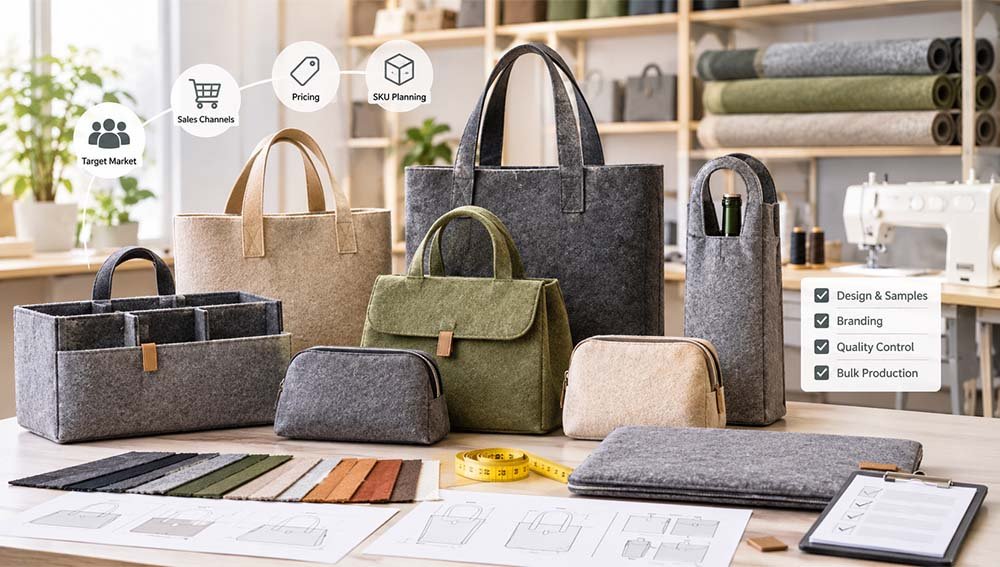
To develop a private label felt bag collection, buyers should first define their target market, select complementary bag styles, establish consistent branding, confirm product specifications, and work with a manufacturer that can manage multi-SKU production.
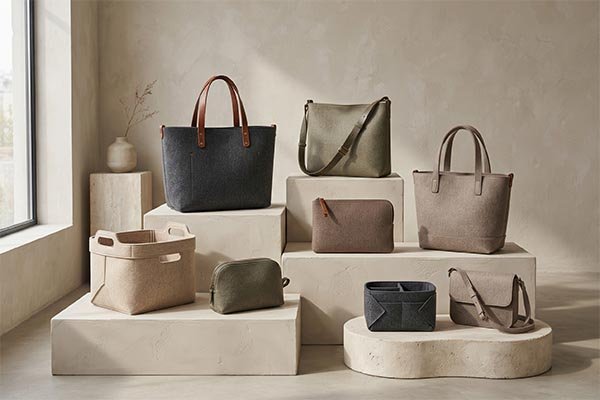
A successful felt bag collection needs more than several products with the same logo. Each style should have a clear role in the product range, and the whole collection should look like it belongs to the same brand. For retail businesses, good planning also helps control purchasing costs, reduce inventory risks, and make future product expansion easier. So, where should buyers start?
What Should Buyers Consider Before Developing a Custom Felt Bag Collection?
A new collection should start with a clear business plan. Buyers need to understand who will purchase the products and which sales channels they will use before selecting specific bag styles.
Before developing a custom felt bag collection, buyers should define their target customers, retail channels, expected price range, and initial product quantity. These decisions help determine which products to develop and how many SKUs to include in the first order.
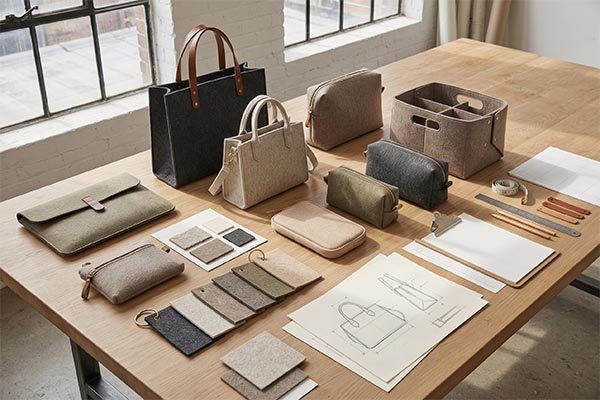
The first product range does not need to cover every possible market. A focused collection is easier to develop, manage, and test. Buyers can start with a few products that match their main customers and expand the range after they receive sales feedback.
How Do Target Markets and Retail Channels Influence Product Development?
Different B2B buyers have different expectations when they develop private label felt bags. A brand owner may want a distinctive product range that supports its brand image. A wholesaler may focus more on product variety, competitive prices, and repeat order potential.
Retail channels also affect product decisions. Products sold through online stores need clear product photos, attractive designs, and practical packaging. Physical retail stores may need products with different sizes and price points to create a more complete shelf display. Gift shops often prefer decorative details and gift-ready packaging, while wholesale distributors need styles that can serve different retail customers.
Buyers should consider these differences before choosing their products.
| Target Customer | Main Development Focus |
|---|---|
| Brand Owners | Brand identity, exclusive designs, and private labeling |
| Retailers | Product appearance, shelf presentation, and selling prices |
| Wholesalers | Product variety, cost control, and repeat orders |
| Importers | Stable quality, production capacity, and delivery schedules |
| Distributors | Flexible product ranges and different market requirements |
The sales channel also affects product specifications. An online retailer selling felt storage bags may need several sizes and clear product packaging information. A gift shop in the UK may prefer felt wine bags and small decorative bags with attractive hang tags.
Buyers should connect product development decisions with their actual sales channels. This approach helps avoid developing products that look good in samples but do not fit the needs of their customers.
How Should Buyers Plan Their Initial Product Range and SKU Quantity?
The first collection should be large enough to offer customers a choice, but it should not create unnecessary inventory pressure. Developing too many styles at the beginning can increase sampling costs, complicate production, and make stock management harder.
For a new retail collection, buyers can start with around 3–5 core styles. This is a practical starting point rather than a fixed rule. The final number should reflect the purchasing budget, sales channel, and expected demand. A useful reference for retail assortment planning1 can help buyers think about product categories, variations, and inventory allocation.
A useful starting structure could include:
- Core products: Two or three main felt bag styles that represent the collection.
- Complementary products: One or two smaller products that support the main range.
- Future development: Additional sizes, colors, or structures based on customer feedback.
Buyers should also avoid creating too many SKUs that look almost identical. A felt tote bag in three slightly different sizes may not provide enough variety if the products serve the same purpose and have similar prices.
Instead, each SKU should have a clear reason to exist. One tote could focus on everyday retail use, while another could have a larger capacity and stronger structure. A small felt organizer could then provide a lower-priced option within the same collection.
Buyers can keep the initial collection focused and reserve new colors, sizes, and designs for later releases. This gives the business room to grow without making the first purchasing decision too complicated.
How Can Brands Build a Competitive Wholesale Felt Bag Product Range?
A retail collection needs a clear product structure. Buyers should select styles that serve different purposes instead of simply collecting several similar felt bags.
A competitive wholesale felt bag range can combine felt tote bags, storage bags, wine bags, and organizers. Each product should serve a different market need, while the full collection should offer suitable choices across different price points.
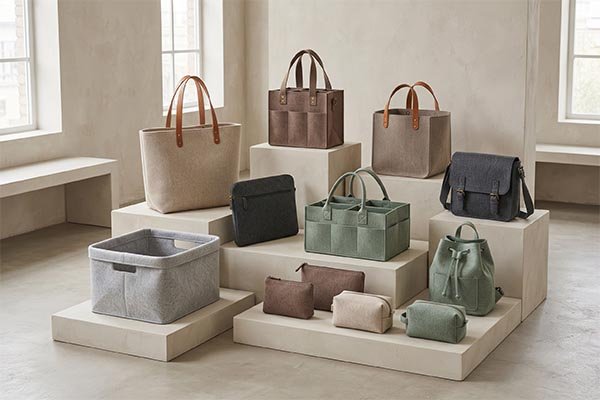
The goal is to create a product range that retailers can present and sell as a collection. This requires careful product selection and a clear understanding of how each style supports the business.
Which Felt Bag Styles Should Buyers Include in a Wholesale Collection?
Felt bags come in different structures and sizes. Buyers do not need to include every available style. They should select products based on their expected customers and the role each product plays in the collection.
Some styles have stronger potential as core products, while others work better as supporting items.
| Product Style | Commercial Position | Potential Retail Channels |
|---|---|---|
| Felt Tote Bags | Core everyday product | Fashion retailers, gift shops, lifestyle stores |
| Felt Storage Bags | Home and organization category | Homeware retailers, online stores |
| Felt Wine Bags | Gift and seasonal product | Gift shops, supermarkets, wine retailers |
| Felt Organizers | Complementary product | Lifestyle stores, homeware retailers |
Felt tote bags are a practical starting point because they can support different sizes, colors, and branding options. Buyers can develop a basic shopping tote and a larger version for customers who need more carrying space. For example, custom felt tote bags can provide a reference for different sizes and branding options.
Felt storage bags can expand the collection into the home organization market. Different sizes can create a more complete range without requiring a completely different material or visual direction.
Felt wine bags have a more specific retail position. A single-bottle design can serve everyday wine purchases, while a two-bottle version may suit gift retailers and holiday promotions. Buyers can explore custom felt wine tote bags as one possible product category.
Felt organizers can fill smaller gaps in the range. Their compact size and different compartment layouts can provide additional product choices for lifestyle and homeware retailers.
The best product mix is not necessarily the one with the most styles. It is the one where every product has a clear customer and selling purpose.
How Can Brands Balance Core Products, Complementary Styles, and Price Points?
A good collection needs a clear product hierarchy. Buyers should decide which products will attract the most customers, which products will increase product variety, and which products will serve customers with different budgets.
Core products should receive the most attention during development. These products usually represent the main style of the collection and may account for a large share of expected sales. A felt tote bag, for instance, could become the main product for a lifestyle brand.
Complementary styles help the collection reach more customers. A felt wine bag or small organizer can give retailers additional products to display alongside the main tote bags.
Product differentiation also matters. Buyers can create meaningful differences through:
- Dimensions and carrying capacity.
- Bag structure and bottom design.
- Handle length and construction.
- Internal pockets or dividers.
- Decorative details and branding elements.
Price positioning should follow these product differences. A simple felt tote with standard handles will usually have a different cost structure from a storage bag with reinforced panels, multiple compartments, and additional accessories.
| Product Level | Product Example | Main Purpose |
|---|---|---|
| Entry Level | Basic felt wine bag | Provide an accessible price option |
| Core Range | Custom felt tote bag | Represent the main collection |
| Higher Specification | Large felt storage bag with compartments | Offer more features and a higher selling price |
Buyers should also consider purchasing quantities when setting price targets. A more complicated design may require additional cutting, sewing, and assembly work. These details can affect the unit price, especially when the order quantity is small.
A balanced collection gives retailers enough product variety without creating unnecessary competition between similar SKUs. Buyers should focus on meaningful differences rather than adding new products just to make the catalog look larger.
How Can Manufacturers Maintain Brand Consistency Across Different Felt Bag Styles?
A collection can include several different bag structures and still look unified. The key is to establish common visual elements before production starts.
Brands can maintain consistency across different felt bag styles by coordinating colors, logo placement, labels, handles, decorative details, and packaging. These elements help customers recognize the products as part of the same collection.
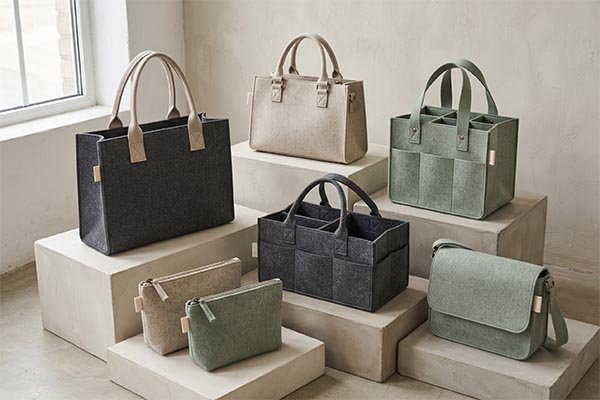
Brand consistency does not mean every product needs to look exactly the same. Each style should keep its own product identity while following the same overall design direction.
How Should Brands Coordinate Colors, Logos, and Branding Elements?
Color planning is one of the easiest ways to connect different products. Buyers should select a small group of main colors and supporting colors before developing individual styles.
For instance, a lifestyle brand could use charcoal grey, beige, and dark green as its main felt bag colors. These colors can appear across tote bags, storage bags, and wine bags in different combinations.
This creates a recognizable collection without forcing every product to use the same color.
Logo placement also needs planning. A large logo may work well on a felt tote bag, but it may look too crowded on a small wine bag. Buyers should consider the available logo area and the proportions of each product.
| Branding Element | Development Consideration |
|---|---|
| Main Colors | Select a consistent color palette for the collection |
| Logo Size | Adjust the logo according to each bag’s dimensions |
| Logo Position | Keep placement visually consistent where possible |
| Woven Labels | Use a shared label design across different styles |
| Leather Labels | Apply where the product style and brand image allow |
| Hang Tags | Maintain consistent logo, typography, and layout |
Buyers can also use woven labels or leather labels to connect products with different structures. A small woven label may suit a basic felt tote, while a leather label may fit a more decorative storage bag.
However, the branding elements should not compete with the product design. Too many labels, colors, and decorative details can make the collection look inconsistent.
A clear color palette and a small set of shared branding elements are usually enough to create a recognizable private label collection.
How Can Design Details and Packaging Create a Unified Collection?
Brand consistency also comes from small design details. Buyers should look at the entire product rather than focusing only on the main body and logo.
Handles are a good starting point. A collection could use similar handle widths, colors, and attachment styles across different tote bags. Storage bags may require different handle structures, but buyers can still keep the same color or finishing details.
Other details can follow the same design direction:
- Similar edge finishing and stitching colors.
- Coordinated metal accessories, where applicable.
- Consistent handle colors and attachment details.
- Related pocket shapes and decorative patterns.
- Matching hang tags and product labels.
Packaging should follow the same visual identity. A retail collection with beige and dark green felt bags may look disconnected if the packaging uses bright colors and unrelated graphic elements.
Buyers should also consider how products will be displayed in stores. Individual product packaging should protect the bags during transportation without making them difficult to display. Hang tags can carry product names, sizes, material information, and brand details.
For online retailers, consistent packaging can also improve the appearance of product photography and the customer experience when orders arrive.
There is no need to add complicated packaging to every product. A shared hang tag design and consistent packaging materials may be enough for a mid-range retail collection.
The goal is to make the collection recognizable through repeated details. Customers should be able to identify the brand even when they see different bag styles displayed next to each other.
What Should Buyers Confirm Before Placing Bulk Orders for Custom Felt Bags?
A product collection may contain several SKUs, and each one can have different dimensions, structures, and accessories. Buyers need to confirm these details before approving bulk production.
Before placing bulk orders, buyers should approve the sample and final specifications for each felt bag style. They should also confirm dimensions, colors, handles, compartments, branding, and packaging to reduce differences between samples and mass production.
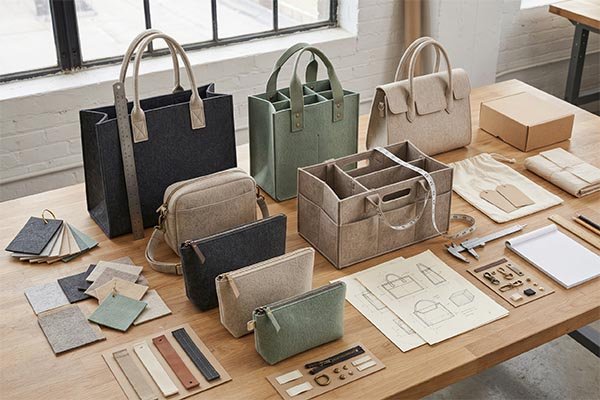
A single approved sample does not automatically cover every product in the collection. Each design needs clear specifications, especially when different structures require different production steps.
What Product Specifications and Sample Details Should Buyers Approve?
Each bag style should have its own approved sample or clearly confirmed production reference. A felt tote bag and a felt storage bag may use the same material, but their structures and assembly requirements can be very different.
Buyers should check the actual samples and record the approved specifications. Verbal confirmation alone can create confusion when several products enter production at the same time.
The following table shows the main details that buyers should confirm.
| Specification | Details to Confirm |
|---|---|
| Product Dimensions | Length, width, height, and size tolerance |
| Felt Material | Material type, thickness, weight, and color |
| Bag Structure | Body panels, bottom, gusset, and overall shape |
| Handles | Length, width, material, and attachment position |
| Functional Details | Pockets, dividers, closures, and compartments |
| Branding | Logo size, position, labels, and approved artwork |
| Emballage | Hang tags, individual packing, and carton requirements |
Buyers should pay particular attention to material thickness and product dimensions. A small change in felt thickness can affect the bag’s appearance, flexibility, and overall structure. The felt bag material and customization process can help buyers understand the available material and specification choices.
Logo details also need a clear reference. Buyers should provide the final artwork and confirm its size and position on each product. If the same logo appears on different bag styles, the placement may need adjustment to fit the available space.
A product specification sheet can help organize all these details. It should include product drawings or reference photos, measurements, materials, colors, and approved accessories.
Buyers should treat the approved sample and specification sheet as the production reference for every SKU. This gives the factory a clear standard and makes later quality checks easier.
How Can Buyers Coordinate Multi-SKU Production and Manage Inventory Risks?
Multi-SKU orders require more planning than orders with only one bag style. Different products may need different cutting patterns, sewing steps, accessories, and production times.
Buyers should first confirm the order quantity for each SKU. They should not assume that every style needs the same quantity. A core felt tote may require 1,000 pieces, while a new felt wine bag may only need 300 pieces for an initial market test.
Production planning should also consider the complexity of each design. A simple felt tote may be ready for production sooner than a storage bag with several compartments and reinforced sections.
Buyers can organize their production requirements in a simple table.
| SKU | Product Style | Quantity | Main Production Consideration |
|---|---|---|---|
| FB001 | Felt Tote Bag | 1,000 pcs | Main collection product |
| FB002 | Felt Storage Bag | 500 pcs | Additional structure and assembly |
| FB003 | Felt Wine Bag | 300 pcs | Smaller product with separate specifications |
| FB004 | Felt Organizer | 400 pcs | Compartment and size checks |
These quantities are only an example. Actual orders should reflect the buyer’s sales forecasts and available budget.
Buyers should also coordinate common production requirements. Shared material colors, logo artwork, hang tags, and packaging can make multi-SKU orders easier to manage. However, each product still needs its own quality inspection standards.
Inventory planning deserves attention as well. A large first order may reduce unit costs, but it can leave buyers with slow-moving products. This is especially risky when a collection includes several new styles that have not been tested in the market.
A practical approach is to place a controlled first order, review sales performance, and prepare repeat orders based on actual demand. Buyers should also discuss material availability and production lead times with the manufacturer so that popular products can be replenished without unnecessary delays.
Good multi-SKU management starts with clear quantity planning, coordinated production schedules, and consistent quality standards.
How to Choose the Right Private Label Felt Bag Manufacturer for Your Business?
The manufacturer plays a direct role in the quality and consistency of the final collection. Buyers need a partner that can handle different bag structures and manage the full development process.
The right private label felt bag manufacturer should have experience with multiple bag styles, OEM/ODM development capabilities, flexible customization options, reliable quality control, and experience managing international B2B orders.
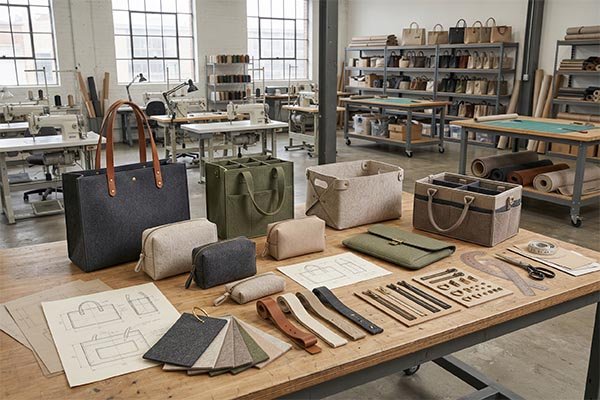
A factory that only produces one basic bag style may not be suitable for a collection that includes totes, storage bags, wine bags, and organizers. Buyers should evaluate the manufacturer’s actual development and production capabilities before placing an order.
What Manufacturing Capabilities Should Buyers Look for in an OEM/ODM Partner?
Buyers should first check whether the manufacturer has experience with the product categories they want to develop. Experience with felt tote bags does not always mean the factory can produce structured storage bags or organizers with multiple compartments.
A suitable OEM/ODM partner should support different stages of product development. Buyers can review the custom felt bag manufacturing capabilities to understand the types of felt products and customization options available.
| Manufacturing Capability | What Buyers Should Check |
|---|---|
| Product Development | Experience with different felt bag structures |
| OEM Services | Ability to produce according to supplied designs |
| ODM Services | Support with product concepts and design development |
| Sampling | Ability to make samples for different SKUs |
| Branding | Custom logos, woven labels, hang tags, and packaging |
| Quality Control | Material checks, sample approval, and production inspections |
| Export Experience | Order coordination, packing, and international shipping |
OEM services are suitable for buyers who already have product designs, drawings, or detailed specifications. The manufacturer follows the supplied requirements and produces the bags according to the approved standards.
ODM services provide more development support. Buyers can share product ideas, reference photos, or basic requirements, and the manufacturer can help turn them into workable product designs.
Quality control is another important factor. Buyers should ask how the factory checks material colors, dimensions, stitching, logo placement, and finished products. The manufacturer should also have a clear process for checking consistency across different production batches.
For a private label collection, the ability to manage several SKUs is especially useful. Buyers should confirm whether the manufacturer can coordinate different samples, specifications, production schedules, and packaging requirements within one project.
How Can Buyers Evaluate a Manufacturer and Prepare for a Custom Quote?
A manufacturer’s website and product catalog can provide a first impression, but buyers should look for more direct evidence of its capabilities.
Ask for photos of similar products and check whether the manufacturer has produced different felt bag structures. Buyers can also request sample development to evaluate material quality, construction, and finishing before committing to bulk orders.
Communication is another useful indicator. A reliable manufacturer should understand the product requirements, identify unclear specifications, and explain possible production limitations. Quick replies are helpful, but accurate answers are more important.
Before requesting a quote, buyers should prepare the following information:
- Product References: Photos, drawings, or existing product samples.
- Estimated Quantity per SKU: Expected order quantities for each bag style.
- Dimensions and Specifications: Product measurements, material requirements, and structural details.
- Logo Artwork: Final logo files and preferred branding positions.
- Packaging Requirements: Hang tags, labels, individual packaging, and carton details.
- Target Delivery Schedule: Expected sample approval and bulk shipment dates.
Buyers do not need to have every detail finalized before contacting a manufacturer. However, providing clear product references and estimated quantities will help the factory understand the project and prepare a more accurate quotation.
At Avecobaggie, we support B2B customers with custom bag development and OEM/ODM services, material selection, branding, sampling, and bulk production. Our product range includes felt bags, cotton bags, canvas bags, rPET bags, Tyvek bags, and other custom bag solutions.
We work with brand owners, wholesalers, distributors, and businesses that need multiple bag styles within one product collection. Whether you already have finished designs or only have an initial product idea, our team can help review your requirements and develop suitable options.
If you are planning a private label felt bag collection, contact Avecobaggie with your product references, estimated quantities, and customization requirements. Request a Custom Quote to discuss your project.
Konklusion
A successful private label felt bag collection needs clear product planning, consistent branding, controlled SKU quantities, and a manufacturer that can support long-term production.
Frequently Asked Questions
Q: What Types of Felt Are Commonly Used for Custom Felt Bags?
A: Common options include polyester felt, recycled polyester felt, and wool felt. Each material has different characteristics in terms of texture, appearance, durability, and cost. Buyers should select materials based on the intended product positioning and customer expectations.
Q: Can Felt Bags Be Made from Recycled Materials?
A: Yes. Felt bags can be manufactured using recycled polyester fibers, including fibers made from recycled plastic bottles. Buyers can request material information and supporting documentation to verify recycled content claims. Textile Exchange’s overview of polyester provides additional background on conventional and recycled polyester fibers.
Q: Are Felt Bags Suitable for Everyday Retail Use?
A: Yes. Felt bags are suitable for many everyday retail applications, such as shopping, carrying personal items, and home organization. Their suitability depends on material thickness, construction quality, and the weight they are expected to carry.
Q: Can Custom Felt Bags Be Produced in Different Thicknesses?
A: Yes. Manufacturers can usually offer different felt thicknesses according to the product design. Thicker felt provides a more structured appearance, while thinner felt offers greater flexibility and can help reduce material costs.
Q: How Should Retailers Store Felt Bags Before Selling Them?
A: Retailers should store felt bags in a clean, dry, and well-ventilated area. Bags should be protected from moisture, direct sunlight, and excessive pressure to help maintain their original shape and appearance.
Q: Do Felt Bags Need Special Care Instructions?
A: Felt bags generally benefit from simple care instructions. Buyers can recommend removing surface dust with a soft brush and cleaning small stains carefully according to the material manufacturer’s guidance. Washing methods should be tested before being recommended to customers.
Q: Are Felt Bags Suitable for Seasonal Retail Collections?
A: Yes. Felt bags work well in autumn and winter retail collections because of their soft texture and warm appearance. Retailers can also develop gift-oriented designs for Christmas, Mother’s Day, and other seasonal promotions.
Q: Can Felt Bags Be Designed with Different Levels of Stiffness?
A: Yes. The stiffness of a felt bag depends on factors such as fiber composition, material thickness, density, and product construction. Buyers can discuss the desired shape and structure with the manufacturer during product development.
Q: Are Felt Bags Suitable for Corporate Promotional Gifts
A: Yes. Felt bags can be used for corporate gifts, employee welcome kits, trade show merchandise, and branded event giveaways. Their surface also provides space for company logos and other branding elements.
Q:What Information Should Be Included on Felt Bag Product Labels?
A: Retail product labels may include the product name, material composition, country of origin, care instructions, brand information, and relevant product details. Buyers should check the labeling requirements of their target markets before finalizing the label design. For US-bound products, the FTC’s apparel and textile labeling guidance is a useful starting point for understanding relevant labeling rules. Requirements can vary depending on the product and material.
-
Shopify explains retail assortment planning, including how businesses can organize product categories, variations, and inventory to better match customer demand. ↩


 English
 Deutsch
 Español
 Português
 Русский
 العربية
 Français
 Italiano
 日本語
 한국어
 Dansk