Saltar al contenido

In 2026, reusable bags are shifting from a simple eco-friendly choice to a core business decision. For years, the industry focused only on materials, certifications, and costs. But now, brands are asking a harder question. They want to know if the bag will actually be used.
The trend in 2026 moves beyond just materials. It focuses on usage methods, system value, and long-term returns. Brands want bags to stay in consumers’ lives. This creates real value and becomes a true brand asset.
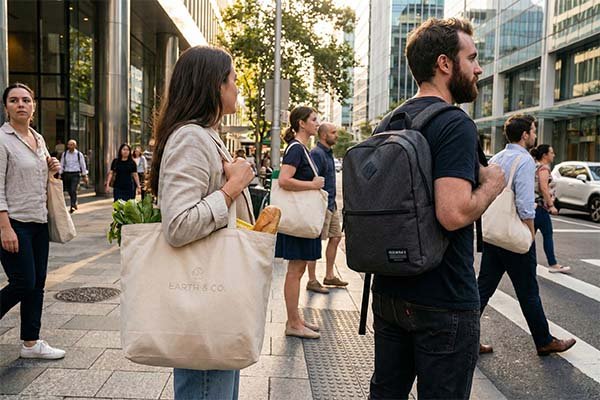
The market has changed. We used to look at a bag as a standalone item. Now, we must see it as part of a larger picture. If a bag does not fit into a consumer’s daily life, it is waste. We need to look at how these bags fit into brand systems.
What Role Do Reusable Bags Play in Brand Systems in 2026?
A reusable bag is often treated as a lonely giveaway item. This approach misses a big opportunity to connect with customers. It creates a fragmented brand experience.
Reusable bags now act as connectors within brand systems. They appear in stores, hotels, and events. This creates a unified visual experience. It is a low-cost way to get long-term exposure across different scenarios.
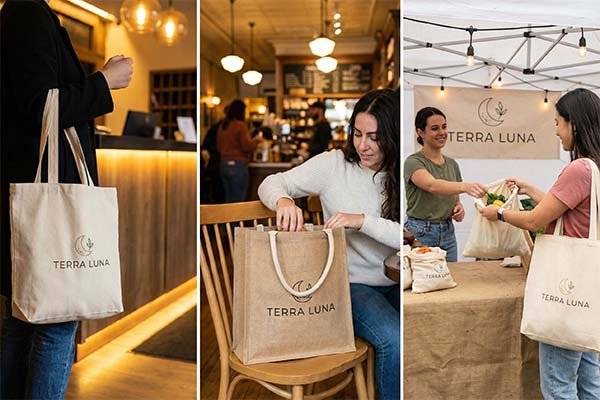
We need to stop thinking about bags as single products. In 2026, a reusable bag is a touchpoint. It connects the brand to the customer in many places. I see brands using the same high-quality bag logic across different channels. You might see a similar design style in a retail store, a hotel room bag, and a VIP event gift bag. This is not an accident. It is a strategy.
Brands want to keep a unified visual experience. The bag becomes a mobile sign for the brand. It travels from a shop to a home, and then to a gym or office. This makes the reusable bag the lowest-cost medium for long-term exposure. It is not just about holding products. It is about holding the brand image together. When a customer sees the consistent quality in a hotel welcome kit and a retail package, they trust the brand more. We must view these bags as "brand reusable bags" that support the whole system.
| Old Approach | 2026 System Approach |
|---|---|
| Isolated giveaway item | Part of a brand ecosystem |
| Different designs for every event | Unified visual identity |
| Short-term use | Long-term brand touchpoint |
| Focus on the single transaction | Focus on the customer journey |
Why Are Brands Shifting from Giveaway Bags to Long-Term Reusable Assets?
Many brands buy cheap bags to give away in large numbers. They think high volume equals high success. But these cheap bags often end up in the trash very quickly.
The goal in 2026 is less quantity and more quality. Brands want bags to last years, not days. The frequency of use creates the real value, not just the number of bags distributed.
The logic of quantity is changing. In the past, brands wanted to flood the market. They bought thousands of cheap non-woven bags. They gave them to everyone. But we have to look at the data. If a customer uses a bag once and throws it away, the value is zero. It is also bad for the planet.
Now, brands prefer to control the quantity. They invest more in each bag to make it better. They want the bag to survive for two years, not two days. Think about the Return on Investment (ROI)1. A slightly more expensive bag that a customer uses 100 times costs very little per impression. A cheap bag that is used once is actually expensive. Brands are starting to value "being kept." They want their bag to be the one distinct bag that a person keeps in their car or hallway. This is the shift from a "giveaway" mindset to an "asset" mindset. Exposure counts do not matter if the engagement is low. Real value comes from how often the bag solves a problem for the user.
How Do Design Choices Influence Whether a Reusable Bag Gets Used or Forgotten?
Big logos used to be the main requirement for brand bags. But modern consumers do not like walking billboards. They often leave loud, promotional bags at home.
Design in 2026 is quiet, neutral, and restrained. It avoids a heavy sales feel. This helps the bag fit into daily life. It increases the chance of frequent use.
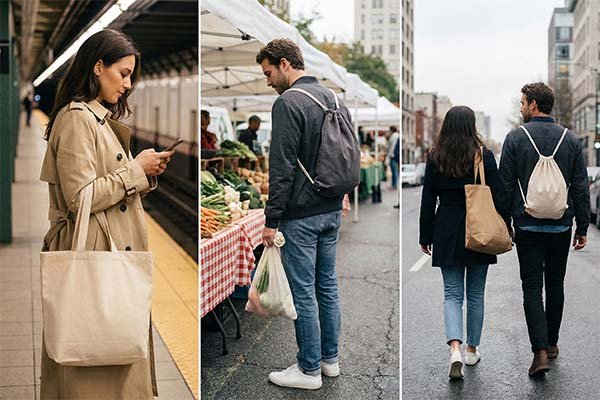
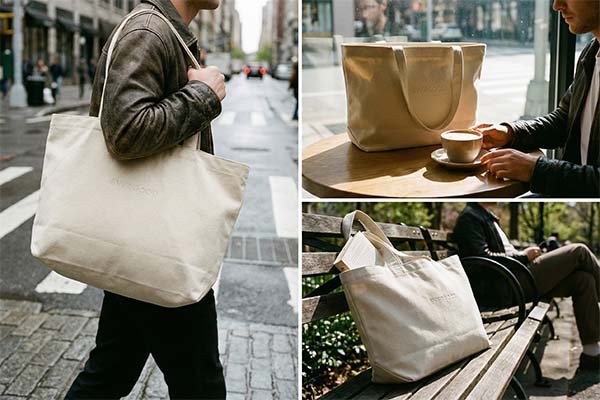
Design is not just about making things look pretty. In 2026, design is a tool to ensure usage. We are seeing a major trend toward "restraint." Brands are making their logos smaller. Sometimes the logo is hidden or tone-on-tone. They avoid bright colors that scream "sale" or specific event dates. Why do they do this?
They do it because they understand human behavior. A customer is more likely to carry a neutral, stylish bag to the grocery store or work. If the bag looks too much like an advertisement, it stays in the closet. Brands are actively lowering their "presence" on the bag. This sounds like a contradiction. But by being subtle, they get used more. A "lifestyle" bag gets carried every week. A "promo" bag gets carried once. By designing for the user’s outfit and daily needs, the brand actually gets more visibility. We are moving from "look at me" design to "use me" design.
| Design Feature | Why it Works in 2026 |
|---|---|
| Small / Subtle Logo | Fits with any outfit, less "commercial" |
| Neutral Colors | timeless appeal, not tied to a season |
| No Event Dates | Extends the life of the bag indefinitely |
| High-Quality Fabric | Feels like a product, not packaging |
What New Use Scenarios Are Driving Demand for Brand Reusable Bags?
Retail stores used to be the only place for these bags. Other industries ignored this tool. They missed a chance to improve the customer experience and reduce waste.
Reusable bags now appear in hotels, welcome kits, and gift boxes. They replace throw-away boxes and plastic. This reduces waste and upgrades the unboxing moment for the customer.
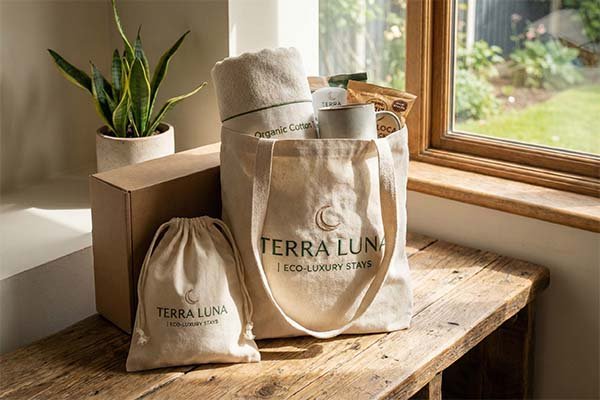
We are seeing a move away from simple retail shopping bags. Reusable bags are entering "non-retail scenarios." This is a very exciting shift. For example, hotels are replacing plastic laundry bags with cotton drawstring bags. Gift companies are using nice felt or canvas bags instead of paper boxes. Beauty brands use small reusable pouches for essential oils or washing kits.
In these new cases, the bag has a double role. First, it is packaging. It protects the product inside. Second, it is a useful item. The customer keeps it to store shoes, cables, or cosmetics. Brands use this to solve the waste problem. Cardboard boxes are thrown away immediately. A nice bag is kept. This extends the brand experience into the home. It turns "sustainable packaging alternatives" into a practical reality. Brands in 2026 are looking for every opportunity to replace single-use packaging with something reusable. This applies to corporate welcome kits, subscription boxes, and event swag.
How Are Brands Choosing Reusable Bag Suppliers Differently in 2026?
Price used to be the only factor for choosing a factory. Brands switched suppliers for pennies. This caused quality drops, communication gaps, and production delays.
Brands now look for long-term partners who understand their brand. They need suppliers who can handle complex projects. Stability and consistency matter more than the lowest single-unit price.
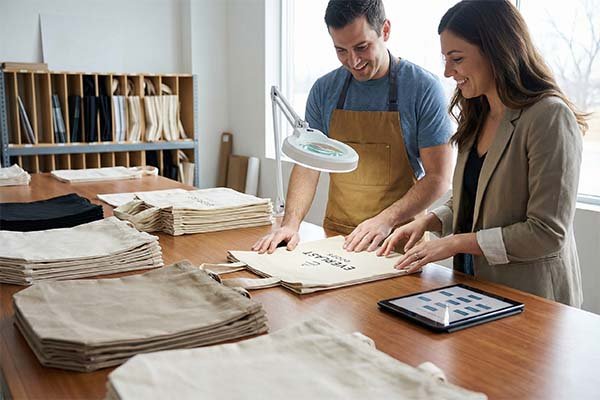
The relationship between brands and suppliers is changing. It is no longer just about the transaction. In the past, a buyer asked, "How much is this?" Now, they ask, "Can you support our long-term plan?" Brands need partners, not just order takers. They have complex needs. They might need a small batch for a pop-up store and a large batch for a global launch. They need the colors to match perfectly every time.
We see a shift from "order-based" relationships to "project-based" partnerships. Brands want stability. They are tired of inconsistent quality between batches. They are tired of suppliers who disappear when a problem happens. They value clear communication and understanding of the usage scenario. A good supplier in 2026 offers solutions, not just products. They understand that sustainability is also about a sustainable supply chain. This means fair labor, stable lead times, and reliable replicability. Brands are willing to pay a fair price for a partner who makes their job easier and their product better.
Conclusión
In 2026, reusable bags are no longer just an eco-cost. They are a brand asset. Brands now focus on systems, design for daily use, and long-term partnerships.
Frequently Asked Questions
Q: What specific material certifications should we look for to ensure the bags are genuinely sustainable?
A: While the article focuses on usage, verifying the source is critical. In 2026, the Global Recycled Standard (GRS) is the benchmark for rPET and recycled cotton. For virgin natural fibers, look for OEKO-TEX Standard 100 to ensure no harmful chemicals are used, which is essential for bags that will be in close contact with personal items like clothes or bedding.
Q: How much more does a "long-term asset" bag cost compared to a standard promotional bag?
A: Generally, upgrading from a "throw-away" non-woven bag to a durable, high-quality canvas or Tyvek asset bag increases the unit cost by 30% to 50%. However, because the lifespan extends from a few days to over two years, the cost-per-impression actually drops significantly.
Q: You mentioned "subtle logos," but what printing techniques achieve this look best?
A: To achieve the "restrained" aesthetic, we recommend using tonal printing (printing a slightly darker shade of the bag’s color), embroidery for a premium texture, or small woven side labels. Debossing is also excellent for washable paper or leather-like materials, as it adds branding without adding contrasting colors.
Q: Can small businesses or startups implement this "system approach" with limited budgets?
A: Yes. A startup does not need five different types of bags. The strategy for smaller budgets is to design one "Hero Bag"—a versatile, medium-sized tote with high durability—that can serve multiple functions, such as an event gift, a premium purchase add-on, and an employee welcome kit item.
Q: What is the typical lead time for these higher-quality custom bags?
A: Unlike simple stock bags that can be printed in a week, high-quality custom bags with specific fabrics and dyed-to-match colors typically require 35 to 45 days for production. We always recommend planning your supply chain at least two months in advance to allow for rigorous quality control.
Q: How do we handle the hygiene aspect of reusable bags in hotel or grocery scenarios?
A: Hygiene is a major factor for long-term use. We advise choosing materials that are machine washable, such as heavy cotton or canvas. Avoid laminated or non-woven materials for these scenarios, as they degrade in washing machines. Including a "Washable" tag on the bag can also encourage users to keep it clean and use it longer.
Q: Is there a way to measure the "usage rate" of a physical bag?
A: While hard data is difficult to capture offline, some brands are adding QR codes inside the bag connected to a loyalty program. When a customer scans the code or brings the bag back to the store for a discount, you can track the frequency of use and the retention rate of that specific batch.
Q: What happens to these durable bags at the end of their life cycle?
A: We recommend thinking about the "end of life" during the design phase. 100% cotton bags are biodegradable/compostable if the inks are eco-friendly. rPET bags can be recycled again if they are not mixed with other complex materials. Avoid mixing metal rivets with plastic fabrics if you want to ensure the bag remains recyclable.
Q: How can we prevent "bag clutter" if every brand starts doing this?
A: The key is an "Opt-In" distribution model rather than an automatic giveaway. Ask customers at checkout or registration if they need a bag. Those who say yes are more likely to use it. This reduces your costs and ensures the bags go to people who value them, preventing clutter.
Q: Does the "neutral design" trend mean we cannot use our brand colors?
A: Not necessarily. You can still use brand colors, but we suggest using them for accents—like the handles, the stitching, or the inner lining—rather than the entire body of the bag. A cream bag with brand-colored handles is often more likely to be carried daily than a bag that is 100% bright orange or purple.
-
Understanding ROI in marketing helps brands make informed decisions about their investments, ensuring better long-term value. ↩


 Español
  English
  Deutsch
  Português
  Русский
  العربية
  Français
  Italiano
  日本語
日本語  한국어
한국어  Dansk
Dansk