Vai al contenuto

High freight quotes destroy your profit margins. You feel frustrated when costs spike unexpectedly. You can control these expenses once you understand how shipping math actually works.
Shipping costs for custom bags from China depend on chargeable weight, destination, transport mode, and bag material. Freight carriers charge by actual weight or box volume, whichever is larger. Customs duties and local handling fees also increase your final landed cost per unit.
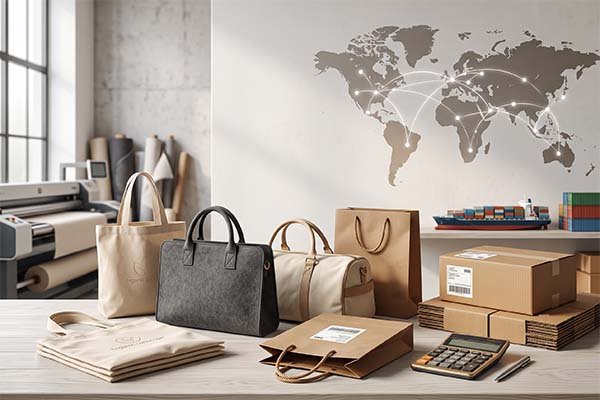
Many buyers assume freight rates are fixed numbers. They get confused when two similar orders carry completely different price tags. Let us look at why this happens and how you can fix it.
Why Can Two Identical Orders Have Completely Different Shipping Costs?
Two buyers order the exact same 1,000 custom totes, yet one pays triple for freight. Misunderstanding shipping rules burns your budget fast. Knowing these variables protects your bottom line.
Identical bag orders have different shipping costs because freight rates vary by destination and delivery speed. Fast air express charges a premium per kilogram. Ocean shipping takes longer but lowers the unit cost significantly for bulk orders.
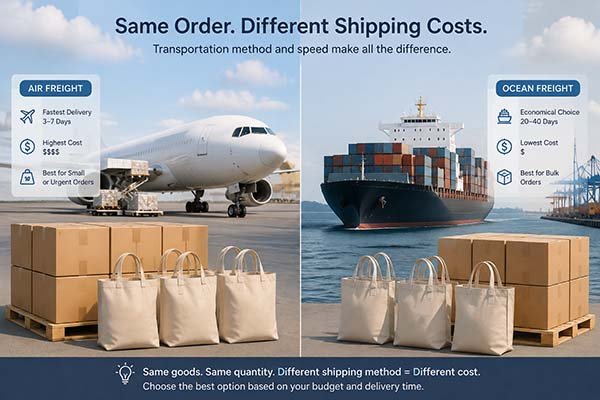
Distance plays a major role in pricing. But the transport mode creates the biggest cost gap between identical orders. A buyer shipping 1,000 bags to New York via express air pays thousands of dollars. Another buyer sending the same bags to New York via sea freight pays a fraction of that amount. Fast services charge you for speed. Slow services trade time for massive savings. When you request a quote, suppliers check current rates for your specific location. Small changes in how the factory packs the cartons alter the total price. A slightly larger box might push the shipment into a higher pricing tier.
Transport Method and Speed Differences
| Shipping Factor | Express Courier | Sea Freight |
|---|---|---|
| Transit Time | 3 to 7 days | 25 to 35 days |
| Billing Unit | Chargeable weight (kg) | Volume in CBM |
| Cost Impact | Highest rate per bag | Lowest rate for large orders |
Understanding these differences helps you select the right method before you finalize your purchase. You stop guessing and start planning based on hard facts. If you run a private-label resale business, choosing sea freight for bulk orders protects your profit margin.
What Information Do We Need Before Calculating Shipping Costs?
Waiting for freight quotes delays your project timeline. Forwarders cannot calculate accurate costs without specific order details. Providing basic shipment data up front speeds up pricing.
Suppliers need your destination country, postal code, product dimensions, order quantity, and preferred transport mode to calculate freight. These details determine if courier, air, or sea freight offers the best rate.
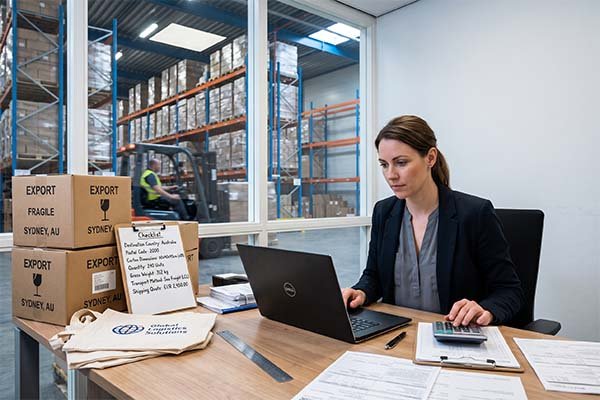
We always ask for your delivery address before providing a shipping quote. Every detail alters the math. Your location dictates the available transport routes. Nearby Asian markets cost less to ship to because the distance is short. Major western markets have high-volume trade routes that keep prices competitive despite the long distance. We match your shipment with the right carrier service based on quantity. Sending heavy cargo on a plane wastes money. Sending tiny boxes on a ship wastes time.
Choosing the Right Transport Mode
| Destination Region | Transport Features | Livello dei costi |
|---|---|---|
| Asia | Short distance, fast ocean and air options | Basso |
| North America, Europe, Australia & Middle East | High volume routes, multiple DDP air/sea options | Medio |
| Island Nations | Fewer shipping lines, limited routes | Alto |
For a 20 kg sample order, express courier keeps the price reasonable. We use Air DDP for urgent 7-day deliveries. Sea DDP offers the lowest unit cost for orders over 1,000 pieces. If you have your own forwarder, we can load goods directly into your designated container.
How Do Freight Companies Calculate Shipping Costs?
Lightweight bags can surprise you with massive shipping bills. Paying for empty space in a box feels like throwing money away. Learning volumetric weight calculations1 prevents unexpected expenses.
Freight companies calculate shipping costs using actual weight or volumetric weight, charging whichever number is larger. Volumetric weight measures the space a carton occupies. Couriers divide volume by 5000, while forwarders use 6000.
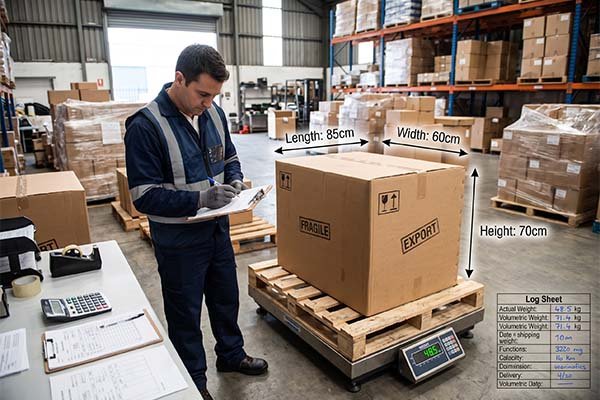
Logistics companies do not just weigh your boxes on a scale. They also measure how much space your cartons take up in a plane or cargo container. Actual weight is the scale weight in kilograms. Volumetric weight measures the physical size of the box using a standardized formula. Express companies multiply length, width, and height in centimeters, then divide by 5000. Many buyers find out their eco bags are very light but still trigger high freight bills. This happens entirely because of volumetric weight. Puffy items trap air inside the box. You end up paying for that trapped air.
Actual Weight vs. Volumetric Weight
| Measurement Type | Carton Value | Billed Weight Result |
|---|---|---|
| Carton Size | 50 cm x 40 cm x 40 cm | 80,000 cubic cm |
| Actual Scale Weight | 8 kg | 8 kg scale weight |
| Express Volumetric Weight | 80,000 / 5000 | 16 kg billed weight |
Because 16 kg is higher than the scale weight of 8 kg, the courier charges you for 16 kg. This rule shows exactly why bulky materials increase your final bill.
Why Do Different Bag Materials Have Different Shipping Costs?
Picking the wrong fabric for your custom bags can double your freight bill. Soft, puffy materials eat up box space fast. Choosing your fabric wisely keeps costs low.
Bag materials affect shipping costs because density determines whether freight bills by scale weight or volume. Dense cotton bills by actual weight. Light, bulky materials like felt and non-woven fabrics bill by volume.
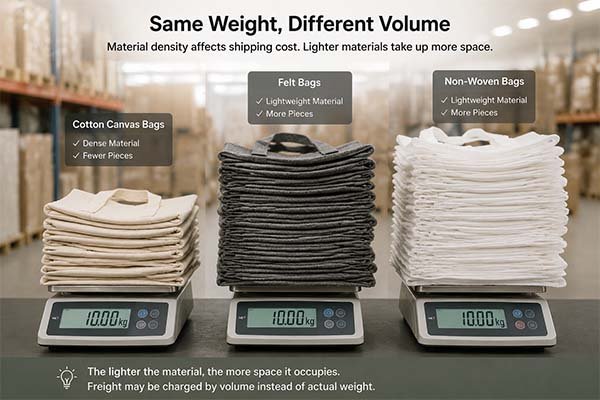
The fabric you choose directly impacts carton dimensions. Different eco-friendly fabrics behave differently during packing. Heavy fabrics fold flat. Fluffy materials hold air and push the carton walls outward. Cotton and canvas fabrics are dense and heavy. They fold completely flat. Carriers almost always bill them by actual scale weight. Felt is thick yet very light. Boxes of felt bags take up large amounts of space. Carriers almost always bill them by volumetric weight. Non-woven material is very light and stiff. It creates large carton volumes that trigger high dimensional weight charges. Jute is a coarse, heavy fiber. Most jute shipments bill by actual weight. However, some light weaves with stiff linings can sometimes trigger volumetric charges.
Material Density and Freight Billing Impact
| Tipo di materiale | Material Density | Primary Billing Method |
|---|---|---|
| Cotton / Canvas | Alto | Actual Weight |
| Feltro | Low / Bulky | Volumetric Weight |
| Tessuto non tessuto | Low / Stiff | Volumetric Weight |
| Juta | Medium to High | Actual Weight |
Understanding material density helps you select fabrics that fit your target budget. You avoid ordering a giant container just to move a few thousand light bags.
How Can Packaging and Order Quantity Reduce Shipping Costs?
Paying extra for oversized shipping boxes eats away your margins. Loose packing wastes valuable container space. Smart carton design and bulk quantities significantly drop your per-unit freight rate.
Packaging techniques like bulk flat-packing and carton size optimization reduce box volume to lower volumetric charges. Increasing your order volume distributes transport costs across more bags, lowering the unit price.
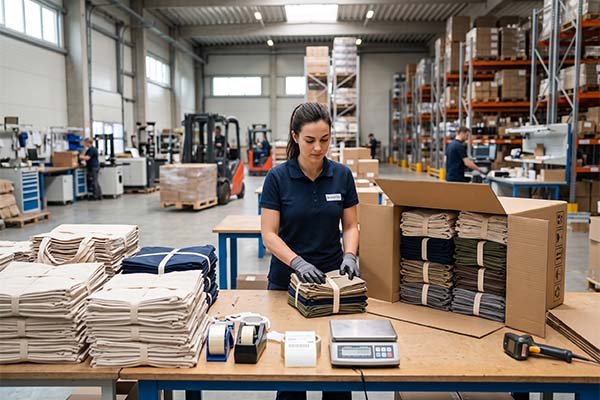
Factory packing methods directly control your final freight bill. Small changes in how we fold and box your custom bags yield major savings. Individual polybags add bulk to every bag. Skipping individual plastic wrapping and flat-packing bags in bulk allows more units to fit into a single box. We adjust carton dimensions to match standard pallet sizes. This eliminates wasted air space inside shipping containers. Order volume changes your unit price dramatically. The larger the quantity, the lower the shipping price shared by each bag. It becomes far more cost-effective.
For buyers comparing different bag formats, custom reusable bag options can also help you evaluate material, size, and packaging requirements before finalizing production.
Impact of Order Volume on Unit Freight
| Order Quantity | Freight Method | Cost Allocation Effect | Unit Shipping Cost |
|---|---|---|---|
| 300 pcs | Express Courier | Transport costs split among few units | High cost per bag |
| 1,000 pcs | Air Freight / LCL Sea | Balanced volume and speed | Moderate cost per bag |
| 5,000 pcs | FCL Sea Freight | Maximum space efficiency | Lowest cost per bag |
When you order 5,000 canvas totes instead of 500, the sea freight total cost goes up, but the amount you pay per individual bag drops significantly. Ordering larger production runs lowers your landed cost per unit. We always review your volume and recommend the most economical transport route.
What Other Costs Should Buyers Be Aware Of?
Hidden logistics fees can destroy your profit margin after production finishes. Surprise border tariffs catch unprepared buyers off guard. Knowing all import charges protects your budget.
Buyers must budget for Incoterms responsibilities, customs duties, import tariffs, destination port handling fees, and peak season surcharges. DDP terms include these extra costs up front, while FOB terms leave destination charges for the buyer.
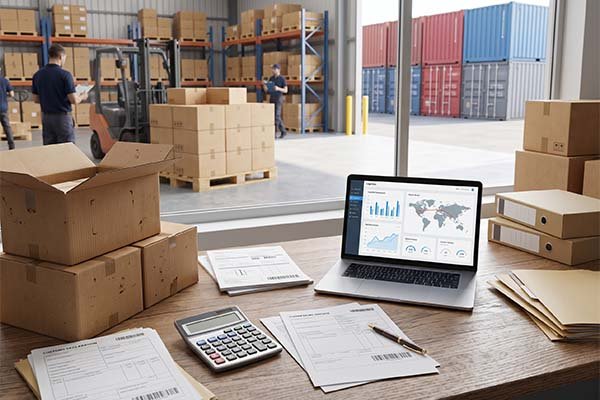
A cheap freight quote turns expensive fast if it excludes destination charges. Trade terms determine exactly who pays for each stage of transport. Under EXW terms, you pay for everything from our factory floor to your address. With FOB, we cover local export fees and customs clearance in China. You pay sea freight and import fees. DDP means we handle freight, import customs, duties, and final delivery under one clear total price. The Incoterms rules2 provide an internationally recognized framework for clarifying these responsibilities.
Common Extra Freight Charges
| Fee Type | Descrizione | Included in DDP? |
|---|---|---|
| Import Duty & Tariffs | Taxes based on bag HS codes and country rules | Sì |
| Terminal Handling (THC) | Port and warehouse unloading charges | Sì |
| Customs Brokerage | Filing import entry documents with authorities | Sì |
| Peak Season Surcharge | Temporary rate hikes during busy holidays | Sì |
You must evaluate the full landed cost of your custom bags before approving production. Import duties and taxes can vary by destination, product classification, and local regulations, so buyers should check the applicable import tariffs and fees3 before finalizing their budget.
Missing one fee can wipe out your margin. Certain countries require specific import licenses for ocean shipments. Working under DDP eliminates these surprises. It keeps your accounting simple and predictable.
How Can We Help You Choose the Most Cost-Effective Shipping Solution?
Choosing international freight options alone feels confusing. Picking the wrong route delays your product launch. Experienced factory guidance helps you balance budget, speed, and delivery safety.
We help buyers optimize shipping costs by testing flat-pack carton dimensions, matching order volumes with ideal transport modes, and offering DDP or FOB quotes. We support designated forwarders and schedule early to avoid peak surcharges.

Every custom bag project requires a unique logistics plan. Different orders do not share a single correct transport route. We work directly with your procurement team to evaluate speed, budget, and quantity before shipping. Our team tests custom box sizes to maximize bag count per carton. This keeps volumetric weight low. We calculate multiple freight quotes so you can compare costs directly against your delivery deadline.
For a detailed overview of available shipping solutions from factory to door, buyers can compare express, air, sea, and port-delivery options based on order size and delivery requirements.
Practical Steps We Take to Optimize Freight Costs
| Optimization Action | How It Helps Your Business |
|---|---|
| Custom Box Sizing | Eliminates empty air space and reduces volumetric weight |
| Multi-Option Quotes | Trades speed for lower cost based on schedule needs |
| Container Co-Loading | Mixes your bags with existing shipments to save money |
| Early Scheduling | Avoids expensive holiday peak season freight surcharges |
You might want to use your own freight forwarder. We support that entirely. We can consolidate your bags with an existing container. If you need a full door-to-door DDP solution, we adjust our export process to give you the best landed cost per unit.
Conclusione
Understanding volumetric weight, material density, and Incoterms helps you choose the best shipping method. This knowledge controls your budget and achieves the lowest landed cost for your custom bags.
Frequenty Asked Questions
Q: Do you ship custom bags directly to Amazon FBA warehouses?
A: Yes. We attach FBA carton labels at our factory. We route the boxes directly to Amazon fulfillment centers using DDP terms.
Q: Can I split my bag order between air and sea freight?
A: Yes. Many buyers ship 10% of their order via air express for an immediate product launch. They send the rest via sea freight to keep the total average cost low.
Q: Does the shipping quote include cargo insurance?
A: Standard quotes usually do not include insurance. Freight carriers offer limited liability for lost goods. We highly recommend adding cargo insurance to cover the full value of your custom bags during transit.
Q: How do I track my ocean freight container?
A: Your forwarder gives you a bill of lading (BOL) or container number. You enter this number on the shipping line’s website to see the vessel’s current location.
Q: Who pays if my sea freight shipment gets delayed at the destination port?
A: Port congestion or customs holds happen occasionally. If the container sits at the terminal past its free days, the port charges storage fees called demurrage. The buyer typically pays these fees.
Q: Will my shipping cartons arrive on wooden pallets?
A: Most custom bags ship as loose floor-loaded cartons to save container space. If your warehouse requires pallets, we use plastic or fumigated pallets to meet international customs rules.
Q: What should I do if my boxes get crushed during shipping?
A: Take clear photos of the damaged cartons before opening them. Note the damage on the delivery receipt before you sign. Contact your forwarder immediately to start an insurance claim.
Q: What currency do I use to pay the freight bill?
A: We quote DDP terms in US dollars. The freight is included in your total order invoice.
Q: Can I change the final delivery address after the bags leave the port?
A: For air express, you can sometimes redirect a package for a fee. For sea freight, changing the destination after the ship leaves the port is highly expensive and often impossible.
-
FedEx explains how dimensional weight is calculated from package dimensions and why carriers may use dimensional weight when it exceeds actual weight. ↩
-
The International Chamber of Commerce explains how Incoterms define responsibilities, costs, and risks between buyers and sellers in international trade. ↩
-
The U.S. International Trade Administration provides an overview of import tariffs, duties, taxes, and other fees that can affect the final landed cost of imported products. ↩


 English
  Deutsch
  Español
  Português
  Русский
  العربية
  Français
  Italiano
  日本語
日本語  한국어
한국어  Dansk
Dansk