Aller directement au contenu

The market is flooded with packaging options, yet many businesses struggle to select the right product for their specific sector. This confusion often leads to wasted budgets on bags that customers simply discard or ignore. Procurement teams must understand how different industries apply these tools to turn a cost item into a valuable asset.
Reusable bags serve distinct purposes across different sectors. In retail, they function as high-frequency carrying tools and mobile advertisements. In hospitality, they act as service enhancements and premium amenities. Understanding this distinction helps buyers choose the correct material and design for specific business goals.
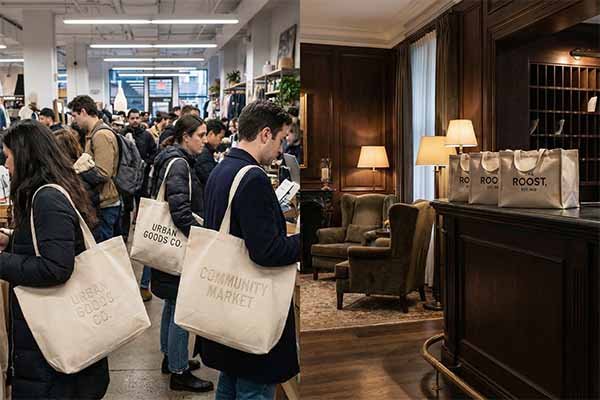
Many buyers assume a bag is just a general commodity, but that mindset often leads to project failure. A closer look reveals how specific sectors actually utilize these products to drive value.
How Are Reusable Bags Used Differently in Retail and Hospitality Businesses?
Retailers and hoteliers often source similar eco-friendly bags, but their operational goals are fundamentally different. If a buyer misses this distinction, the selected product may fail to perform its primary function.
Retail businesses prioritize usage frequency and load-bearing capacity, using bags to replace disposable plastic at checkout. Conversely, the hospitality industry employs bags to elevate the guest experience, often as welcome gifts or laundry solutions. The application dictates the design, not just the price point.
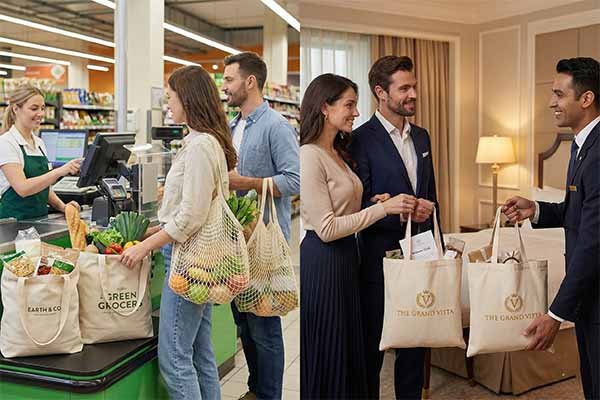
Breaking down these differences reveals why budget allocation must vary by industry. In the retail sector, the bag functions as a workhorse. It must hold heavy groceries, clothing, or boxed items without tearing. The customer uses it, folds it, and reuses it for future shopping trips. Consequently, the logo must be large and visible because the primary objective is brand exposure on the street.
In contrast, a hotel or restaurant utilizes the bag as an integral part of the service. Here, the "touch and feel" is more critical than heavy load capacity. A guest in a luxury hotel judges the quality of an amenity kit or a laundry bag by its texture. If the fabric feels cheap, the hotel brand image suffers. The table below illustrates the specific functional differences between these two industries.
| Fonctionnalité | Retail Industry Application | Hospitality Industry Application |
|---|---|---|
| Primary Goal | Brand exposure & Plastic replacement | Guest experience & Service extension |
| Key Feature | Durability & Load capacity | Texture, Aesthetics & Hygiene |
| Typical Usage | Weekly grocery/shopping trips | One-time stay (taken home as gift) |
| Visual Focus | Large Logo, Bright Colors | Subtle Branding, Premium Tones |
| Material Choice | Canvas, PP Non-woven, rPET | Cotton, Washable Paper, Velvet, Tyvek |
Aligning the product choice with these specific expectations is essential. Retail buyers should focus on strength parameters, while hospitality buyers should prioritize tactile experience and design aesthetics.
Why Are Branded Reusable Bags Becoming a Strategic Tool for Retailers and Hotels?
Allocating budget for custom bags can appear as a sunk cost if only the unit price is considered. However, successful brands view these items as powerful, low-cost marketing tools that continue to perform long after the initial transaction.
Branded reusable bags offer "invisible marketing" value that standard advertisements cannot match. For retailers, they support loyalty programs and provide walking exposure. For hotels, they reinforce a premium eco-friendly image. The effective cost per bag is low when divided by the number of impressions it generates.
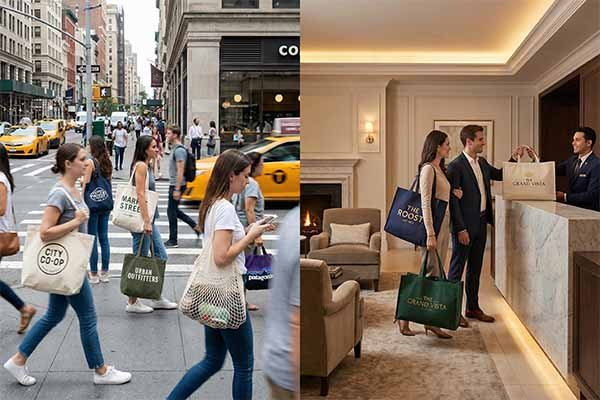
This strategy often outperforms traditional billboards because of long-term exposure. When a retailer provides a high-quality tote, that bag becomes part of the customer’s daily routine. Consumers frequently use a supermarket bag to carry gym clothes, library books, or lunch. Every time this happens, the brand logo appears in a new environment. The Return on Investment (ROI) increases significantly because the company pays for the bag once, but the bag advertises the brand dozens of times.
For the hospitality and catering sectors, the value lies in the "take-home" factor. A guest who keeps a high-quality laundry bag or a toiletry pouch from a resort retains a physical memory of the stay. It transforms from packaging into a gift, building an emotional connection. Marketing experts note that if a bag is good enough to keep, it becomes the most cost-effective advertising available. This also supports loyalty initiatives. Retailers can offer points for reusing the bag, which drives traffic back to the store. This approach connects a physical product directly to sales strategy.
What Types of Reusable Bags Work Best for Industry-Specific Applications?
Selecting a standard size for all purposes rarely yields good results. The physical environment of a supermarket differs vastly from a hotel room or a catering delivery vehicle.
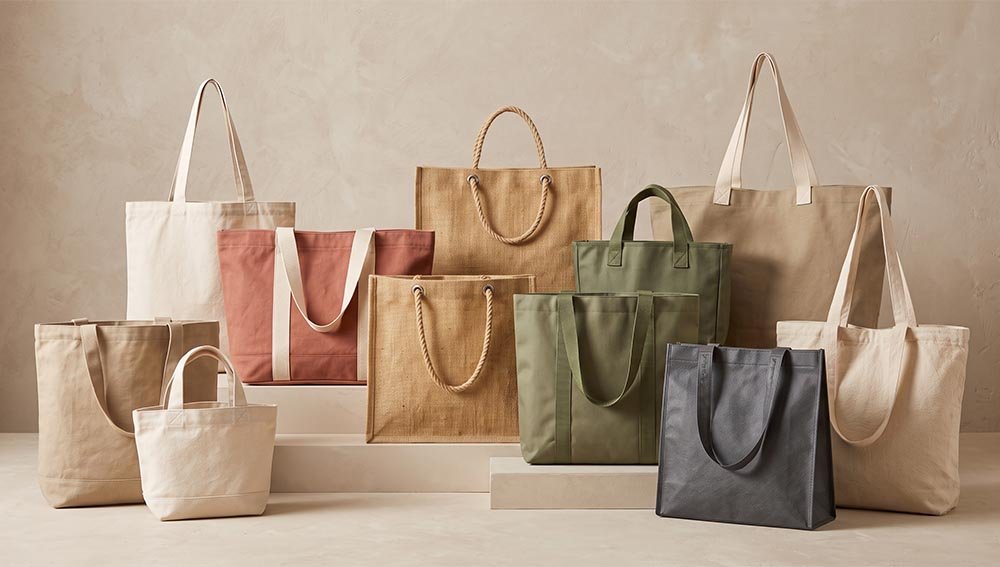
Retailers succeed with heavy-duty totes and foldable shoppers that are easy to carry. The hospitality sector prefers specialized items like washable food bags, drawstring laundry pouches, or rigid wine carriers. Matching the bag type to the specific function ensures the customer actually uses it.
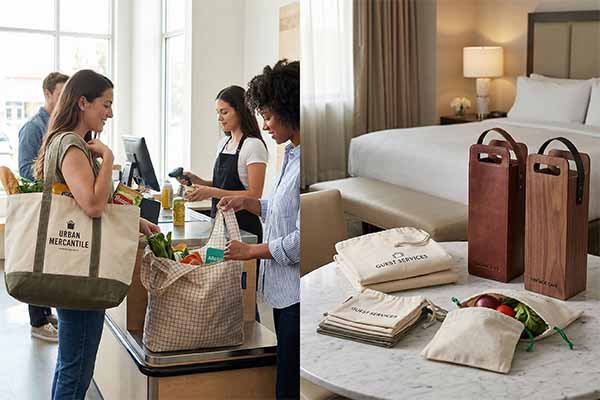
Specifics regarding materials and shapes are crucial for success. In retail, the "Shopper" style dominates. These bags require wide bottoms (gussets) to accommodate boxes or fresh produce. Materials like rPET (recycled plastic) or heavy canvas perform best here due to their toughness. Foldable bags are also popular in retail because customers can easily keep them in pockets or cars. If a bag is portable, usage rates increase.
In hospitality and catering, the requirements are more precise. For example, a restaurant offering high-end takeout needs a bag that is easy to clean and potentially insulated. A hotel requires "quiet" luxury. DuPont Tyvek is excellent for this setting because it resembles paper but offers waterproof and tear-resistant properties, making it ideal for amenity kits. Washable paper is another preferred material for table service or room organization due to its natural, organic look. Even simple drawstring bags for hair dryers or shoes must feel soft. Providing a guest with a scratchy, cheap non-woven bag lowers their perception of the room quality. The material must always match the customer touchpoint.
How Do Reusable Bags Support Sustainable Branding Across Multiple Industries?
Sustainability has shifted from a marketing trend to a business requirement for major companies. B2B buyers now rigorously scrutinize the environmental impact of every item in their supply chain.
Reusable bags act as a tangible "sustainable symbol" for a brand. They demonstrate a commitment to reducing single-use plastic and help meet ESG (Environmental, Social, and Governance) goals. Whether in retail or hospitality, using certified eco-materials sends a unified message of responsibility.
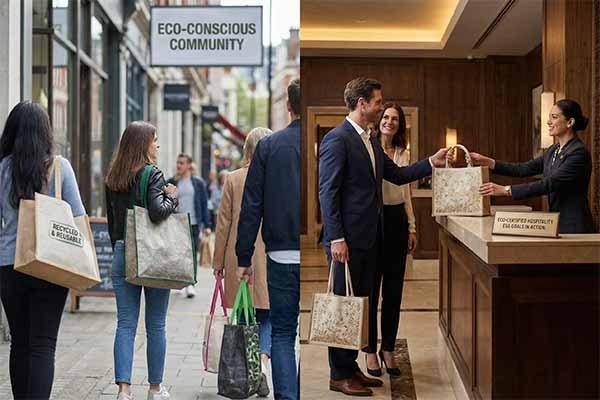
Sustainability creates a common language across all industries. A retailer uses a recycled cotton bag to demonstrate care for the environment. A hotel uses a plastic-free laundry bag to show efforts in waste reduction. However, the impact goes deeper than image. B2B clients, especially in regions like the US and UK, face strict regulations. They demand to know if materials are recyclable or made from post-consumer waste.
Supplying these bags provides more than just a container; it provides compliance. By switching to reusable options, a business can claim the elimination of thousands of plastic bags from their operations. This data serves as a powerful narrative for annual reports. Furthermore, using materials like rPET (recycled bottles) closes the manufacturing loop. It signals to customers that the brand participates in the "Circular Economy." This turns a simple purchase into a statement of corporate values. Consistency builds trust; if a hotel claims to be green but uses styrofoam, guests notice the contradiction. The reusable bag helps bridge that gap.
Why Are Industry-Specific Reusable Bag Solutions Gaining Attention in B2B Procurement?
Procurement managers are increasingly rejecting generic, low-cost options. They realize that a cheap bag that fails or looks poor ultimately costs the company more in reputation and replacement.
B2B buyers now focus on "Value over Price," seeking customized solutions that fit exact supply chain needs. Industry-specific bags ensure stability, consistent quality, and high reuse rates. This shift from generic wholesale to tailored development solves pain points like inconsistent sizing and poor branding.
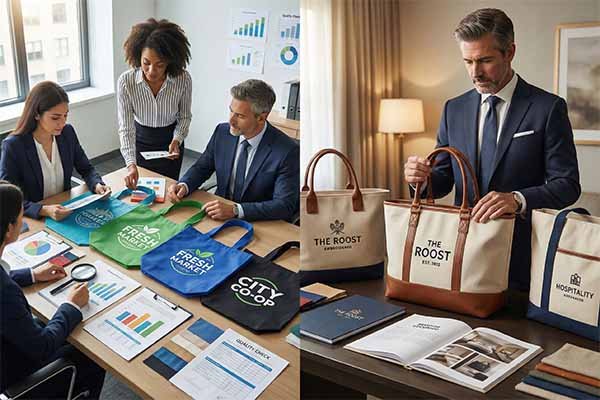
Industry observation shows a significant shift in purchasing behavior over the last decade. Previously, buyers prioritized the lowest unit price. Now, experienced procurement managers ask how a product performs for their specific merchandise. Stability is a key factor. A generic bag might be inexpensive, but if the handle fails or the logo peels, it damages the brand’s reputation.
This reality drives the growth of industry-specific customization. A retail chain may require a bag tailored to specific cereal box dimensions. A hotel chain might need a laundry bag designed to fit a specific closet hook. This is where OEM/ODM services provide value. Manufacturers do not just sell a product; they develop a solution. Buyers demand control over lead times and quality consistency between batches. They need assurance that the bag will be identical every time. Customizing the bag to the industry solves operational headaches, turning the bag into a reliable tool rather than a risky commodity.
Conclusion
Reusable bags are not one-size-fits-all; retail demands durability and exposure, while hospitality requires texture and service. Matching the right bag to the right industry guarantees better ROI and brand impact.
Foire aux questions
Q: What is the typical Minimum Order Quantity (MOQ) difference between standard retail totes and specialized hospitality bags?
A: Generally, standard retail totes (like cotton or non-woven) have lower MOQs (often starting at 500-1,000 units) because the raw materials are readily available. Specialized hospitality items, such as Tyvek amenity pouches or custom-dyed velvet laundry bags, often require MOQs of 3,000+ units. This is because the fabric must be custom-manufactured to match specific brand colors or textures.
Q: How does the printing method affect the durability of the logo on high-use retail bags?
A: For retail bags subjected to heavy wear and friction, Silk Screen printing is standard for durability. However, for full-color or gradient designs, Lamination or Heat Transfer is used. Heat Transfer offers vibrancy but can crack over time with heavy washing. We recommend water-based ink silk screening for the best balance of longevity and eco-friendliness.
Q: Can we request a pre-production sample (Golden Sample) before committing to a full bulk order?
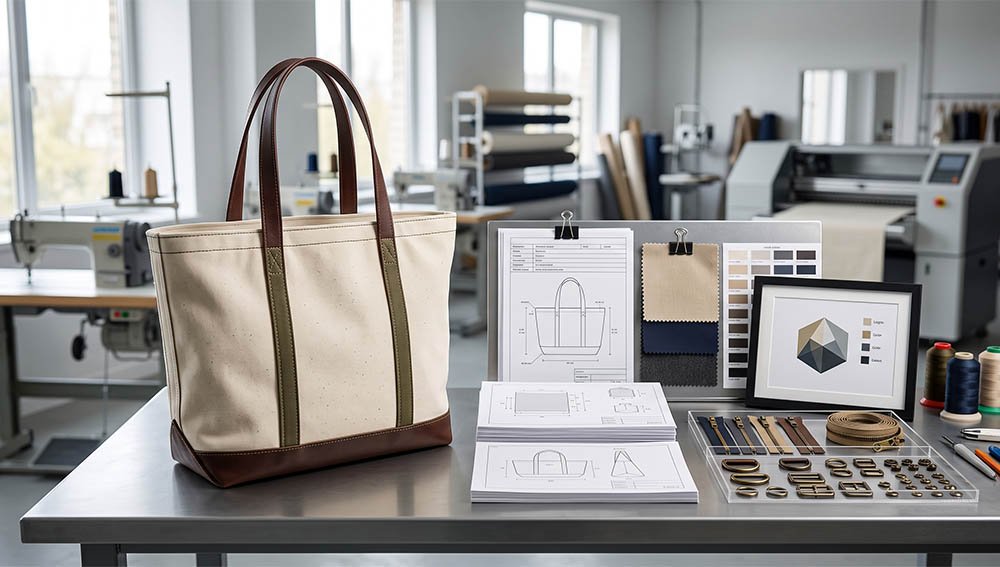
A: Yes, this is standard procedure in B2B procurement. We strongly advise creating a physical prototype to verify material texture, stitching strength (especially for load-bearing retail bags), and color accuracy. Sample production typically takes 5-7 days and helps prevent costly mass-production errors.
Q: What certifications should I look for to verify the "eco-friendly" claims of recycled materials?
A: To ensure materials like rPET or recycled cotton are genuine, you should request GRS (Global Recycled Standard) certification. For testing harmful substances in fabrics used for hospitality (which touch skin), Oeko-Tex Standard 100 is the industry benchmark.
Q: How should we store cotton or canvas bags in our warehouse to prevent damage before distribution?
A: Natural fibers like cotton and canvas are susceptible to moisture. It is critical to store these cartons in a dry, ventilated area off the ground (on pallets). If your warehouse is in a humid region, we recommend adding silica gel desiccant packets inside the master cartons to prevent mold growth during long-term storage.
Q: What is the lead time difference between a repeat order and a new custom development project?
A: A repeat order using existing molds and films typically takes 25-30 days for production. A new custom development (OEM) requires additional time for pattern making, mold creation, and sample approval, usually adding 10-15 days to the initial timeline. Logistics time must be calculated separately.
Q: Why is DuPont Tyvek often more expensive than cotton for hospitality applications?
A: Tyvek is a proprietary material from DuPont that combines the properties of paper, film, and fabric. It is waterproof, tear-resistant, and lightweight, making it a premium choice for amenity kits. The higher cost reflects the raw material price and the specialized printing techniques required, as standard inks do not adhere well to Tyvek.
Q: Can you handle DDP (Delivered Duty Paid) shipping terms for international orders?
A: Yes, for many B2B buyers who want to avoid the hassle of customs clearance and import duties, we offer DDP terms. This means the price per unit includes all shipping, tax, and delivery costs to your final warehouse address, providing a predictable "landed cost" without hidden fees.
Q: How do you ensure quality control (QC) for large-scale retail orders?
A: We follow AQL 2.5 (Acceptable Quality Limit) standards. This involves inspecting a statistically significant random sample of the production run. Inspections cover load-bearing tests (lifting specific weights), print adhesion tests, and dimension checks. We encourage third-party inspections (like SGS or Intertek) before shipment.
Q: What file formats are required for custom logo printing?
A: To ensure the print is sharp and clear, we require vector files (AI, PDF, or EPS formats). Raster images (JPG, PNG) are pixelated when enlarged and are not suitable for screen printing or plate making. If you only have a JPG, our design team may need to redraw the logo into a vector format.

 English
  Deutsch
  Español
  Português
  Русский
  العربية
  Français
  Italiano
  日本語
日本語  한국어
한국어  Dansk
Dansk