Skip to content

Managing the budget for custom bags can be stressful for small businesses. You want high quality, but costs can rise quickly. Smart planning helps you save money without sacrificing value.
To control costs, focus on the "landed cost" rather than just the factory price. Choose cost-effective materials like standard cotton, optimize your order quantity (MOQ) to hit price breaks, and simplify your print design. Planning logistics early to avoid air freight is also crucial.
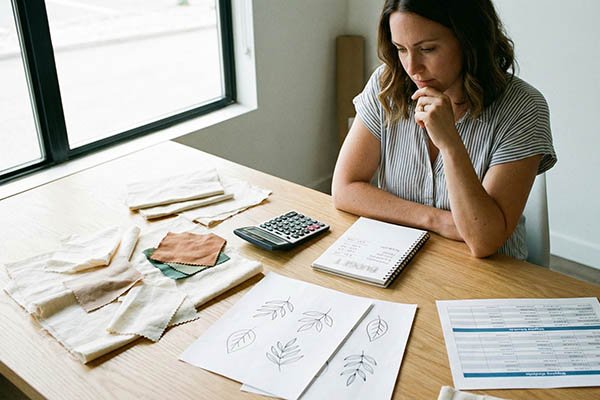
Many buyers look only at the unit price of the bag. This is a mistake. The real cost involves material, production, and shipping. Let’s break down how to optimize each step for the best deal.
Why Material Choice Matters for Custom Bag Pricing?
Choosing the wrong fabric is the fastest way to blow your budget. You might pick a material that is too expensive for your purpose. The right choice balances cost and quality.
Material cost is the biggest part of the bag’s price. Standard cotton and canvas are affordable and durable. Premium options like heavy canvas or eco-friendly Tyvek cost more but feel more valuable. Adjusting the fabric thickness (GSM) is a simple way to lower costs.
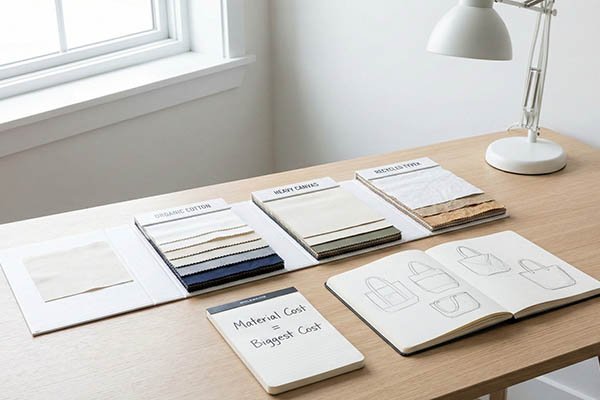
The material is the foundation of your cost. It is the first thing you must decide. There is a huge price difference between different fabrics. Tissu non tissé is the cheapest option. It is great for trade show giveaways where you need thousands of bags. However, it does not last long. Cotton and Canvas are the most common choices. They are durable and feel good.
You also need to understand "GSM" or ounces. This measures the weight and thickness of the fabric.
- Lightweight (5oz-6oz): These are cheap and good for simple totes.
- Heavyweight (12oz-16oz): These cost more but feel premium. They are better for retail products.
Eco-friendly materials like RPET (recycled plastic) or Tyvek are trendy. They tell a great brand story. But, they cost more to produce. If you are on a tight budget, standard cotton is a safe choice. It is natural and biodegradable, so it is still eco-friendly. You do not always need the most expensive fabric to make a good bag. Match the material to how the customer will use the bag.
| Matériau | Coût | Durabilité | Recommended For |
|---|---|---|---|
| Non-Woven | $ | Faible | Events, Supermarkets |
| Cotton (5oz) | $$ | Moyen | Light Shopping, Promos |
| Canvas (12oz) | $$$ | Haut | Retail, Fashion, Gifts |
| Tyvek | $$$$ | Haut | Unique Design Brands |
| RPET | $$$ | Haut | Eco-focused Brands |
How MOQ Can Optimize Your B2B Bag Budget?
Ordering a very small number of bags often leads to a high unit price. You pay for setup costs on just a few items. Increasing your volume spreads these costs out.
Minimum Order Quantity (MOQ) is key to pricing. Suppliers charge less when you order more because fixed setup costs are shared across more units. Ordering 500 to 1000 pieces is often the "sweet spot" for small businesses to get a good price.
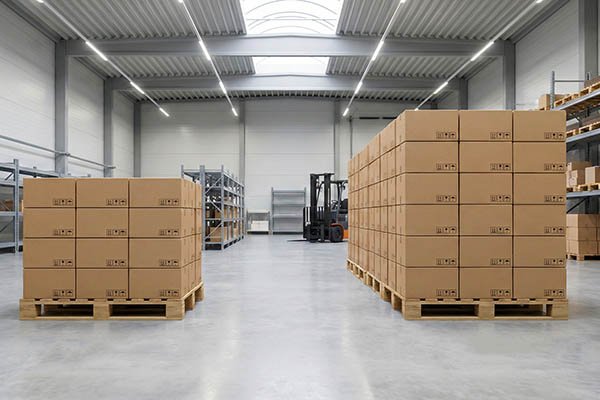
Manufacturing has fixed costs. We have to set up the machines, mix the ink, and cut the fabric. This takes time. If you order 50 bags, we still have to do all this work. The cost is divided by only 50 bags, so the price per bag is high. If you order 1000 bags, that setup cost is divided by 1000. It becomes very small per bag.
This is why MOQ (Minimum Order Quantity) matters. For many factories, the best price break starts around 500 or 1000 pieces. This is a good target for small businesses. It is enough to get a good price, but not so many that you have storage problems.
If you are a startup, you might fear ordering too much. A good strategy is "testing." You can order a small batch (like 100) first. The price will be higher, but the risk is lower. Once you know the bags sell well, you can place a bulk order. This lowers your average cost over time. Also, consider grouping orders. If you want two different prints, use the same bag size and material. This helps the factory work faster and might get you a better deal.
What Impact Do Production Methods Have on Bag Costs?
Complex designs can surprisingly double your production bill. You might not realize that extra colors add extra fees. Choosing the right print method keeps expenses low.
The printing method changes the price structure. Screen printing is cheap for simple designs but costly for many colors. Digital printing works best for colorful, complex art on small orders. Reducing print colors and locations lowers labor and setup fees.
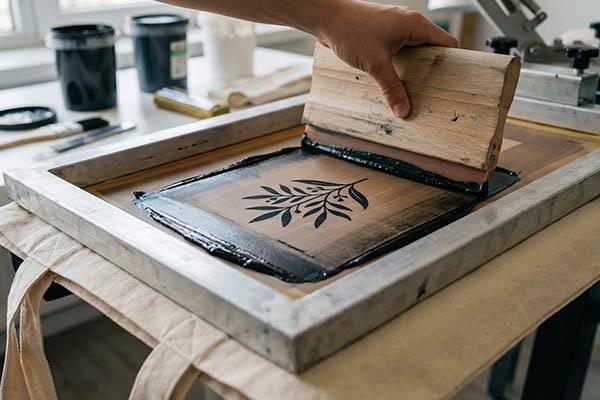
Your design directly affects the production method. The most common method is Sérigraphie. It is very durable and cheap for large orders. However, every color in your logo needs a separate screen. If your logo has 6 colors, we need to make 6 screens. You pay a setup fee for each one.
For complex, colorful art, Impression numérique ou Transfert de chaleur is often smarter. These methods print the whole image at once. The ink costs a bit more, but the setup is cheap. This is perfect for small orders with photos or gradients.
- Simple is Cheaper: A one-color logo on one side is the cheapest option.
- Complex is Costly: Full-color printing on both sides, plus pockets and zippers, adds labor time.
Think about the bag construction too. Adding zippers, linings, or inside pockets increases sewing time. More labor means a higher price. Often, a simple tote with a beautiful design is better than a complicated bag. Stick to standard sizes to avoid paying for new cutting molds. Using existing molds saves time and money.
How to Include Shipping and Logistics in Bag Procurement?
Shipping fees can shock you when the final invoice arrives. You did not plan for freight and duties. Calculating these early prevents budget disasters.
Shipping is a major part of the total landed cost. Air freight is fast but expensive, often costing more than the bags. Sea freight is much slower but significantly cheaper. Planning your timeline early allows you to use sea shipping and save money.
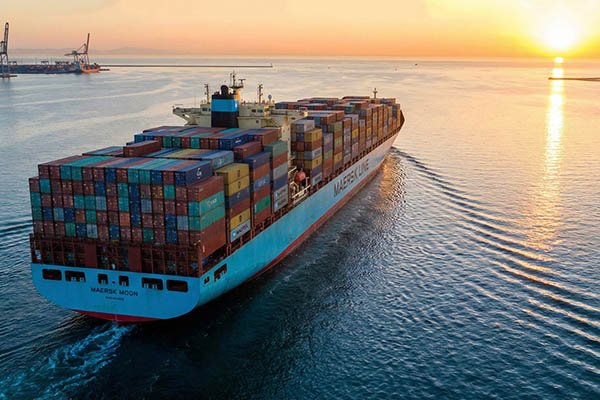
Shipping is often the biggest "hidden" cost in international trade. A cheap bag becomes expensive if you have to ship it by air. Air freight is fast (7-10 days), but it charges by weight and volume. It is very expensive. It should only be used for urgent orders.
Sea freight is the best friend of your budget. It takes longer (30-45 days), but the cost is very low. By planning your order 3 months in advance, you can use sea shipping. This dramatically lowers your "landed cost" per bag.
Also, consider the weight and packaging. Canvas bags are heavy. Tyvek bags are light. Heavy bags cost more to ship. We can also pack bags more tightly to fit more in a box. This reduces the shipping volume.
- Action Plan: Always ask your supplier for a DDP (Delivered Duty Paid) price. This includes shipping and customs tax. It shows you the true final price. Do not guess the shipping cost; lock it in early.
Why Bulk Orders and Partnerships Reduce Overall Costs?
Switching suppliers constantly wastes your time and money. You lose bargaining power with every new order. Building a relationship creates long-term savings.
Long-term relationships with suppliers lead to better pricing and service. Repeat orders allow factories to work faster and more efficiently. Suppliers often give discounts or lower MOQs to loyal partners who place consistent orders over time.
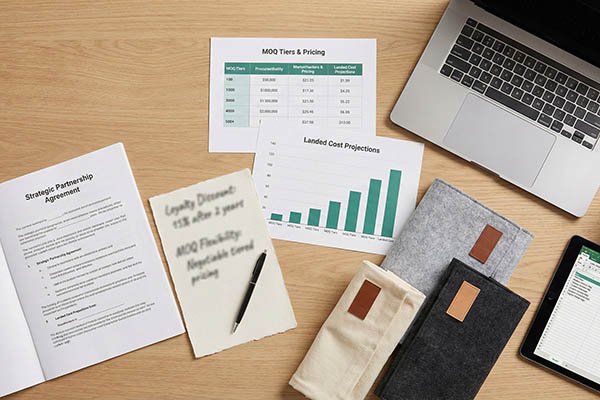
Finding a good supplier is like finding a business partner. When you stick with one factory, we get to know your brand. We know your quality standards. This reduces mistakes. Mistakes are expensive because they cause delays and returns.
Suppliers value consistent customers. If you order regularly, we can offer you better terms.
- Discounts: We might give you a lower unit price for being a loyal client.
- Faster Production: We can prioritize your order during busy seasons.
- Lower MOQs: We might accept smaller orders for you because we trust you.
Also, repeat orders are cheaper to produce. We keep your printing screens and molds. When you reorder the same design, you do not pay the setup fees again. This is an instant saving. Do not just chase the lowest price for every single order. Look for a partner who helps you grow over the long term. A stable supply chain saves you money and stress.
Conclusion
To manage costs, balance material quality with order volume and choose sea shipping. Plan early, simplify designs, and build strong supplier relationships to secure the best profit margins.
Frequently Asked Questions
Q: Do I have to pay for a pre-production sample, and is it refundable?
A : Yes, suppliers typically charge a sample fee to cover the setup of screens and sourcing specific materials. However, many suppliers (including us) will refund this sample fee once you place a bulk order that meets a certain quantity (usually over 1,000 pieces), effectively making the sample free.
Q: How much does individual packaging (like polybags) add to the unit cost?
A : Standard bulk packing (usually 50-100 bags per master carton) is the cheapest option and is included in the base price. Adding individual OPP bags or biodegradable polybags for each unit increases labor and material costs, typically adding $0.10 to $0.25 per bag depending on the material and size.
Q: Can I mix different bag colors to reach the Minimum Order Quantity (MOQ)?
A : Usually, yes. If the bag style and size remain exactly the same, most factories allow you to mix fabric colors (e.g., 250 black and 250 natural to hit a 500 MOQ). However, if you change the print color or the artwork between the bag colors, there may be a small extra fee for washing the screens or changing the ink setup.
Q: Does requesting eco-certifications like GOTS or GRS increase the price?
A : Yes. While the material itself costs more, providing the official transaction certificate (TC) for GOTS (Global Organic Textile Standard) or GRS (Global Recycled Standard) often incurs an administrative fee per order. If you need the tags and official paperwork for your marketing, be prepared for a slightly higher total project cost.
Q: What file format should I provide to avoid extra "artwork processing" fees?
A : To save money and time, always provide vector files (AI, EPS, or PDF). If you only provide a low-quality JPEG or PNG, the factory’s design team has to redraw your logo to make it printable. Some suppliers charge a design service fee for this, so providing vector art helps you avoid this unnecessary cost.
Q: Is it cheaper to buy stock bags and print them locally in my country?
A : It depends on the volume. For very small orders (under 100 units) needed in 2 days, buying stock locally is better. However, for orders over 300-500 units, buying custom-made bags directly from China is almost always significantly cheaper, even with shipping included, because the labor and raw material costs are lower at the source.
Q: How much extra should I budget for a "Rush Order"?
A : If you need to cut the production time down (e.g., from 20 days to 10 days), factories often have to pay overtime wages to workers or rearrange schedules. Expect a "rush fee" surcharge of approximately 10% to 20% on the total production cost, plus the inevitable high cost of air shipping.
Q: What is the difference between EXW and FOB pricing terms regarding my budget?
A : EXW (Ex Works) is the factory price only; you must arrange and pay for pickup and export customs. FOB (Free on Board) means the supplier pays to get the goods to the port and clears export customs. FOB is generally safer for you, but EXW looks "cheaper" on paper until you add the hidden logistics fees you will have to pay later.
Q: How do zippers and accessories affect the duty/tax rate?
A : Complex bags with many accessories (metal zippers, leather trims, magnetic snaps) can sometimes be classified under different HS Codes (Harmonized System Codes) for customs. Depending on your country’s import laws, a "fancy" tote might attract a higher tariff rate than a "simple" textile bag. It is wise to check the HS code with your supplier beforehand to estimate tax costs.
Q: If I reorder the exact same bag in 6 months, will the price be the same?
A : Not necessarily. While you save on setup fees (molds/screens), the base unit price fluctuates with raw material markets (e.g., cotton prices change) and currency exchange rates (USD vs. RMB). However, long-term partners often try to hold pricing steady for you as long as the market fluctuations aren’t extreme.

 Français
  English
  Deutsch
  Español
  Português
  Русский
  العربية
  Italiano
  日本語
日本語  한국어
한국어  Dansk
Dansk