Skip to content

Are you treating material selection as a simple purchasing task rather than a strategic business decision? This oversight often leads to wasted budgets and missed branding opportunities in competitive markets.
Material choice is the foundation of product compliance, supply chain stability, and cost control. While standard fabrics ensure market entry and safety, emerging materials drive brand differentiation and support ESG goals. A strategic approach to materials maximizes marketing ROI and strengthens brand positioning.

Many procurement managers focus solely on unit price. They overlook how material specifications impact logistics, compliance, and long-term brand value. This article analyzes the strategic role of different materials in global B2B trade. We will explore why mainstream options remain essential and how new alternatives are reshaping market competition.
How Do Mainstream Materials Still Set the Market Baseline?
Do you wonder why "boring" materials like NWPP and cotton still dominate global orders? These materials provide the necessary stability and compliance for large-scale operations.
Standard materials such as Non-Woven Polypropylene (NWPP) and cotton resolve critical B2B pain points: regulatory compliance, supply scalability, and predictable costs. They serve as the reliable "baseline" for mass-market retail and promotional projects where risk management is the priority.
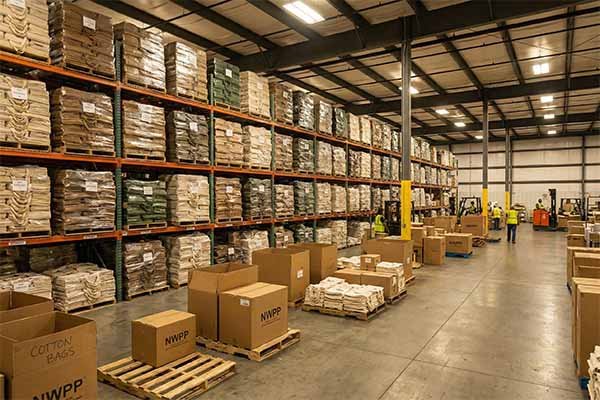
We must recognize that mainstream materials act as the industry standard. They are not outdated; they are foundational. For a B2B buyer, the priority is often risk reduction. NWPP1 e regular cotton2 offer a proven track record. They have established supply chains. This means the lead times are stable. The quality is consistent across large batches. For global retailers, this replicability is more valuable than novelty.
In my experience serving clients in North America and Europe, these materials address "entry-level" requirements. The primary focus here is compliance. Buyers need to know the bags meet safety standards and durability tests. In Asian markets, the focus shifts slightly to cost efficiency and speed. However, the logic remains the same. These materials allow brands to execute large projects without supply chain disruptions. They are the safe choice for high-volume orders.
However, a "safe choice" creates a new challenge. It becomes a commodity. When every brand uses the same standard cotton tote, the material loses its ability to differentiate. It becomes a baseline requirement to enter the market, not a competitive advantage. Buyers must understand that choosing these materials solves the "supply" problem but does not solve the "branding" problem.
Why Are Brands Moving Beyond Conventional Bag Materials?
Is your brand’s promotional investment failing to generate long-term value? Relying on commodity materials may restrict your product’s lifecycle and marketing reach.
Brands are shifting procurement logic from "cost per unit" to "value per impression." Conventional materials often suffer from visual homogeneity and limited usage scenarios. Upgrading materials extends product lifespan, transforming a disposable packaging cost into a durable marketing asset.
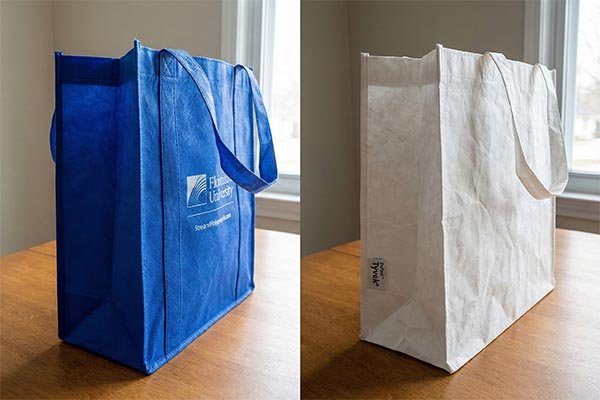
The B2B procurement logic is evolving. Previously, buyers viewed reusable bags as a line item for packaging. The goal was cost minimization. Now, marketing teams view these bags as a mobile billboard. This shift changes the requirements for materials. A bag that degrades quickly or looks generic fails to deliver ongoing brand exposure. We see a clear move toward materials that justify a longer shelf life in the consumer’s home.
Conventional materials have exposed their limitations in the current market. The market is saturated with standard non-woven and cotton bags. They lack distinctiveness. If your bag looks identical to your competitor’s bag, your brand identity is diluted. Furthermore, standard materials limit the usage scenario. A basic cotton bag is often relegated to light shopping. It does not penetrate other high-value scenes like travel, work, or social events.
This is a strategic pivot. Brands are not just buying "new cloth." They are buying "usage frequency." A better material structure or texture encourages the end-user to keep the item. This moves the product from an operational expense (OpEx) to a marketing investment. Buyers are willing to accept higher unit costs if the material guarantees that the bag will be reused for twelve months instead of one week.
What Emerging Materials Are Gaining Global Attention?
Are you struggling to align your physical products with your company’s corporate sustainability goals? Adopting emerging materials can directly support your ESG reporting and brand narrative.
Recycled PET (rPET), Tyvek, and composite structures are gaining market share in high-value segments. These materials are chosen not just for aesthetics, but because they validate corporate sustainability claims (ESG) and open doors to premium lifestyle markets.

We are observing a targeted adoption of specific new materials. This is not a random trend. It is driven by corporate strategy. Recycled PET (rPET)3 is the leading example. For global companies with clear carbon reduction targets or ESG commitments, rPET is a strategic solution. It allows the procurement team to report tangible sustainability metrics. The material itself tells a story of "waste reduction" that aligns with corporate responsibility. This is particularly effective in the European and North American markets.
On the other hand, materials like Tyvek (paper-like) and washable kraft paper serve a different purpose. They target the "lifestyle" segment. These materials distinguish a brand as design-conscious. We see strong demand for these from clients in the hotel, cosmetics, and cultural sectors. They use these materials to separate themselves from mass-market retailers. The material is durable, water-resistant, and visually unique. It commands attention.
| Material Category | Strategic Driver | Target Sector |
|---|---|---|
| rPET | ESG & Carbon Goals | Corporate, FMCG, Retail |
| Tyvek / Paper | Design Differentiation | Lifestyle, Fashion, Hospitality |
| Composite | Performance & Utility | Outdoor, Tech, Travel |
There is also a niche for composite or hybrid materials. These address the functional weaknesses of pure eco-materials. They offer the durability needed for heavy-duty use. While these materials currently represent a smaller volume of total exports, their value per unit is high. They are used for projects where performance is critical. This proves that buyers are becoming more sophisticated in matching material properties to specific project goals.
How Do New Materials Change Usage and Brand Perception?
Does your merchandise budget yield a low return because customers discard your items? Material quality directly dictates the retention rate and the environment in which your brand is displayed.
Advanced materials shift consumer behavior from "disposal" to "retention." High-quality fabrics position the bag as a functional accessory rather than a freebie, significantly extending the duration of brand exposure and associating the company with quality and reliability.

The material determines the destiny of the bag. From a data perspective, we look at "retention rate." A bag made from flimsy material has a high discard rate. It is often treated as single-use packaging. This creates a very high "Cost Per Impression" (CPM) because the advertisement disappears quickly. In contrast, superior materials change the user’s behavior. The item transitions from a "giveaway" to a "personal possession."
When a bag is durable and aesthetically pleasing, it enters the user’s daily rotation. It appears in offices, subways, and gyms. These are high-value environments for brand visibility. The consumer becomes a brand ambassador. This secondary propagation is free marketing. The initial procurement cost might be 30% higher, but the marketing duration is 500% longer. This is the math that smart B2B buyers are doing today.
Furthermore, the material impacts brand perception. A brand that provides a high-quality, reusable item signals stability and generosity. A brand that provides a cheap, tearing bag signals cost-cutting. In B2B relationships, these signals matter. The physical quality of your promotional materials reflects the quality of your services or products. Therefore, material selection is a direct component of brand reputation management.
Why Is Material Strategy Becoming a Competitive Advantage?
Are you applying a "one-size-fits-all" approach to your procurement? Segmenting your material strategy based on market position is the key to optimizing costs and maximizing impact.
Successful buyers now segment their material choices: low-cost options for volume projects and premium materials for brand building. This strategic alignment reduces trial-and-error costs, facilitates internal stakeholder approval, and ensures the product fits the specific market context.

We advise clients to stop looking for a "perfect" universal material. It does not exist. Instead, successful companies use a portfolio strategy. They map materials to specific business objectives. For high-volume, wide-distribution campaigns, standard NWPP or cotton is the correct strategic choice. It controls the budget and ensures coverage. For VIP gifting, limited editions, or paid retail products, they switch to rPET ou Tyvek.
This segmentation creates a competitive advantage. It prevents overspending on low-impact channels and underspending on high-impact channels. It also streamlines the internal approval process. When a procurement manager can explain why a more expensive material is needed for a specific project (e.g., "This rPET bag fulfills our Q3 sustainability mandate"), it is easier to get budget approval. It shifts the conversation from price to value.
Additionally, this strategy reduces market risk. Testing new materials in smaller, high-value projects allows a company to gauge market reaction without committing to a massive order. It balances innovation with security. Ultimately, material selection has graduated from a tactical manufacturing detail to a strategic lever. It is a tool for market entry, brand positioning, and budget optimization.
Conclusão
Material selection is a strategic lever for B2B success. It determines compliance, defines brand perception, and optimizes marketing ROI by balancing cost efficiency with long-term product retention.
Frequently Asked Questions
Q: How does the choice of material impact the available printing methods for my logo?
A: Material texture dictates print quality. Smooth materials like laminated NWPP or Tyvek are best for complex, full-color CMYK graphics (Rotogravure or Digital printing). Textured materials like canvas or jute are better suited for simple spot colors using Silk Screen printing. Heat transfer is an option for detailed logos on canvas, but it increases the unit cost.
Q: Is there a significant difference in Minimum Order Quantity (MOQ) between standard and emerging materials?
A: Yes. Standard materials like NWPP and regular cotton are kept in stock, allowing for lower MOQs (often 500–1,000 pcs). Emerging materials like specific grades of rPET or custom-colored Tyvek often require the fabric to be manufactured from scratch, usually requiring MOQs of 3,000 to 5,000 pieces or more depending on fabric availability.
Q: Which certifications should I request to verify the authenticity of recycled materials like rPET?
A: To ensure the material is genuinely recycled, you should request a GRS (Global Recycled Standard) certificate. For organic cotton, look for GOTS (Global Organic Textile Standard). These certificates track the chain of custody from the raw waste to the final fabric, ensuring you are not paying a premium for standard virgin plastic.
Q: How does material weight (GSM) correlate with the bag’s load-bearing capacity?
A: Generally, a higher GSM (Grams per Square Meter) means a thicker, stronger fabric. However, tensile strength varies by material type. For example, a 100gsm Woven PP bag is significantly stronger than a 140gsm Cotton bag due to the structural integrity of the plastic fibers. For heavy grocery use, we recommend at least 80gsm for NWPP and 10oz for Cotton.
Q: What is the typical shelf-life of Non-Woven Polypropylene (NWPP) bags in storage?
A: NWPP is designed to photodegrade over time. If stored in a warehouse with exposure to direct sunlight or high UV levels, the material can become brittle and crack within 6 to 12 months. For long-term inventory, these bags must be stored in cool, dark environments to maintain their structural integrity.
Q: Can Tyvek bags be washed like cotton totes?
A: Yes, but with differences. Tyvek is water-resistant and can be hand-washed or wiped down easily. It does not shrink like cotton. However, Tyvek develops a "wrinkled" leather-like texture after washing and repeated use, which is a desirable aesthetic for lifestyle brands but may not suit brands looking for a permanently crisp look.
Q: How much additional lead time should I plan for if switching from NWPP to rPET?
A: You should buffer an additional 15 to 20 days. While NWPP production is almost immediate due to stock fabric, rPET often requires a process of turning bottle flakes into fiber, weaving the fabric, and then printing. If the specific rPET thickness you want is not in stock, the lead time covers the entire fabric production cycle.
Q: Are composite (laminated) bags harder to recycle than single-material bags?
A: Yes. A bag made of 100% cotton or 100% NWPP is easier to process at recycling facilities. Composite bags (e.g., a cotton bag with a plastic waterproof lining or a laminated woven bag) require the layers to be separated before recycling, which many municipal facilities cannot do. This is a trade-off between durability and end-of-life recyclability.
Q: Do "biodegradable" additives in plastic bags actually work?
A: We advise caution here. Many "oxo-biodegradable" additives merely cause the plastic to fragment into microplastics faster rather than fully decomposing. For a truly compostable option, you should look for certified materials like PLA (Polylactic Acid) or cornstarch-based blends that meet ASTM D6400 or EN 13432 standards, rather than standard plastics with additives.
Q: How does the cost of rPET compare to standard Non-Woven PP?
A: rPET is generally 20% to 40% more expensive than virgin Non-Woven PP. The higher cost comes from the processing of collecting, cleaning, and remanufacturing waste plastic. However, this price gap is narrowing as recycling technologies improve and demand increases.
-
Explore this link to understand how NWPP can enhance your supply chain efficiency and reliability. ↩
-
Discover the significance of regular cotton in meeting safety standards and ensuring product durability. ↩
-
Explore how Recycled PET (rPET) can enhance corporate sustainability efforts and meet carbon reduction targets. ↩




 Português
  English
  Deutsch
  Español
  Русский
  العربية
  Français
  Italiano
  日本語
日本語  한국어
한국어  Dansk
Dansk