コンテンツへスキップ

Sourcing custom packaging is a critical step for your business, but factory requirements often clash with your inventory plan. Balancing your budget with the Minimum Order Quantity (MOQ) is key to a successful launch.
The right MOQ depends on your material choice, printing complexity, and product specifications. While established brands order 1000+ units for cost efficiency, startups can secure orders of 100 to 300 units by using standard materials. Aligning these factors with your business model reduces risk.
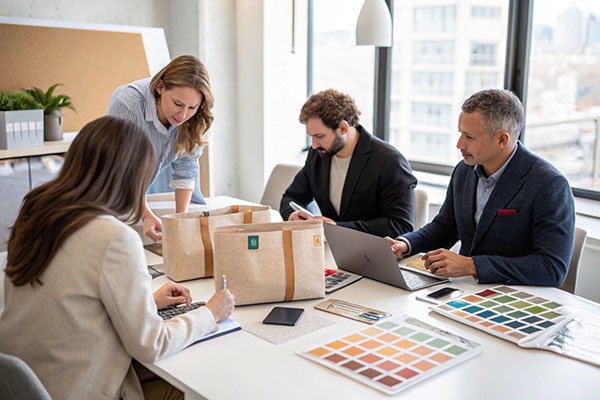
Every decision you make regarding the design impacts the factory’s ability to produce small batches. Let us examine the production factors that define these limits.
What Factors Decide the MOQ for Custom Bags?
Buyers often ask why MOQ1 varies so much between different designs. The answer lies in the fixed costs of production setup.
Key factors include raw materials, printing methods, bag dimensions, and hardware. Stock fabrics and standard sizes allow for lower MOQs, often around 100 pieces. In contrast, custom-dyed fabrics or complex multi-color prints require higher volumes to amortize the setup costs effectively.
Materials:
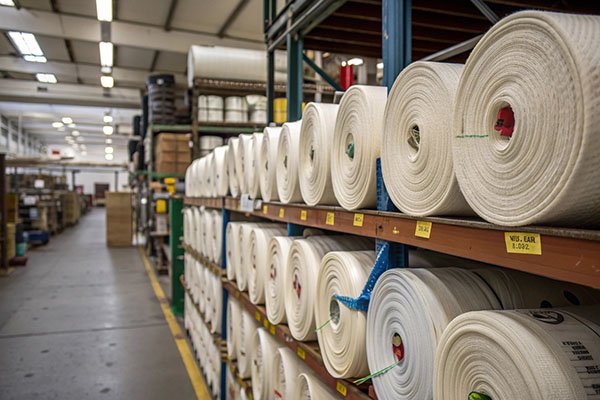
This is the starting point. Factories buy fabric in large rolls. If you choose a common material like standard cotton canvas or generic nylon, the factory likely has it in stock. This allows for flexible, low-volume orders. However, if you require a specific Pantone color or a specialized fabric like Tyvek or rPET, the factory must purchase a minimum amount of raw material from the mill. This drives the MOQ up because we cannot buy just a few meters of custom cloth.
Printing Methods:
Your logo design affects the order size.
- Digital Printing: This is ideal for complex, colorful designs on small batches. There are no expensive plate costs, so it works well for low MOQs.
- Screen Printing: This is the industry standard for high quality. However, each color requires a separate screen frame. For a design with many colors, the setup cost is high. To make the unit price reasonable, you need a larger order volume.
- Heat Transfer: This is great for photos or gradients, but the film used for transfer often has its own minimum purchase requirement, usually pushing the bag MOQ to 500 pieces.
Dimensions and Shapes:
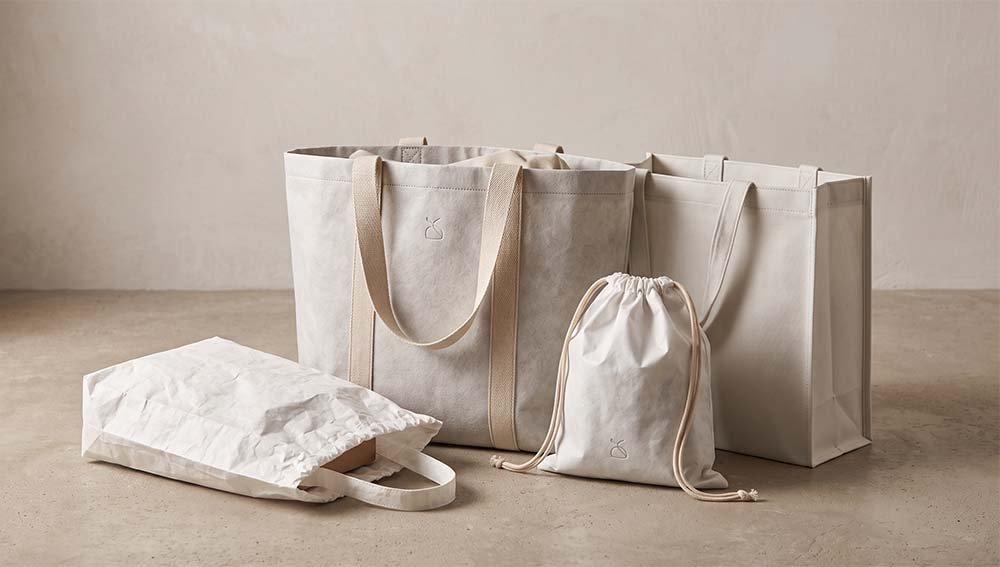
Standard shapes like tote bags or drawstring bags are efficient. We know exactly how to cut the fabric to minimize waste. If you request a custom size, even a small change can create significant fabric scrap. To balance the cost of this waste, the order quantity must be higher.
Accessories:
Zippers, buttons, and custom handles also have MOQs. Sourcing 100 custom gold zippers is difficult because the zipper supplier usually sells in thousands. Using stock accessories keeps your MOQ low.
Understanding these technical limits helps you match your product needs with the right industry standards.
Why Different Industries Need Different MOQ Levels?
Your business model dictates your inventory turnover and budget. Different industries have established MOQ norms based on how the bags are used.
Beauty brands typically order 300 to 500 premium pouches to match high-end product launches. Conversely, trade show organizers need 1000 to 2000 low-cost bags for mass distribution. Startups usually limit orders to 100 units to test market response without overstocking.
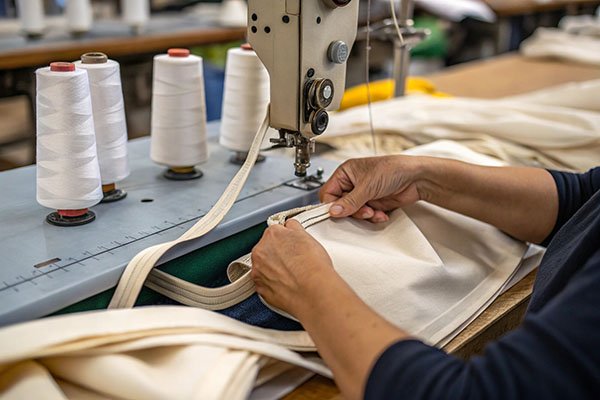
Aligning your order volume with your industry’s habits helps you manage cash flow and storage effectively.
Beauty and Personal Care:
In this sector, packaging is part of the product value. Brands often require zipper pouches or drawstring bags made from high-quality cotton or velvet. The focus is on brand image rather than massive distribution. Because the unit value of the product inside is high, brands can afford a slightly higher unit cost for the packaging. An MOQ of 300 to 500 pieces is standard. This quantity balances reasonable production costs with a manageable inventory level for a seasonal launch.
Wine and Beverage:
Wineries and beverage distributors use bags for retail display or gifting. The industry favors sturdy materials like ジュート or heavy canvas. The shapes are usually standard wine totes or bottle drawstring bags. Since these designs are simple and the materials are often in stock, factories can be flexible. Orders typically range from 300 to 500 units. This allows businesses to cover a holiday season or a specific marketing campaign without renting extra warehouse space.
Events and Exhibitions:
For trade shows, the primary goal is brand visibility at a low cost. Organizers need to distribute thousands of units. They choose materials like non-woven fabric or rPET because they are cheap. However, to get the unit price down to the necessary level, the volume must be high. The standard MOQ here is 1000 to 2000 pieces. This volume ensures that machine setup costs are spread thin, resulting in a very low price per bag.
Startups and Retail Brands:
New businesses face the highest risk. You need to validate your product before committing capital. Startups often select standard canvas tote bags or simple drawstring bags. By keeping the design simple—perhaps just a logo on a blank bag—we can support MOQs as low as 100 pieces. This allows new brands to enter the market, gather customer feedback, and iterate on the design for the next batch.
If your required volume is lower than the industry standard, you need strategies to negotiate.
How You Can Lower the MOQ Without Reducing Quality?
Smart procurement involves finding the intersection between what you want and what the factory can easily make. You can lower limits by standardizing specs.
To reduce MOQ, select un-dyed stock fabrics and standard bag dimensions. Minimizing complex accessories like linings or pockets also simplifies production. Consulting with your manufacturer early allows you to find a specification that fits your budget and their production lines.
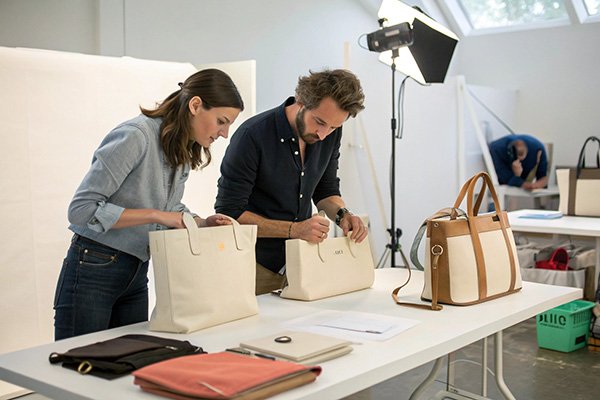
Reducing MOQ does not mean you have to sell a low-quality product. It means designing for manufacturing efficiency. When you make the factory’s job easier, they can accommodate smaller orders.
Leverage Stock Materials:
The biggest barrier to low MOQ is material sourcing. Ask your supplier what fabrics they currently have in the warehouse. Using "off-the-shelf" natural canvas or standard black cotton eliminates the need for the factory to purchase new raw materials. This removes the material MOQ constraint entirely, allowing you to order just what you need for production.
Standardize Your Size:
Factories have templates and cutting molds for common sizes. If you insist on a bag that is 31cm wide when the standard is 30cm, you force the creation of new molds and potential material waste. Adopting the factory’s standard dimensions saves labor and material. This efficiency makes the factory more willing to accept a smaller order, such as 200 units instead of 500.
Simplify Construction:
Review your tech pack. Do you really need an inner zipper pocket for a promotional tote? Do you need a magnetic clasp? Every additional sewing step adds time to the production line. For a small batch, the setup time for these complex steps might exceed the actual sewing time. Simplifying the construction—removing linings, using standard handles—streamlines the process.
Negotiate Based on Potential:
Suppliers look for long-term partners. If you need a small initial order, explain your business plan. If you can show that a trial order of 100 units will lead to a re-order of 500 units in three months, many manufacturers will accept the lower initial volume as an investment in the relationship. Transparency builds trust and flexibility.
Real-world examples illustrate how these strategies work in practice.
What Real MOQ Examples Can Help You Plan Your Order?
Analyzing how other businesses manage their orders can help you structure your purchasing plan. Here are actual cases from our clients.
A soap brand scaled from 300 to 500 units by keeping designs simple. A home goods startup tested a new line with just 100 totes. These cases prove that starting small with standard specifications helps you grow safely.
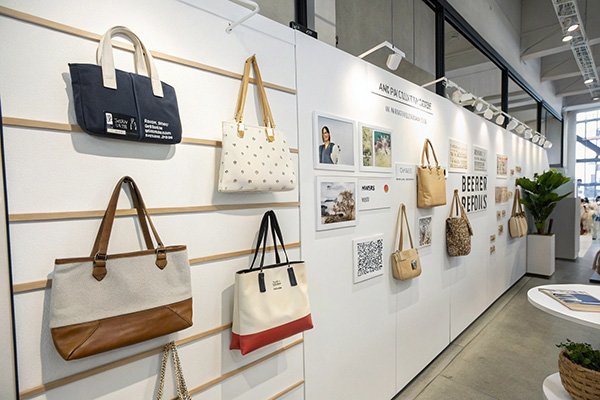
At Avecobaggie, we have supported many B2B clients through their growth stages. Their choices regarding MOQ reflect successful inventory management strategies.
Case Study: The Canvas Drawstring Bag:
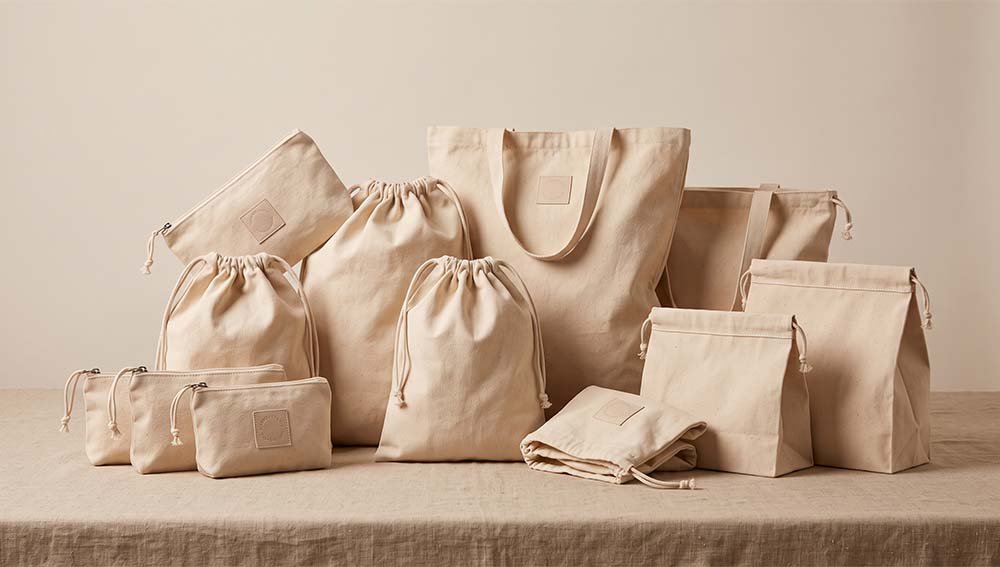
A client in the organic skincare sector needed packaging for soap bundles. They selected a standard canvas drawstring bag. By choosing a stock fabric and a single-color logo print, they avoided high setup fees. They started with an order of 300 units. As their B2B wholesale channel grew, they increased their standing order to 500 units per quarter. This consistency allows them to maintain a stable unit price.
Case Study: The Startup Kitchen Collection:
A design studio wanted to launch a textile series including tea towels and matching tote bags. They were unsure if the tote bags would sell. We advised them to use our standard tote bag size to minimize risk. They placed a trial order of 100 bags. The low entry barrier allowed them to test the market. The product sold out quickly, and they now order 500 to 1000 units, adding new prints to the series regularly.
Case Study: The Wine Bag Transition:
A wine distributor initially ordered standard jute drawstring bags. When they returned for a re-stock, we proposed a new Jute Tote design to diversify their offering. To mitigate risk, we allowed a pilot run of 100 totes. The market feedback was excellent. They now consolidate their orders, purchasing both drawstrings and totes in larger batches to maximize shipping efficiency.
Case Study: The Urgent Event:
A corporate client needed 2000 non-woven bags for a sudden trade show opportunity. They had less than two weeks. Because they accepted our recommendation for standard size and stock material, we skipped the material sourcing phase. We went straight to production. The high volume of 2000 units actually accelerated the process because we could dedicate a full team to it. They received the goods in under 10 days.
Key Takeaways for Your Sourcing Strategy
Choosing the right MOQ is a balance between your financial constraints and the reality of manufacturing. It is not just a number; it is a business decision.
Plan your budget, clarify your usage, and treat your supplier as a partner. By understanding the trade-offs between design complexity and order volume, you can secure the best packaging solution for your current business stage.
As you finalize your procurement plan, keep these core insights in mind to ensure a smooth process.
1. Define Your Usage Scenario:
Are these bags for sale or for giveaway? If they are for sale, quality is paramount, and a slightly higher unit cost on a lower MOQ (300-500) is acceptable. If they are giveaways, volume matters. Aim for 1000+ to get the price down.
2. Audit Your Cash Flow and Storage:
Do not order 1000 bags just to get a discount if you only sell 50 a month. The cost of storing inventory and tying up cash often outweighs the savings on the unit price. A smaller MOQ of 200 might have a higher unit price, but it keeps your cash flow healthy.
3. Use Standard Specs for Low Volume:
If you must order small (under 300), be flexible with the design. Use what the factory has. Stock fabric and standard sizes are your best friends for low-risk trials.
4. Build a Partnership:
Factories are businesses too. We prefer growing with a client rather than a one-off deal. Be open about your projections. Negotiate tiered pricing—ask what the price is for 100, 500, and 1000. This gives you a roadmap for growth.
結論
Successful sourcing starts with matching your design to your volume. Start with a realistic MOQ that fits your budget, and scale up as your business grows.
Frequently Asked Questions About Custom Bag Orders
Q: Can I mix different bag colors to reach the required MOQ?
A: In many cases, yes. If you are using stock fabric, we can often allow you to split an order of 500 pieces into two colors (e.g., 250 natural, 250 black). However, please note that if the logo ink color needs to change to match the fabric, a small "ink change fee" or screen setup fee may apply.
Q: If I order below the stated MOQ, is it completely impossible to produce?
A: Not necessarily. If you need 50 bags but the MOQ is 100, we can sometimes process it as a "sample run" or apply an "under-minimum fee." This surcharge covers the fixed setup costs (machine calibration, screen making) that would normally be amortized over a larger number of units.
Q: Does ordering the MOQ limit my shipping options?
A: Yes, logistics are tied to volume. Small MOQ orders (e.g., 100-300 units) are typically light enough for express air courier (DHL/FedEx), which is fast but has a higher per-unit cost. Larger orders (1000+ units) enable you to use sea freight, which drastically reduces your shipping cost per bag but takes longer to arrive.
Q: Is the cost of the pre-production sample refundable?
A: Typically, yes. If you pay for a physical sample to test the quality and print, that cost is often credited back to you when you place a bulk order that meets or exceeds a certain quantity (usually 500 or 1000 pieces).
Q: Do re-orders have the same MOQ requirements as the first order?
A: The minimum quantity usually remains the same because the machines still need to be set up. However, for re-orders, you often save money on "setup fees" (like screen plate charges) since we keep your molds and screens on file for a specific period.
Q: How do sustainable materials like rPET affect the lead time for small MOQs?
A: Specialized eco-materials like rPET or Tyvek are not always kept in stock in every color. If you are ordering a small batch of a specific eco-fabric, the lead time might be longer than standard cotton because we have to wait for the fabric mill to consolidate orders before they ship the material to us.
Q: Can I change the artwork design within a single MOQ batch?
A: No, the MOQ is generally per design/per size. If you want 500 bags but with two different logos (250 of each), this counts as two separate setups. Effectively, you are placing two separate orders, and the price will reflect that split.
Q: What is the standard payment term for low MOQ orders versus high volume?
A: For smaller orders (e.g., under $1,000 value), full payment is usually required upfront to cover materials and labor immediately. For larger, high-volume orders, it is standard practice to pay a deposit (often 30-50%) to start production, with the balance due before shipping.
Q: If I provide my own fabric, does the MOQ go down?
A: This is called "CMT" (Cut, Make, Trim). While it solves the material sourcing issue, the factory still has to set up production lines. Therefore, while the 材料 minimums disappear, the labor minimums (sewing line setup) still apply, though they may be slightly more flexible.
Q: How does the number of print locations affect my order minimum?
A: Printing on multiple sides (e.g., front, back, and bottom) increases the complexity and risk of defects. For highly complex, multi-position prints, factories may require a higher MOQ to ensure that after quality control checks, there are enough perfect units to fulfill the order.
-
Understanding MOQ can help buyers make informed decisions and negotiate better deals. ↩
 English
  Deutsch
  Español
  Português
  Русский
  العربية
  Français
  Italiano
  日本語
日本語  한국어
한국어  Dansk
Dansk