Ir diretamente para o conteúdo

High price gaps for similar bags confuse buyers. These sudden cost changes break project budgets. Learning the real cost drivers stops overpaying and keeps procurement plans completely safe.
Custom bag prices depend heavily on material type, fabric weight, print complexity, order volume, and shipping methods. Extra features like zippers also increase costs. Understanding these exact elements helps procurement managers compare quotes accurately and control project budgets.
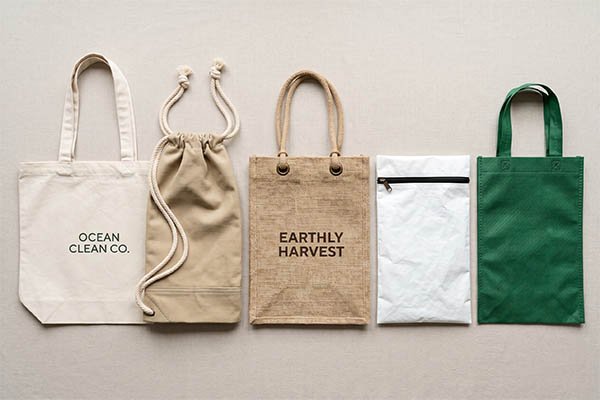
Bag size seems like the only big cost factor at first glance.
But hidden details in the supply chain1 change the final quote very fast.
Let us look at the exact reasons below to clarify these differences.
What Fabric Materials Increase the Cost of Custom Tote Bags?
Cheap fabrics break fast. Premium fabrics drain budgets quickly. Selecting the wrong material ruins both the product quality and the financial plan.
The raw material type and fabric weight dictate the base cost. Canvas and eco-friendly RPET cost much more than basic non-woven fabrics. Heavier materials require more raw input and increase shipping weight, raising the final unit price.
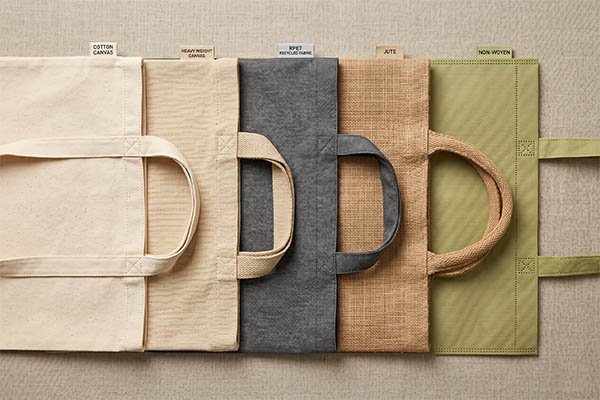
Fabric choice acts as the foundation of bag pricing. Different materials have very different base costs.
Non-woven fabric is cheap. Brands use it for quick events. Cotton and canvas are strong and cost more. They work well for long-term retail.RPET and Tyvek are eco-friendly. These options cost the most money.
Many buyers only look at bag dimensions. They completely ignore the fabric weight. Fabric weight is a major cost driver. A 12oz canvas bag uses twice as much cotton as a 6oz bag. This fact increases the raw material fee. Heavy bags also increase shipping volume and logistics fees.
Sustainable materials have a complex supply chain. RPET requires plastic recycling processes and exact GRS certifications2. These extra steps force factories to charge higher prices. The market prices for raw cotton and plastic fluctuate often. Factories must buy these materials in bulk. Choosing heavy canvas means paying for thicker yarn. Thicker yarn takes longer to weave. The production time increases significantly. Procurement managers must specify the exact fabric weight. Exact material specifications create fair supplier comparisons. You can explore our custom canvas bags to see different weight options. Selecting the correct thickness balances quality and budget perfectly. It stops factories from using thin materials to cheat on costs.
Material Comparison Cost Chart
| Tipo de material | Cost Level | Best B2B Application |
|---|---|---|
| Não tecido | Baixa | Fast promotional events |
| Tela | Médio | Long-term retail |
| RPET | Elevado | Eco-friendly brand campaigns |
How Do Printing Methods Affect Custom Bag Pricing?
Poor printing looks cheap. Complex logos cost too much money. Choosing the wrong print method completely wastes the marketing budget.
Silkscreen printing is the cheapest option for simple logos and bulk orders. Heat transfer and digital printing cost more for colorful designs. Every extra color adds plate fees and labor. Large print areas also use more ink.
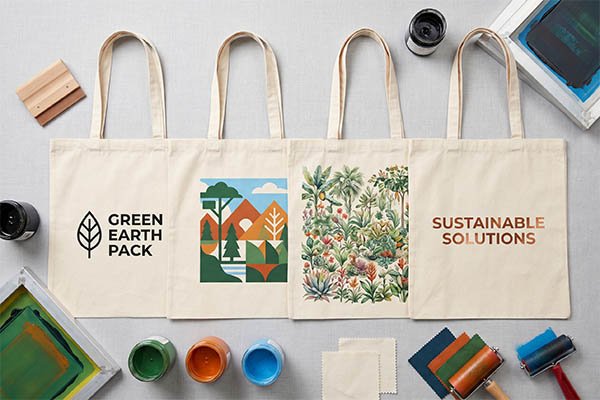
Factories use different methods to print brand logos. Silkscreen printing3 is very common in B2B manufacturing. It is cheap for one or two colors. Heat transfer printing handles multi-color designs well. But it has a higher unit price. Embroidery looks premium. It requires expensive labor.
The number of colors changes the price fast. Every new color needs a new print plate. Workers need more time to set up machines. Printing each color takes extra factory time. This adds up quickly.
The print area size is also important. Full-edge printing uses lots of ink. It takes more time to dry. A huge logo costs much more than a small logo. Reducing the print size saves money. This helps procurement teams control the project cost and avoid printing defects.
Many logo designs have tiny details. Fine details require advanced printing machines. Digital printing captures small lines perfectly. But digital machines process bags slowly. Slow processing increases the final bag price. Big brands sometimes request dual-sided printing. Printing on two sides doubles the machine operation time. It also doubles the ink usage. A simple one-sided logo keeps the budget low. Check our printing guide for custom bags to match your design with the right technique.
Printing Methods Cost Chart
| Print Method | Logo Colors | Unit Price Impact |
|---|---|---|
| Silkscreen | 1-2 Colors | Baixa |
| Heat Transfer | Multi-color | Médio |
| Bordados | 1-4 Colors | Elevado |
Why Do Small MOQ Custom Bags Usually Cost More?
Small orders seem safe. But they cause very high unit prices. Ignored factory limits lead to expensive surprises during procurement.
Small orders cannot share fixed factory costs efficiently. Print setup, machine tuning, and raw material minimums cost the same for 500 or 5000 bags. High custom details make small orders harder to produce, forcing factories to raise unit prices.
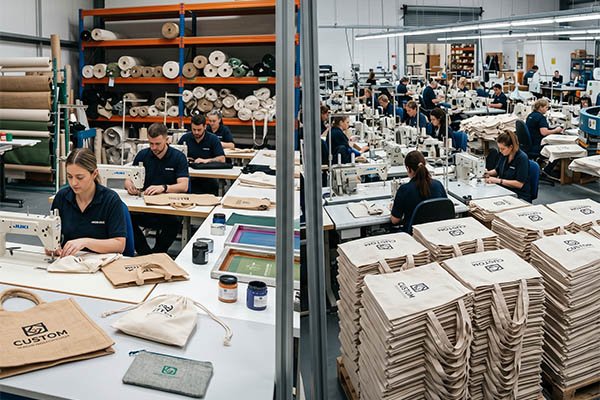
Factories have strict fixed costs for every production run. Workers must set up machines. They must make print plates. They must arrange production lines. These steps take the exact same time for 500 pieces or 5000 pieces.
A large bulk order shares these fixed costs across many units. A small order puts all these costs on a few bags. Fabric suppliers also have high minimum order rules. If a project requires a special brand color, the factory must buy a huge fabric roll. A small order cannot use the whole roll. The buyer pays for the wasted fabric. Learn more about how we handle low MOQ bag orders efficiently for startups.
Special sizes and custom features make small orders very slow. Workers cannot use standard factory molds. Production efficiency drops. Factories lose money on slow lines. They must raise prices to accept highly customized small orders.
Communication takes time. Sales teams spend hours discussing details for small orders. The administrative cost remains the same regardless of order size. Sample making also consumes resources. Factories build physical samples to confirm details. The sample cost feels very high when split across only a few hundred bags. Increasing the order volume lowers the unit price dramatically. Business owners need to balance inventory needs and economies of scale4.
Order Volume Cost Chart
| Order Volume | Fixed Cost Share | Final Price |
|---|---|---|
| 500 pcs | Elevado | Muito elevado |
| 2,000 pcs | Médio | Average |
| 10,000 pcs | Baixa | Very Low |
What Extra Features Can Raise the Price of Promotional Bags?
Simple bags are cheap. Missing features upset end users. Too many custom add-ons destroy the profit margin quickly.
Add-ons like zippers, inside pockets, and custom handles need extra materials and sewing time. Premium choices like waterproof linings or metal zippers increase costs fast. Small details like woven labels add hidden labor fees.
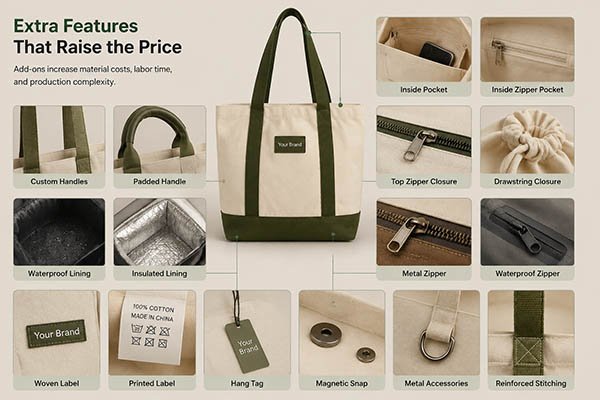
A standard open tote bag is cheap to sew. Adding a zipper changes the whole structure. Nylon zippers are standard. Metal zippers or waterproof zippers cost much more money. Workers need extra time to install the zipper. This increases the direct labor cost.
Inner linings are another big cost factor. A basic cotton lining adds raw material expense. Special linings cost even more. RPET linings, waterproof layers, and thick thermal insulation materials are expensive. Small details add up quickly. Woven labels, custom hang tags, buttons, and velcro need manual work.
Handle structure is very important. A simple webbing handle is fast to sew. A padded handle or reinforced cross-stitching makes the bag strong. But more machine stitches mean more factory time. Complex handles increase the final quote. We offer multiple custom bag handle options to suit different design needs.
Adjustable shoulder straps require metal or plastic buckles. These buckles add extra component fees. Workers must thread the straps through the hardware by hand. This manual step slows down the sewing line. Inside pockets also require separate cutting and sewing phases. Every additional pocket increases the labor time. Simplifying the bag structure removes these hidden assembly costs. A clean design keeps the factory line moving fast.
Extra Features Cost Chart
| Feature Added | Custo do material | Labor Impact |
|---|---|---|
| Nylon Zipper | Baixa | Médio |
| Waterproof Lining | Elevado | Elevado |
| Padded Handle | Médio | Elevado |
How Does Shipping Impact the Final Cost of Bulk Custom Bags?
High shipping fees ruin good factory prices. Huge boxes cost lots of money to transport. Bad logistics planning destroys margins.
Custom bags are bulky but lightweight. Carriers charge by volumetric weight, making big cartons expensive to ship. Sea freight is cheap for big orders, while air freight is fast but costly. Smart packaging cuts total shipping volume.
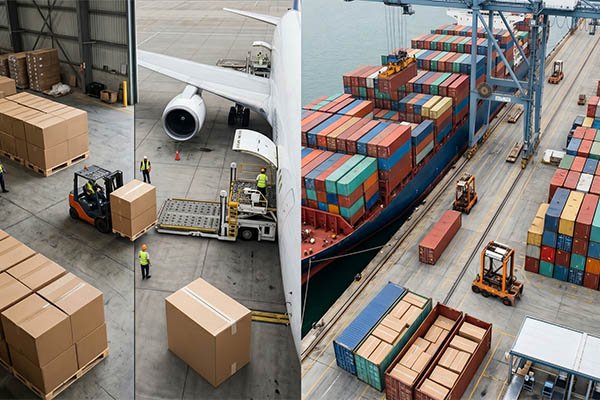
Custom bags are tricky to transport. They do not weigh a lot. But they take up huge space. Shipping companies use volumetric weight5. They charge for the carton size, not just the physical weight. A big box of light bags costs a lot of money. Buyers pay for empty air.
Sea freight is very cheap. It is the best choice for bulk B2B orders. But it takes a long time. Air freight is very fast. It works well for urgent events. But air freight is extremely expensive. Smart factory packaging saves money. Factories fold bags tightly. Vacuum packing removes air. Smaller cartons mean lower shipping fees. Check our shipping and delivery policy to understand our logistics support.
Customs fees and local delivery costs vary heavily by country. Procurement teams must calculate all logistics costs before confirming the final order. Warehouse storage adds another expense. Arriving goods need storage space before distribution. Large cartons require more warehouse pallets. More pallets equal higher monthly storage bills. Port delays sometimes occur. Delays force buyers to pay demurrage fees. Planning efficient carton sizes prevents wasted space inside the shipping container. Good container planning maximizes the number of bags per shipment.
Shipping Methods Cost Chart
| Shipping Method | Delivery Speed | Cost Level |
|---|---|---|
| Sea Freight | Slow | Baixa |
| Air Freight | Fast | Elevado |
| Express | Very Fast | Muito elevado |
How Can Brands Reduce Custom Bag Costs Without Sacrificing Quality?
High quality does not require high prices. Wasted design features drain cash. Optimizing the bag structure saves money fast.
Reducing logo colors and simplifying print areas drops prices quickly. Choosing standard bag sizes and stock fabric colors avoids extra mold fees. Planning orders early allows for cheap sea freight and avoids sudden raw material price jumps.
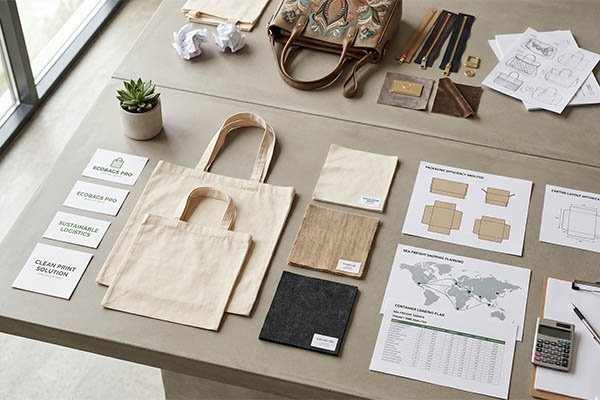
A complex design is not always necessary. The fastest way to drop costs is reducing logo colors. A single-color logo is cheap and classic. Making the print area smaller saves money. Avoiding edge-to-edge printing saves ink and factory labor.
Custom bag sizes cost extra money. Factories use standard cutting molds. Standard sizes eliminate new mold fees. Using regular fabric colors from factory stock is smart. Special dyed fabrics require high minimum orders and long wait times.
Time is money in B2B manufacturing. Late orders force the use of air freight. Early planning allows the use of cheap sea freight. Early orders also protect budgets. Commodity pricesfluctuate constantly. Booking early locks in a good material price. Factories offer better production schedules for early stock orders.
Removing complex accessories streamlines production. Replacing metal zippers with velcro drops the hardware cost. Choosing a basic cross-stitch over a padded handle cuts labor time. Simplifying the inner structure removes the need for expensive linings. Bulk purchasing always wins. Consolidating orders for the whole year ensures the lowest possible unit price. Strategic planning replaces rushed decisions. Contact our team for a custom bag quote to get professional cost-saving advice.
Cost Reduction Strategy Chart
| Saving Action | Money Saved | Quality Impact |
|---|---|---|
| Use fewer print colors | Elevado | None |
| Pick standard bag sizes | Médio | None |
| Order months early | Muito elevado | None |
Conclusão
Understanding material weights, print setups, accessories, and shipping avoids hidden costs. Smart B2B procurement choices in these areas keep budgets completely safe and ensure highly successful custom bag projects.
Frequently Asked Questions
Q: What are the standard payment terms for B2B custom bag orders?
A: Most suppliers require a 30% deposit before production starts. You pay the remaining 70% balance before shipment after the final quality inspection.
Q: Does the quoted production lead time include shipping days?
A: No, production lead time only covers the actual manufacturing process. You must add the sea or air freight transit time to calculate your final delivery date.
Q: What is an acceptable defect rate for bulk custom bag manufacturing?
A: In mass production, an acceptable defect rate is typically around 1% to 2%. Suppliers usually provide a few extra bags in the shipment to cover these minor issues.
Q: Can you match the bag fabric exactly to my brand’s Pantone color?
A: Yes, factories can dye the raw fabric to match a specific Pantone color. However, custom dyeing requires a much higher Minimum Order Quantity and extends the production wait time.
Q: Are the master cartons used for shipping bags waterproof?
A: Standard corrugated shipping cartons are not completely waterproof. Factories line the inside of the carton with a large plastic polybag to protect your bags from moisture during ocean transit.
Q: What file format does the factory need for my custom bag logo?
A: Factories require vector graphics formats like AI, EPS, or vector PDF. Vector files ensure the logo remains perfectly sharp and clear when printed on the actual fabric.
-
Supply chains encompass the entire process of creating and delivering a product. ↩
-
The Global Recycled Standard verifies the recycled content of products globally. ↩
-
Screen printing pushes ink through a woven mesh stencil onto the fabric. ↩
-
Economies of scale refer to cost advantages gained by increased production. ↩
-
Volumetric weight is a pricing technique used by freight companies worldwide. ↩


 English
  Deutsch
  Español
  Português
  Русский
  العربية
  Français
  Italiano
  日本語
日本語  한국어
한국어  Dansk
Dansk