Skip to content

Brands design great bags. A bad zipper breaks later. This defect ruins the product and causes returns. Procurement managers must pick the right zipper to save the brand.
B2B buyers must select zippers based on bag use, load capacity, and environment. Matching the material, size, slider, and finish to specific needs is critical. Lock these specifications into tech packs and supplier agreements to prevent production errors and ensure stable quality.
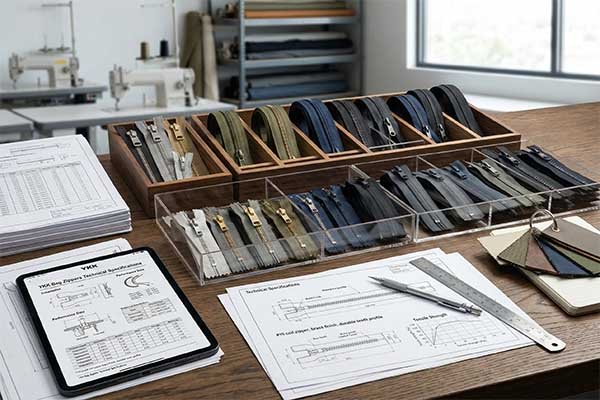
Many procurement teams ignore zipper details until a large batch fails. Supply chain managers must learn the core elements of zipper selection before placing the next order. Skipping this review step directly increases the risk of high return rates and unhappy end users.
What Factors Should You Consider When Selecting a Zipper?
Buyers order custom bags blindly. Factories use cheap zippers. The bags fail in the market. Brands must review key application factors to stop this costly problem.
Procurement managers must evaluate the bag use case, durability needs, budget, and brand quality expectations. Weight, daily wear, and production volume strictly dictate the correct zipper choice. This evaluation guides the entire purchasing decision.
Bag Use Cases and Load
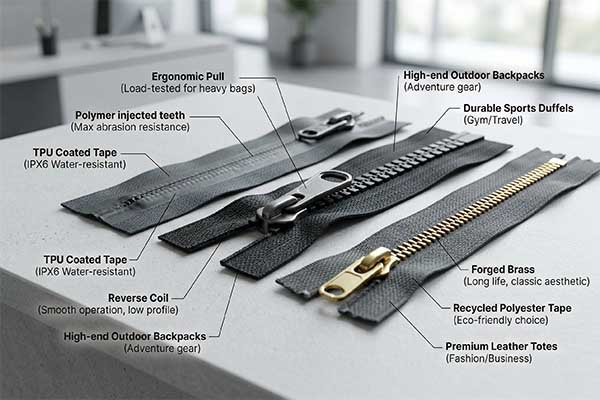
Different bags face different physical demands. Everyday tote bags carry low loads. Cosmetic pouches face low stress and have low cosmetic risks if a failure happens. Travel luggage and outdoor backpacks face high loads and rough handling. Tactical bags might face dust or rain exposure. A simple rule exists for buyers. Higher loads and heavier abuse require larger zipper gauges. Heavy bags also need more robust chain types.
Durability and Budget Rules
Zipper life matters for long-term B2B success. Frequent use wears down weak zippers quickly. The product needs a zipper that matches its expected lifespan. A broken zipper creates immediate customer returns and damages brand reputation. Brands must also manage production costs. Metal zippers cost more than nylon coil zippers. Nylon zippers help optimize costs for large volume orders. Buyers must find a strict balance between cost control and material quality.
Brand Quality Expectations
The target market sets the standard. High-end brands often require premium zippers like YKK or Riri. These choices improve customer perception and product value. Lower-tier bags can use standard OEM zippers to meet tight budgets.
| Factor | Focus Area | B2B Impact |
|---|---|---|
| Use Case | Weight and load | Dictates zipper size and strength |
| Durability | Expected lifespan | Reduces after-sales risk |
| Budget | Production volume | Guides material type selection |
| Brand | Quality perception | Determines supplier brand choice |
Why Does Zipper Material Matter for Your Bag?
A brand puts a metal zipper on a sports bag. The zipper rusts after rain exposure. Customers complain loudly. Supply chains must match materials to specific environments.
Zipper material determines strength and weather resistance. Metal provides a premium look for leather goods. Nylon coil offers smooth flexibility for daily backpacks. Molded plastic resists dirt and water effectively for outdoor gear.
Metal Zippers
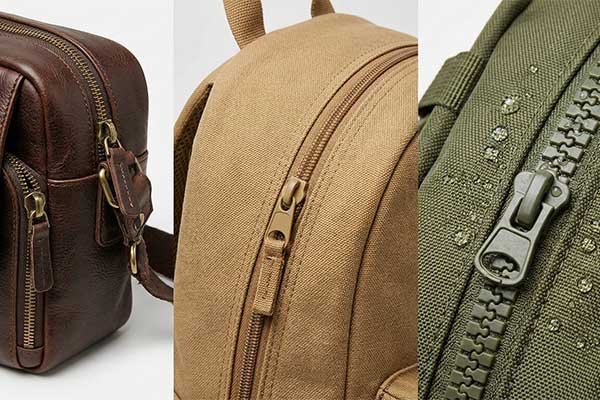
Factories manufacture metal zippers from brass, aluminum, or zinc alloys. These materials look premium and feel very solid. Luxury hand bags and high-end leather goods frequently use metal zippers. However, metal can corrode over time. Outdoor gear and marine bags should completely avoid metal zippers.
Nylon Coil Zippers
Nylon coil zippers provide extreme flexibility. They run very smoothly around curved bag corners. This material offers strong burst strength. Daily fashion backpacks, office bags, and internal pockets rely on nylon coil. Coil zippers help control costs for medium to large production batches. Sometimes, heavy dirt can gum up the tight coils.
Molded Plastic Zippers
Molded plastic zippers feature rigid individual teeth. This structure makes them highly durable. They resist corrosion perfectly. Sand, dirt, and ultraviolet light do not damage them easily. Outdoor backpacks, waterproof travel bags, and sports gear need molded plastic. They do not bend as tightly as nylon coil zippers.
Special Function Zippers
Technical bags require specific zipper functions. Waterproof zippers keep moisture out of sensitive camera bags. Invisible zippers create clean, minimal designs for small accessories. Double slider zippers work perfectly for large travel bags.
| Material | Top Advantage | Best B2B Application |
|---|---|---|
| Metal | Premium texture | High-end leather bags |
| Nylon Coil | High flexibility | Everyday casual bags |
| Molded Plastic | Weather resistance | Outdoor and sports gear |
How Do Size, Teeth, and Slider Affect Performance?
A factory sews a tiny zipper on a heavy travel bag. The teeth burst open during a trip. The brand loses money. Buyers must strictly size their zippers.
Zipper gauge numbers represent the closed teeth width in millimeters. Larger teeth handle heavier loads safely. The slider type controls user convenience and security. Procurement teams must combine the correct size with the right slider mechanism.
Understanding Zipper Gauge
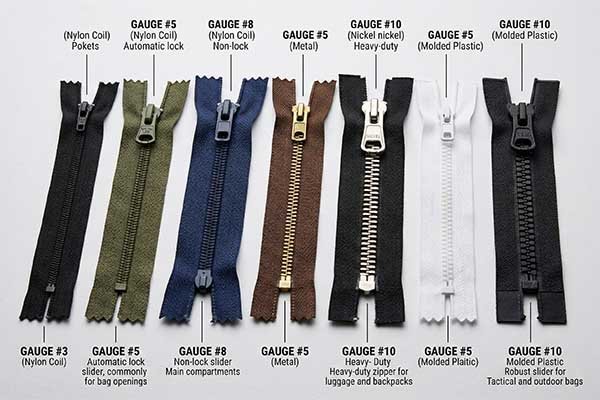
The zipper number defines the physical width of the closed teeth. A #3 zipper measures approximately 3 millimeters wide. Lightweight garment bags and small cosmetic pouches use #3 zippers. A #5 zipper measures 5 millimeters wide. This size acts as the standard workhorse for daily backpacks and fashion totes. A #8 zipper handles heavier duties. Technical backpacks and camera bags use #8 zippers. A #10 zipper measures 10 millimeters wide. Very heavy-duty luggage, large sports duffels, and industrial tool bags require #10 zippers. Small teeth will easily break under high tension.
Slider Mechanisms
Slider choice acts as a common failure point. A locking slider contains an internal pin. It locks firmly when the user releases the pull tab. Luggage and main backpack compartments need locking sliders to prevent accidental opening. A non-locking slider moves freely at all times. Quick-access pockets and internal pouches use non-locking sliders for fast entry.
Pull Tab Designs
Brands can heavily customize the pull tab. Metal, plastic, silicone, and leather pullers exist. Adding a custom brand logo to the puller increases the perceived value. A poorly chosen slider creates a very bad user experience.
| Zipper Size | Width | Standard Bag Application |
|---|---|---|
| #3 | 3 mm | Internal pockets, cosmetic bags |
| #5 | 5 mm | Daily office backpacks, totes |
| #8 | 8 mm | Technical bags, heavy backpacks |
| #10 | 10 mm | Large luggage, tool bags |
What Role Does Color and Finish Play in Design?
A brand designs a sleek black bag with a cheap shiny zipper. The ugly contrast destroys the aesthetic. Sales drop. Product managers must carefully plan zipper finishes.
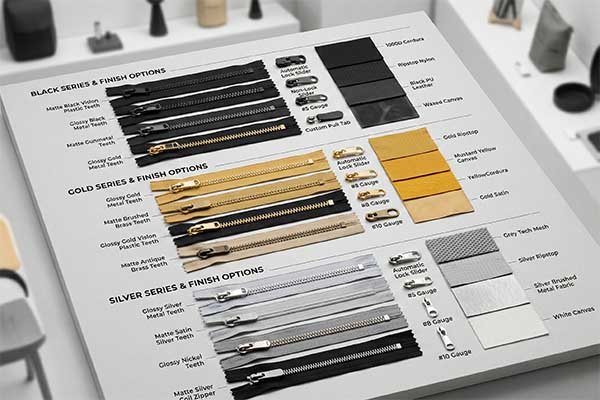
Color and finish heavily impact the final brand perception. The tape color must match the main fabric accurately. The teeth finish must coordinate with other metal hardware. This careful coordination creates a highly professional product design.
Tape Color Matching
The fabric tape holds the zipper teeth. This tape must match the bag material perfectly. Buyers provide specific Pantone color codes to the factory. The factory dyes the tape to meet this exact specification. Sometimes, brands use a bright, contrasting tape color. This strategy creates a strong visual highlight for sporty or modern designs.
Teeth and Slider Finishes
The metal finish requires careful attention. Common metal finishes include shiny gold, matte silver, and dark gunmetal. The zipper finish must perfectly match the buckles, chains, and D-rings on the bag. A mismatched finish looks unprofessional and cheap.
Balancing Design and Function
A good design balances beauty and practical function. A matte black finish looks excellent on a tactical backpack. However, buyers must verify the technical specs. Decorative finishes must not compromise rust resistance in humid environments. Quality control teams must test these finishes against salt and moisture before mass production begins. Proper color choices elevate the entire product appearance.
| Finish Strategy | Visual Effect | Typical B2B Scenario |
|---|---|---|
| Exact Match | Clean and minimal | Professional office bags |
| Contrast Color | Bold and sporty | Youth fashion or outdoor bags |
| Antique Metal | Vintage and premium | Leather messenger bags |
Why Are Brands and Custom Options Important for B2B Buyers?
Procurement teams buy generic zippers from unknown sources. Quality fluctuates wildly between batches. Clients leave negative reviews. B2B buyers must establish stable standards and reliable suppliers.
Established zipper brands guarantee stable quality and smooth operation. Custom pullers and printed tapes boost brand recognition. Procurement managers must define strict specifications in their tech packs and demand thorough batch testing before shipment.

Selecting Reliable Zipper Brands
Market leaders like YKK and Riri dominate the premium segment. These brands offer extremely stable quality. Their zippers run smoothly and withstand thousands of cycles. High-end buyers specifically look for these names. For mid-range projects, carefully vetted OEM zippers provide excellent value. Procurement managers must select suppliers with long-term industry experience.
Leveraging Customization Options
Custom details help independent brands separate themselves from cheap competitors. Factories can easily engrave a brand logo onto the metal slider. Brands can also request custom printed patterns directly on the zipper tape. Special pull shapes, like custom rubber molds, add a unique tactile feel. These small investments yield high returns in customer loyalty.
Quality Standards and B2B Workflows
Buyers need a repeatable specification sheet. This sheet replaces random choices on individual purchase orders. The tech pack must explicitly state the zipper brand, size, type, slider style, and exact color codes. Quality assurance teams must conduct cycle testing on sample bags. They repeatedly open and close the bag to confirm durability.
| B2B Requirement | Action Item | Long-term Benefit |
|---|---|---|
| Brand Selection | Specify brand in tech pack | Prevents inconsistent batches |
| Customization | Design branded pullers | Enhances market presence |
| QA Testing | Mandate cycle testing | Lowers product defect rates |
Conclusion
B2B buyers must strictly match zipper materials, sizes, and sliders to the bag’s intended use. Documenting these specifications prevents costly production errors and builds a reliable, high-quality brand.
Frequently Asked Questions
Q: What is the typical Minimum Order Quantity (MOQ) for customized zipper pullers?
A: Hardware factories usually require an MOQ of 5,000 to 10,000 pieces to create a custom logo mold. Standard sliders without brands have much lower minimums.
Q: Are there eco-friendly zipper options for sustainable custom bags?
A: Yes. Suppliers offer zipper tapes and teeth made from recycled PET (rPET). Factories make this material from old plastic bottles. It matches well with recycled canvas fabrics.
Q: Do metal zippers need to meet specific chemical safety regulations?
A: Yes. Buyers exporting bags to Europe or the United States must use nickel-free and lead-free metal finishes. This ensures the bags pass REACH or California Proposition 65 tests.
Q: How do zipper materials affect bulk shipping and flat-packing?
A: Molded plastic and metal zippers are rigid. They create bulky folds and take up more carton space. Flexible nylon coil zippers allow bags to fold flatter. This reduces freight costs.
Q: What is the difference between an O-type and an X-type double zipper?
A: An O-type zipper means two sliders meet in the middle to close the bag. An X-type means two sliders sit back-to-back in the middle and pull apart to open the bag.
Q: Will the zipper tape shrink when the bag gets wet or washed?
A: Standard polyester zipper tape does not shrink. However, cotton canvas bags often shrink in the wash. This shrinkage makes the fabric around the zipper pucker and warp.
Q: Can a factory easily replace a broken zipper on a fully stitched bag?
A: No. Workers must tear out the main seams to replace a sewn-in zipper. This rework costs a lot of time and money. Upfront zipper quality control is very important.
Q: What is a lateral pull test for zippers?
A: This is a lab test. Machines pull the closed zipper horizontally from the fabric sides. The test measures the exact force needed to break the zipper teeth open.
Q: Does choosing famous brands like YKK increase production lead times?
A: Yes. Ordering specific colors or custom finishes from major brands adds 2 to 4 weeks to the production schedule. Local OEM stock is much faster.
Q: Can buyers order zippers with fire-retardant properties for industrial bags?
A: Yes. Tactical gear and specialized tool bags require fire-resistant molded teeth. Suppliers also offer zipper tapes made from heat-resistant materials like Nomex.

 English
  Deutsch
  Español
  Português
  Русский
  العربية
  Français
  Italiano
  日本語
日本語  한국어
한국어  Dansk
Dansk