Skip to content

Procurement managers often assume that expensive materials like cotton are the only future for eco-packaging, creating concerns about budget sustainability. This creates a difficult conflict between meeting environmental compliance and maintaining profit margins.
Non-woven bags remain the dominant choice in emerging markets, Asia-Pacific, and Latin America because they meet "reusable" regulations without the high expense of natural fibers. They offer the necessary balance of durability, branding potential, and logistics efficiency for B2B buyers requiring scalable solutions.
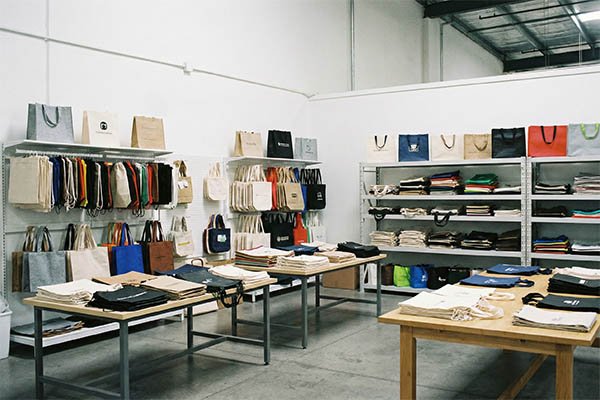
Market analysis indicates that non-woven bags are not disappearing from the global supply chain. Instead, they have shifted into specific, high-utility application scenarios.
What Makes Non-Woven Bags a Cost-Effective Choice in Emerging Markets?
Sourcing materials for large-scale promotions often leads to unexpected budget overruns when utilizing expensive fabrics like cotton or jute. Buyers require a material that scales efficiently without sacrificing quality standards.
Non-woven bags serve as the primary choice in emerging markets because raw material prices remain stable and production cycles are short. Unlike agricultural crops, the industrial production of polypropylene ensures consistent costing for large-volume orders.
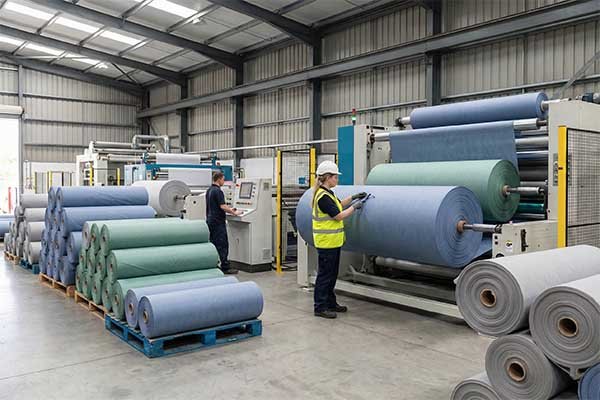
The math of eco-packaging often presents a challenge for procurement teams in developing economies. Brands desire the sustainability narrative associated with natural fibers, but market realities frequently dictate a stricter budget. This is where non-woven polypropylene bags offer a critical advantage. The unit cost is the primary driver. The raw material supply for PP non-woven fabric is incredibly stable compared to cotton, which fluctuates with harvest yields and global demand. This stability allows for accurate long-term budgeting.
In many emerging markets, the definition of "green" focuses on practicality rather than theoretical perfection. A bag does not need to last for five years to be compliant; it simply needs to perform better than a single-use plastic bag. This concept is known as "minimum viable reusability." If a bag withstands ten uses instead of one, it has met the market requirement.
Logistics also play a significant role in this cost equation. Non-woven bags are lightweight and highly compressible. When shipping to price-sensitive markets, maximizing the unit count per container is essential. High-density packing lowers the landed cost per unit significantly. This makes non-woven bags the most logical choice for large government projects or supermarket giveaways where volume is high and the budget is tight.
Why Are Non-Woven Bags Still Widely Used in Asia-Pacific?
Navigating the changing patchwork of plastic bans in Asian countries creates compliance risks for importers and retailers. Businesses fear that current packaging inventory might become non-compliant due to sudden regulatory updates.
Countries throughout Asia use non-woven bags as the primary transitional tool following strict plastic bans. The local supply chains are mature, ensuring stable lead times for high-frequency usage scenarios like food delivery and retail.
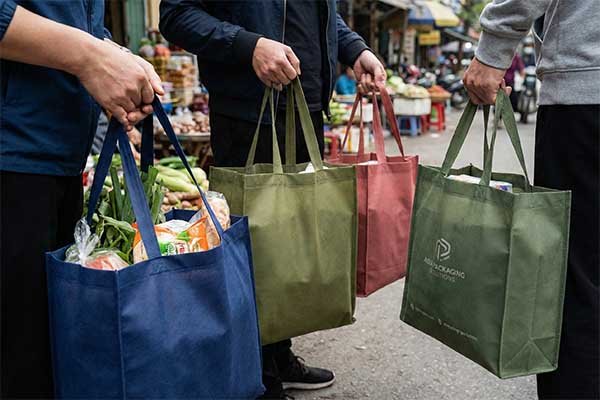
The Asia-Pacific region represents a fast-moving regulatory environment. Many nations have implemented bans on single-use plastics, yet they have not mandated high-cost sustainable materials. Non-woven bags act as the "transitional solution" in this gap. They serve as the bridge between the disposable plastic era and a future of circular economy materials.
Usage scenarios in this region are characterized by high frequency but short lifecycles. For example, the takeaway food industry and exhibition sector require packaging that is functional and cheap. A consumer does not require a heavy canvas bag to carry a lunch box once. The market demands something strong, water-resistant, and inexpensive. Non-woven bags solve this specific functional problem efficiently.
From a supply chain perspective, the manufacturing base in Asia is highly developed. Production hubs like Wenzhou possess mature production lines with standardized molds. For B2B buyers, this translates to operational safety. There is no need to develop products from scratch. The communication costs are low because the manufacturing standards are established. When lead time reliability is the main concern, the Asian supply chain for non-woven bags offers a level of certainty that newer, experimental materials cannot yet match.
How Are Latin American Markets Adopting Non-Woven Reusable Bags?
Brands in Latin America aim to project an eco-friendly image but often operate with strict margin constraints. Companies fear losing mass-market customers if packaging costs force a price increase.
Latin American markets utilize non-woven bags to project an eco-friendly image while strictly controlling operational costs. These bags are the standard for municipal projects and small-to-medium enterprise branding efforts.
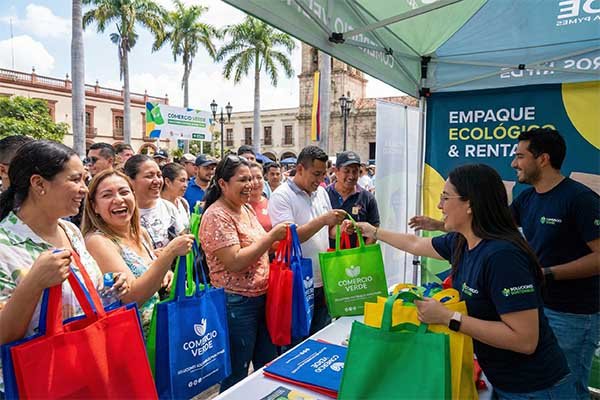
In Latin America, price sensitivity is a market reality. However, there is a simultaneous demand for environmentally conscious branding. Local brands face a dilemma: they need to appear sustainable, yet they operate on thin margins. Non-woven bags provide the optimal performance-to-price ratio for these businesses.
Projects in this region often involve government or public sector contracts. These initiatives require massive quantities. Orders frequently exceed hundreds of thousands of bags for city-wide campaigns or community events. The requirements are specific: uniform design, large volume, and low single-unit price. Such scale is financially impossible with materials like rPET or Tyvek without exceeding fiscal budgets.
Small and medium-sized local brands also rely heavily on this material. These companies are not global giants with vast capital. They cannot invest in expensive inventory that sits in a warehouse. They choose non-woven bags because it allows them to enter the "reusable" market segment effectively. It creates a visible brand presence on the street. It demonstrates to consumers that the brand cares about the environment. Crucially, it achieves these marketing goals without destroying cash flow. It is a pragmatic choice for a market that values functional sustainability over luxury.
What Role Do Non-Woven Bags Play in Small Business Retail?
Small businesses often struggle with the high minimum order quantities required for custom packaging solutions. Independent retailers often feel priced out of effective branding compared to larger competitors.
Non-woven bags serve as powerful promotional tools rather than just simple grocery carriers. They offer low minimum order quantities and excellent printing surfaces for small retailers to gain brand exposure.
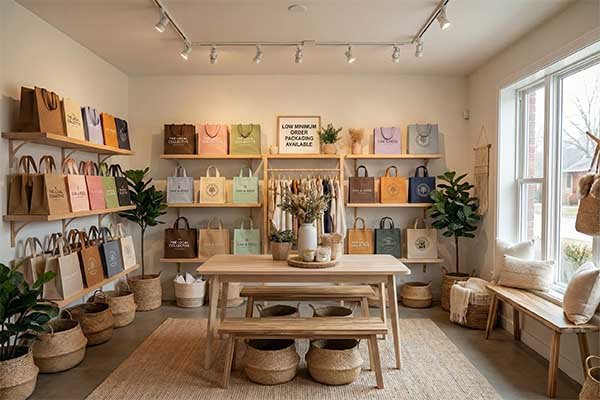
Small business owners are advised to view packaging as a marketing investment rather than an operational cost. The bag functions as a mobile advertisement. Non-woven bags are not intended to be long-term heirlooms; they are promotional vehicles. Their core function is to carry goods home and provide brand visibility during subsequent uses.
This distinction is vital for budget allocation. Non-woven fabric is an excellent substrate for printing. Techniques like silk screen or heat transfer printing are easily applied. The surface area for the logo is large and flat. For a pop-up shop or a local bakery, this visibility is invaluable. When a customer walks down the street, the logo is visible to the entire community.
The "MOQ" or Minimum Order Quantity is another significant advantage for this sector. Customizing cotton bags often requires a large financial commitment and storage space. Non-woven bags are far more accessible for small orders. This allows businesses to test the market or change designs for different holidays. It gives small brands the agility they need. They avoid the risk of dead stock. For a growing business, this flexibility is often more valuable than the material composition itself.
How Do Government Policies Influence Non-Woven Bag Adoption?
Shifting environmental regulations can make current packaging inventory illegal overnight, causing supply chain disruption. Importers often feel uncertain about which materials will remain safe to import long-term.
Policy goals often prioritize the immediate reduction of visible single-use plastic waste over total carbon neutrality. In this regulatory environment, non-woven bags occupy a safe "grey zone" where they are legally accepted.
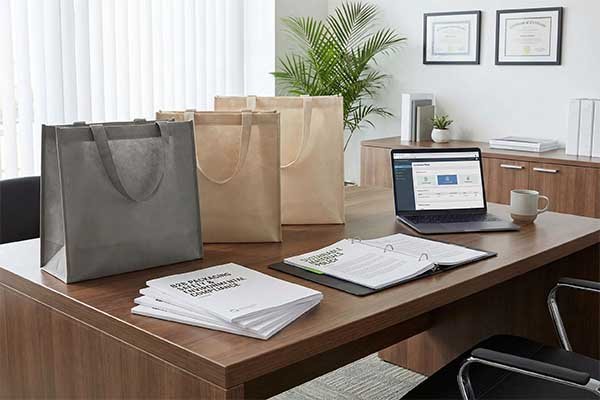
It is essential to analyze the specific objectives of government policies. While some developed nations focus on total carbon footprints, most global regulations currently focus on visible waste reduction. The primary target is "white pollution"—thin plastic bags that litter the environment. This policy goal directly favors the adoption of non-woven bags.
Non-woven bags exist in a regulatory "grey zone." They are technically plastic, but they are not classified as "single-use" in the legal frameworks of many nations. They are sufficiently thick and durable to pass reusability tests. This distinction is crucial for B2B procurement strategies.
When buyers select materials, they must consider local laws. In many jurisdictions, non-woven is the safe, compliant choice. It is accepted and often exempt from the high taxes levied on single-use plastics. For a procurement manager, the goal is not always to source the most theoretically green product. The goal is to ensure compliance, cost-effectiveness, and supply stability. Non-woven bags hit this combination perfectly. They allow businesses to operate smoothly while regulations continue to evolve.
Conclusion
Non-woven bags are not a low-end compromise; they are the correct product for specific high-volume, cost-sensitive scenarios. They remain the most practical solution for compliant, scalable B2B packaging.
Frequently Asked Questions
Q: What is the recommended GSM (thickness) for a standard promotional non-woven bag?
A: For general trade shows or lightweight retail use, 80 GSM is the industry standard. However, for grocery applications requiring heavier load-bearing capacity, upgrading to 100 GSM or 120 GSM is recommended to ensure durability and prevent tearing under stress.
Q: How does the lifespan of a non-woven bag compare to a kraft paper bag?
A: Unlike paper bags, which are often single-use and vulnerable to moisture, a standard non-woven polypropylene bag is water-resistant and designed for 50+ uses. This significantly increases brand impression duration compared to paper packaging.
Q: Can non-woven bags be printed with full-color photographic images?
A: Yes, but not on standard raw fabric. To achieve photographic quality (CMYK), "Laminated Non-Woven" is required. This process involves bonding a BOPP film printed with rotogravure technology onto the non-woven fabric, allowing for high-definition, full-bleed imagery.
Q: Are non-woven polypropylene bags recyclable at the end of their life?
A: Yes, they fall under the Resin Identification Code #5 (PP). However, they generally cannot be thrown in standard curbside recycling bins. They must be collected at specialized drop-off locations, often found at supermarkets, to be melted down and re-extruded.
Q: What is the difference between "Ultrasonic" and "Stitched" non-woven bags?
A: Ultrasonic bags are bonded using heat and pressure automation, resulting in lower production costs and faster output, making them ideal for tight budgets. Stitched (sewn) bags use thread and piping, offering higher weight capacity and a more premium aesthetic suitable for retail merchandise.
Q: Do non-woven bags biodegrade in landfills?
A: Standard PP non-woven bags are photodegradable, meaning they break down faster than solid plastic when exposed to sunlight (UV), but they are not "biodegradable" like cornstarch (PLA) bags. Buyers should avoid claiming they are "biodegradable" to prevent greenwashing accusations.
Q: Is it possible to customize the handle length for different demographics?
A: Absolutely. Standard handles are typically 50cm (shoulder length). However, for markets where carrying by hand is preferred over shoulder carrying, handles can be shortened to 30-40cm without significantly impacting the production cost.
Q: How can material quality be verified remotely?
A: Request a "Light Test" from the supplier. High-quality virgin PP material will display an even distribution of fibers when held up to a light source. Recycled or low-grade material will appear patchy, cloudy, or have inconsistent density, which indicates weaker structural integrity.
Q: Can these bags be washed by the end consumer?
A: They can be hand-washed with cold water and air-dried. Machine washing is generally not recommended as the agitation can break down the bond between fibers, causing the bag to lose its shape and stiffness over time.
Q: What is the typical lead time difference between non-woven and cotton bags?
A: Non-woven production is highly automated. A standard order of 10,000 pieces can often be completed in 15–20 days. Cotton bags require weaving, cutting, and more labor-intensive sewing, often requiring 30–40 days for the same quantity.

 English
  Deutsch
  Español
  Português
  Русский
  العربية
  Français
  Italiano
  日本語
日本語  한국어
한국어  Dansk
Dansk