Skip to content

Global sustainable bag projects often face challenges not due to production quality, but because of a fundamental mismatch in regional usage logic.
Successful procurement requires recognizing that Europe prioritizes material credibility and minimalism, while North America values performance, structure, and brand storytelling. Strategic localization of specifications prevents wasted inventory and maximizes ROI.
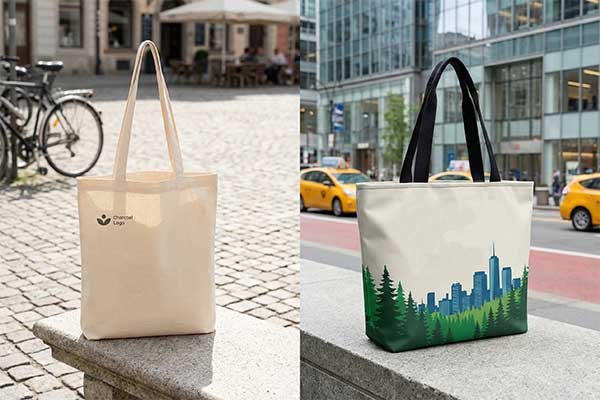
Why do standardized strategies often fail to deliver results in diverse markets? The answer lies in the specific habits and regulatory environments of the target regions. The following analysis explores the critical differences in materials, styles, and sizes to support informed decision-making.
How Do Material Preferences Differ Between Europe and North America?
Selecting the appropriate fabric is critical for inventory turnover. Market data indicates distinct trust factors for materials across different territories.
European markets favor natural credibility like organic cotton and recycled canvas. North American markets prioritize performance and stories, embracing RPET and blends if they offer visual appeal and durability.
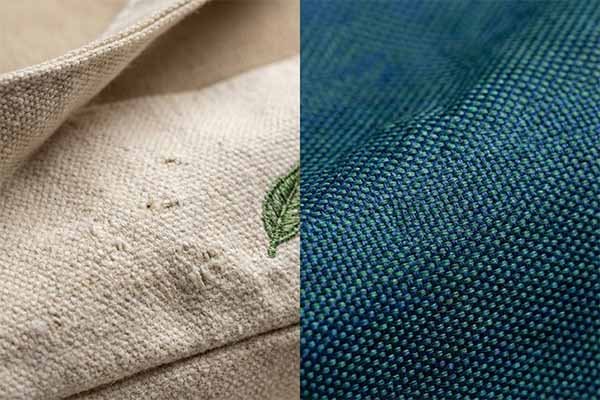
Industry observation confirms that a standardized material strategy rarely succeeds across both continents. European buyers demonstrate a strong preference for authenticity and traceability. In these markets, materials such as unbleached cotton, organic cotton, or recycled canvas are favored because the natural texture signals environmental compliance. If a bag appears too "manufactured" or heavily processed, it risks being perceived as "greenwashing" rather than a genuine sustainable solution. The focus remains on the credibility of the origin and the durability of the raw material.
Conversely, the North American market is generally more receptive to technical innovation and narrative-driven materials. Buyers in this region often accept RPET (recycled polyester) and cotton blends because these materials effectively communicate a story of waste reduction. However, acceptance is contingent on the material’s premium appearance. A product must possess visual impact and structural integrity to be viable. While "recycled content" serves as a key communication point, the material is expected to perform functionally and maintain color vibrancy similar to virgin materials.
| Feature | Europe Preference | North America Preference |
|---|---|---|
| Primary Material | Organic Cotton, Unbleached Canvas | RPET, Cotton Blends, Tyvek |
| Key Value | Natural Origin, Traceability | Recycled Story, Durability |
| Aesthetics | Raw, Matte, Minimalist | Vibrant, Smooth, Structured |
Why Do European Buyers Prefer Natural and Minimal Bag Materials?
Over-designing eco bags for the European market can lead to rejection. Simpler designs often command higher respect and retention rates in this region.
European consumers view bags as part of a systematic approach to waste reduction.Minimalist, natural materials signal durability and regulatory compliance, whereas excessive design is often perceived as resource waste.
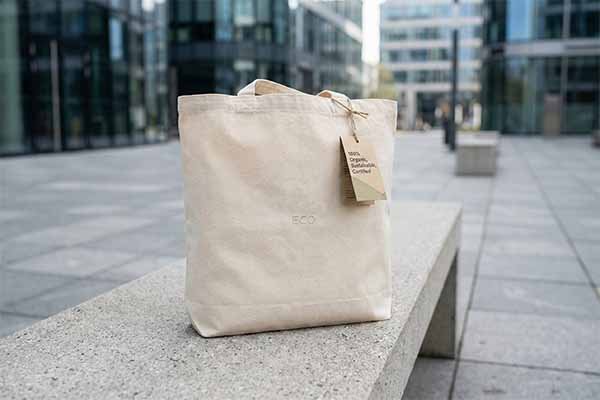
European regulations regarding single-use plastics and packaging waste have shaped a specific consumer and buyer mindset. In this context, the reusable bag is viewed as a functional tool rather than a promotional gift. Experience with European clients indicates a demand for "quiet" quality, where the product fits seamlessly into daily life without aggressive branding. Excessive printing or complex mixed materials are often viewed negatively, as they can complicate the recycling process and contradict the ethos of circularity.
For B2B buyers, decisions are heavily influenced by long-term compliance and brand risk management. There is a tangible hesitation regarding "fake sustainability." Consequently, simple, sturdy, unbleached canvas is frequently selected over flashy synthetic alternatives. The priority is resource conservation. A natural cotton bag that ages well and withstands repeated washing aligns with the European definition of value. Complex laminations or "over-packaging" are often seen as unnecessary costs and environmental liabilities.
| Aspect | European Buyer Logic |
|---|---|
| Design Philosophy | Efficiency and waste avoidance. |
| Regulatory Focus | Alignment with EU circularity directives. |
| Consumer Habit | Long-term substitution for disposable packaging. |
| Preferred Look | Earth tones, raw fabric texture, minimal ink coverage. |
What Sustainable Bag Styles Work Best in the North American Market?
Bags lacking physical structure often suffer from low retention rates in the US. Structure is a key driver of value perception and brand visibility.
North American consumers treat bags as brand carriers. Structured totes with wide gussets and zipper pouches perform best because they serve multiple roles, from retail shopping to event takeaways.
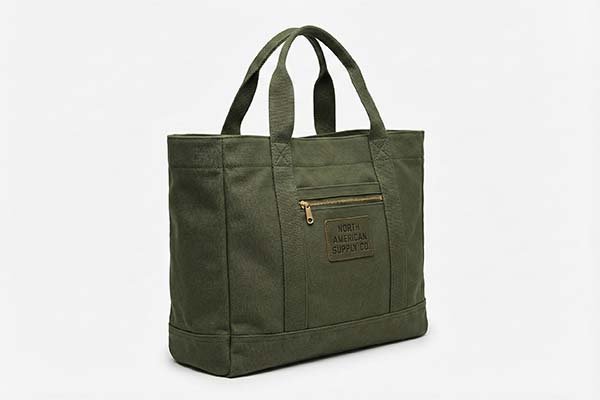
In the North American market, the reusable bag functions as a mobile advertisement. To be effective, the product requires physical presence; a structured tote bag with a defined bottom gusset is perceived as a high-value item rather than temporary packaging.Requests from North American clients frequently include functional add-ons such as zipper closures, inner pockets, or multi-purpose pouches. These features allow the item to transition across various usage scenarios, from grocery shopping to office commuting.
From a marketing perspective, utility drives brand impressions. A structured bag that remains in circulation offers a superior ROI compared to a flimsy alternative that is quickly discarded. The goal is to produce a "retail quality" item that possesses intrinsic value, regardless of whether it is distributed as a gift or a purchase-with-purchase.For promotional and advertising projects, the bag itself must demonstrate substantial quality to reflect positively on the brand image.
| Feature | Importance in North America | Benefit |
|---|---|---|
| Wide Gusset | High | Stability and ease of packing. |
| Zipper/Pockets | High | Security; elevates product status. |
| Fabric Weight | Heavy (10oz+) | Signals durability and premium quality. |
| Usage Scenario | Retail, Events, Travel | Maximizes brand exposure frequency. |
How Do Size and Structure Expectations Vary Across These Markets?
Deploying incorrect dimensions can hinder usability in target markets. Local lifestyle factors dictate the optimal specifications for bag size and capacity.
Europeans prefer medium, lightweight bags that fold easily for daily transit. North Americans generally require larger, heavy-duty capacities suitable for car-based shopping and bulk buying.
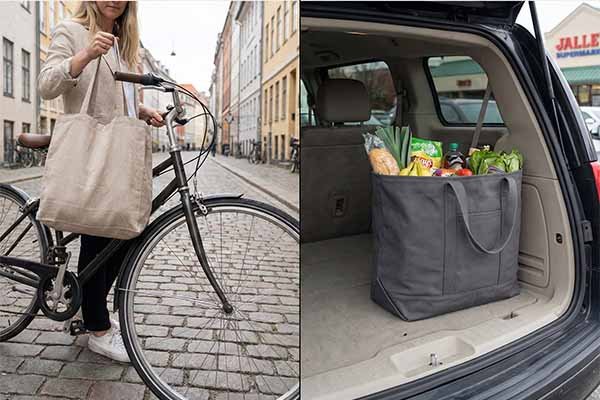
Logistical habits function as the primary determinant for size preferences. In many European urban centers, where walking and public transport are dominant, a large, heavy bag is impractical. The market demands medium-sized, foldable designs that can be easily stowed in a pocket or handbag. Portability is paramount; the item must be unobtrusive when not in use. Consequently, lighter weights and compact form factors are recommended for these regions.
In contrast, the North American lifestyle is heavily reliant on personal vehicles and bulk purchasing.This environment necessitates large-capacity bags capable of holding heavy loads without structural failure. The objective is often to facilitate a "one trip" transfer from vehicle to home. While reducing bag dimensions may lower international freight costs, producing a bag that is too small for the typical US grocery run results in a wasted investment. Balancing unit cost with end-user utility is essential for project success.
| Region | Typical Transport | Preferred Bag Type | Key Size Constraint |
|---|---|---|---|
| Europe | Walking / Metro / Bike | Foldable, Medium Tote | Must be compact and portable. |
| North America | Car / SUV | Large Structured Shopper | Must support bulk items/heavy loads. |
Why Should B2B Buyers Localize Sustainable Bag Design Choices?
Global standardization often results in hidden costs related to brand reputation and dead stock. Localization is a strategic necessity for supply chain efficiency.
Localizing design reduces inventory waste. European buyers value low-key durability, while North American buyers pay for visual impact. Aligning with these habits ensures the product is actually used.
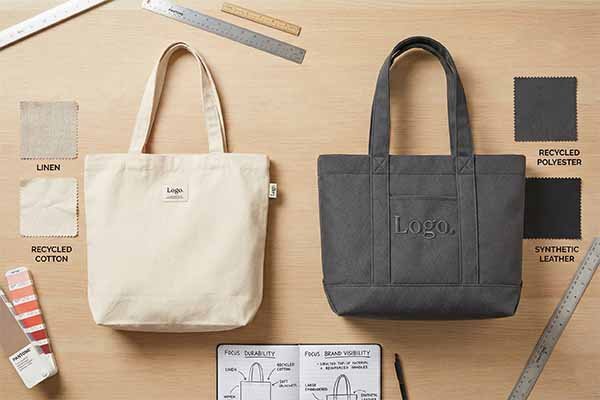
While consolidating global orders into a single SKU appears efficient, manufacturing experience suggests this approach often leads to market failure. A product defined as "high value" in the US may be perceived as "cheap" in Europe, while a "natural" European-style bag might appear "unfinished" to North American consumers. True cost control is achieved through effectiveness and retention, not merely the lowest manufacturing price. If a significant percentage of inventory is discarded due to a mismatch with local habits, the effective cost per impression increases dramatically.
It is advisable to treat these regions as distinct product lines.Adjustments to fabric weight, handle length, and structural details demonstrate an understanding of the end-user. Localization serves as a safeguard for the marketing budget.Suppliers like Avecobaggie provide stable, replicable solutions that allow for these specification modifications without compromising delivery efficiency, ensuring that the final product aligns with the specific "value" definition of the target market.
| Strategy | Standardized Approach | Localized Approach |
|---|---|---|
| Inventory | Single SKU | Region-Specific SKUs |
| Risk | High (mismatch in one market) | Low (tailored fit) |
| Brand Impact | Generic | Targeted & Relevant |
| Outcome | Potential waste | Higher usage rates |
Conclusion
Success lies in adaptation.Treating Europe and North America as unique ecosystems maximizes the environmental and commercial value of sustainable bag projects.
Frequently Asked Questions
Q: What are the specific compliance certifications required for each market?
A: For the European market, GOTS (Global Organic Textile Standard) is highly valued for cotton products, alongside Oeko-Tex Standard 100. In North America, while GOTS is recognized, GRS (Global Recycled Standard) is critical for validating claims regarding RPET and recycled content. Additionally, products for the US market must adhere to CA Prop 65 lead and phthalate restrictions, whereas EU products must comply with REACH chemical standards.
Q: How does the difference in bag structure impact international shipping costs?
A: The "structured" preference in North America often involves heavier fabrics (e.g., 12oz canvas) and gussets, which increases both the gross weight and volumetric weight per carton. This can increase freight costs by 20-30% compared to the flat, lightweight styles preferred in Europe. Buyers should calculate landed costs separately for each region rather than applying a flat shipping rate.
Q: Are there differences in preferred printing methods between these regions?
A: Yes. European buyers often prioritize water-based inks or simple screen printing to maintain the "natural" feel and ensure biodegradability. North American buyers, prioritizing visual impact and branding, are more open to heat transfer printing, lamination, or plastisol inks that offer vibrant, photo-realistic colors, even if they are slightly less eco-friendly.
Q: Does the "packaging of the bag" differ for B2B shipments?
A: Absolutely. To align with waste reduction goals, European shipments should utilize bulk packing (e.g., 50 units per master polybag) or plastic-free inner packaging. Conversely, for North American retail or event distribution, individual polybags (often with suffocation warnings) are frequently requested to protect the "pristine" look of the structured product during distribution.
Q: Can we create a "hybrid" design to satisfy both markets with one SKU?
A: While possible, it is generally discouraged for high-volume orders. A hybrid often results in a "compromise product"—too expensive for the European entry-level requirement and not structured enough for the American premium expectation. It is usually more cost-effective to split production into two specialized SKUs than to hold dead stock of a hybrid product that satisfies no one.
Q: How do strict EU circular economy laws affect hardware selection (zippers/buttons)?
A: EU directives increasingly favor "mono-material" designs to facilitate recycling. Using metal zippers or mixed-material buttons on a cotton bag can complicate the end-of-life recycling process. We recommend using cotton drawstrings or unbleached biodegradable buttons for Europe. For North America, durability is the priority, so metal or heavy-duty nylon zippers are acceptable and often expected.
Q: Is there a difference in "washability" testing standards?
A: European consumers are more likely to wash their bags regularly as part of a hygiene routine. Therefore, fabric shrinkage rates and print fastness must be tested rigorously for machine washing. In North America, many structured bags are "spot clean only" due to their linings or rigid inserts. B2B buyers must specify these care instructions clearly on the sewn-in label to avoid consumer complaints.
Q: What is the trend regarding Digital Product Passports (DPP)?
A: This is emerging rapidly in the EU. B2B buyers for the European market should start preparing for requirements to include QR codes that reveal the full supply chain journey and material composition. This is currently less critical for the North American market but is expected to gain traction as a value-add feature for premium brands.
Q: Do MOQ (Minimum Order Quantity) requirements differ based on these regional styles?
A: Generally, yes. The complex, structured bags for North America often require higher MOQs (e.g., 1,000+ units) because they involve more cutting dies and sewing labor. The simpler, flat tote designs popular in Europe are easier to produce in smaller batches or can sometimes be sourced from stock inventory for rapid overprinting.
Q: How do duty rates compare for these different material compositions?
A: Import duties vary significantly. In the US, tariffs on synthetic materials (like RPET) can differ from cotton, and Section 301 tariffs on Chinese goods must be considered. In Europe, GSP (Generalized Scheme of Preferences) status or specific trade agreements may apply. It is crucial to confirm the HS Code for "woven cotton" versus "man-made textile" bags with a customs broker before finalizing the material choice.


 English
  Deutsch
  Español
  Português
  Русский
  العربية
  Français
  Italiano
  日本語
日本語  한국어
한국어  Dansk
Dansk